Clear Sky Science · en
Virtual screening and molecular dynamics simulations for drug repurposing against autophagy to attenuate blast in cereal plants
Why saving staple crops matters
Rice, wheat and corn feed billions of people, and in countries like Bangladesh they are the backbone of both diets and the rural economy. Yet a fast-spreading fungal infection called blast disease can wipe out fields in just a few weeks, destroying enough grain to feed hundreds of millions of people each year. This study explores a new way to fight that fungus by looking inside its cells and trying to shut down a built‑in self‑eating process that the microbe needs to invade plants. Instead of inventing brand‑new chemicals from scratch, the authors search among thousands of existing medicines to find those that might disarm the fungus and protect cereal crops.
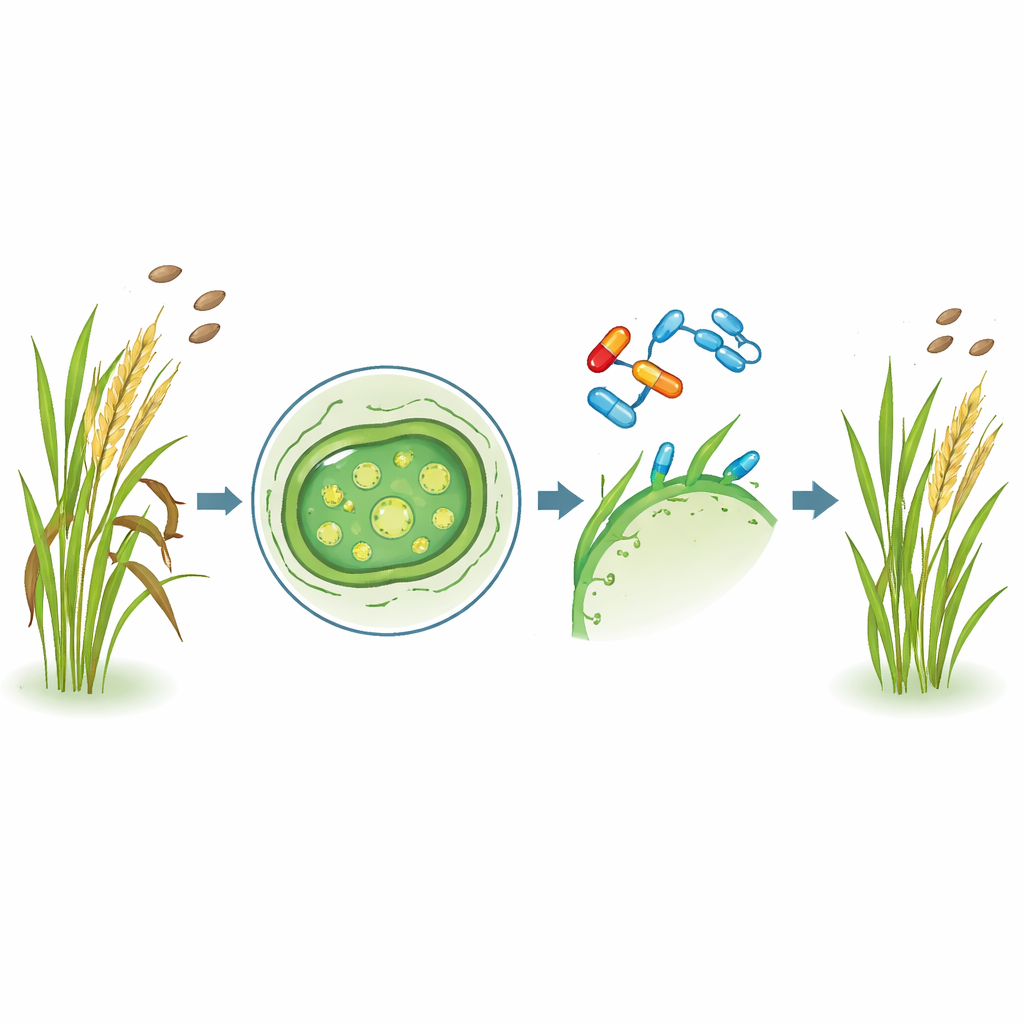
A fungus that turns a plant’s own biology against it
The blast fungus, known as Magnaporthe oryzae, attacks rice, wheat and other cereals at almost any stage of growth, from leaves to flowering heads. Outbreaks have already caused typical yield losses of 10–30 percent in many regions, and under ideal conditions for the pathogen, farmers can lose nearly all of a crop in just 15–20 days. For decades, control has relied mainly on chemical fungicides, but overuse has helped the fungus evolve resistance, while natural genetic resistance in plants is limited and often short‑lived. Scientists therefore are searching for weak points in the fungus itself—molecular processes that are essential for its survival and ability to infect, but that can be targeted with drugs in a precise way.
Turning the fungus’s self‑cleanup system into a target
One such weak point is autophagy, a kind of cellular housekeeping in which worn‑out components are wrapped in small membrane bubbles and broken down for reuse. In plant cells, this process helps them cope with stress. But the blast fungus also exploits autophagy when it germinates on the plant and builds the structures it uses to penetrate host tissue. A key helper protein in this pathway is called Atg4, an enzyme that clips another protein, Atg8, so that Atg8 can attach to membranes and drive the formation and recycling of those self‑eating bubbles. If Atg4 is missing or defective, the fungus struggles to complete autophagy and becomes much less able to cause disease. That makes Atg4 an appealing target: block this protein, and you may block the fungus’s ability to damage crops.
Searching old medicines for new farm uses
To hunt for Atg4 blockers, the researchers turned to “virtual screening,” a computer‑based method that predicts how well small molecules might fit into a protein’s surface. They first used an advanced protein‑structure tool to model the three‑dimensional shape of the fungal Atg4 protein and then refined that model with an initial simulation of its natural motion in water. Using this realistic structure as a target, they fed in a library of about 3,800 drugs that are already approved or in late‑stage testing for human use. Software posed each compound in many orientations inside Atg4 and scored how strongly it was predicted to bind. From more than 11,000 possible pairings, the team selected six top‑scoring candidates that nestled into meaningful pockets on the protein rather than on floppy, unstructured regions.
Watching promising drug–protein pairs in atomic detail
Finding a good fit in a static snapshot is only the first step. The team next asked whether these six drug candidates would stay bound as the protein flexes and jiggles in realistic conditions. They built detailed computer models of Atg4 together with each drug and ran long molecular dynamics simulations for each pair, tracking atomic positions over microseconds—far longer than many typical studies. They monitored how much the protein and drug shifted over time, how compact the complexes remained, and how many hydrogen bonds and other stabilizing contacts formed between them. They also calculated the overall binding energy, which estimates how strongly each drug clings to Atg4, and examined basic drug‑like properties such as size, solubility, and how easily a compound might move through biological membranes.
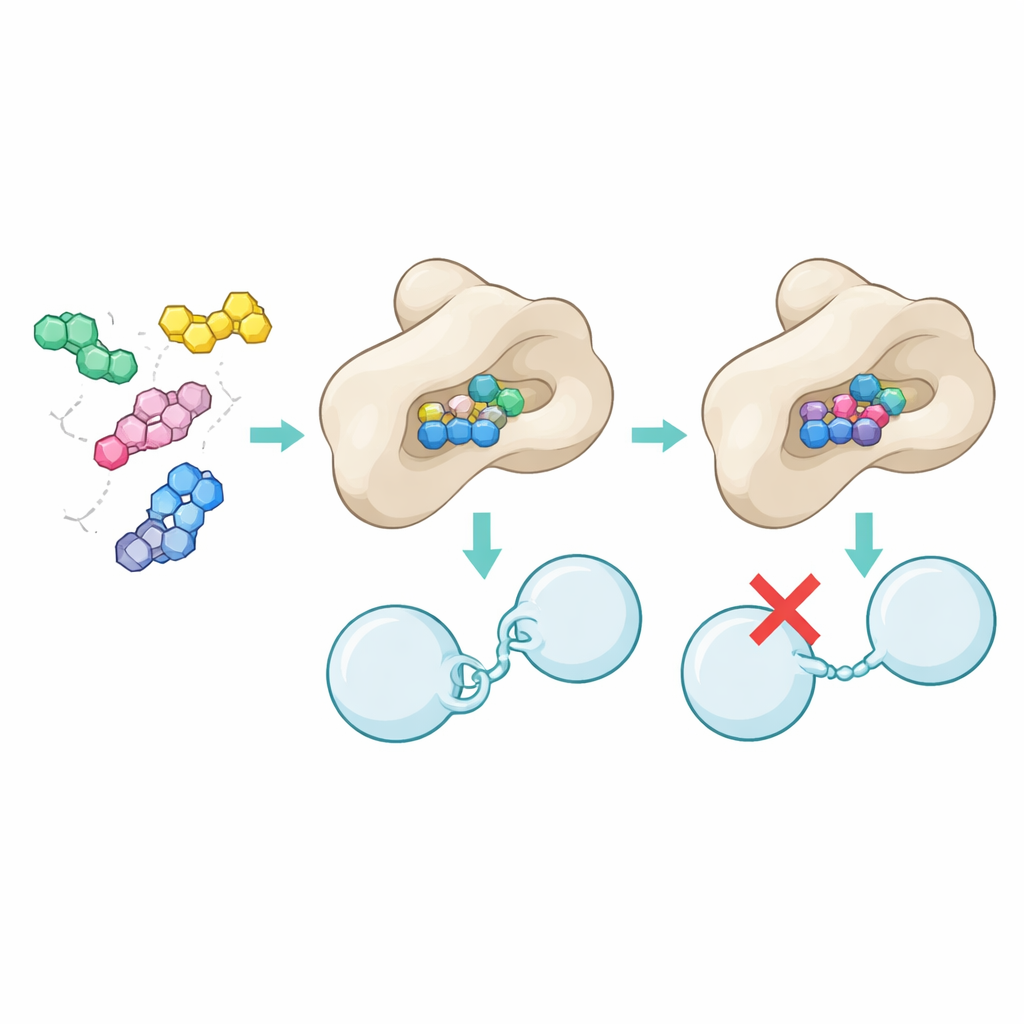
Three leading candidates for crop protection
All six compounds formed stable partnerships with Atg4 in the simulations, but some stood out. Several drugs showed modest movement within the protein’s pocket, maintained steady contact networks, and had favorable overall binding energies, suggesting they could efficiently interfere with Atg4’s normal role in autophagy. At the same time, an important filtering step was to weigh how “drug‑like” each molecule is—whether its size, shape and chemistry make it likely to be absorbed and behave well in real organisms. By combining interaction strength, stability over time and predicted pharmacokinetics, the authors highlight three existing medicines—rebastinib, zafirlukast and radotinib—as especially promising candidates to be repurposed as blast‑control agents.
What this means for farmers and food security
This work does not yet deliver a new fungicide, but it provides a short, prioritized list of well‑characterized drugs that appear able to latch onto a crucial fungal protein and potentially shut down a process the blast pathogen needs to attack cereal plants. Because these molecules have already been studied in human medicine, much is known about their basic safety and behavior, which could speed up testing for agricultural uses. The study shows how marrying modern protein modeling with large‑scale computer screening can rapidly narrow the search for new tools against crop diseases. With further laboratory and field experiments, the candidates identified here could lead to more targeted, effective and sustainable ways to protect rice, wheat and other staples from a devastating fungal threat.
Citation: Rahman, S., Rahman, A., Huang, Ym.M. et al. Virtual screening and molecular dynamics simulations for drug repurposing against autophagy to attenuate blast in cereal plants. Sci Rep 16, 14198 (2026). https://doi.org/10.1038/s41598-026-43708-0
Keywords: rice blast fungus, autophagy inhibition, drug repurposing, cereal crop disease, virtual screening