Clear Sky Science · en
Prognostic impact of neurological dysfunction assessed by modified Rankin Scale in acute myocardial infarction
Why past brain attacks matter for heart patients
Heart attacks and strokes are two of the world’s biggest killers, and many people live long enough to experience both. This study asks a deceptively simple question with big consequences for patients and families: if someone has already had an ischemic stroke and later suffers a heart attack, does their previous brain injury—and the degree of disability it left behind—change their chances of long-term survival? The answer helps doctors recognize which patients need especially close follow-up and more aggressive prevention.
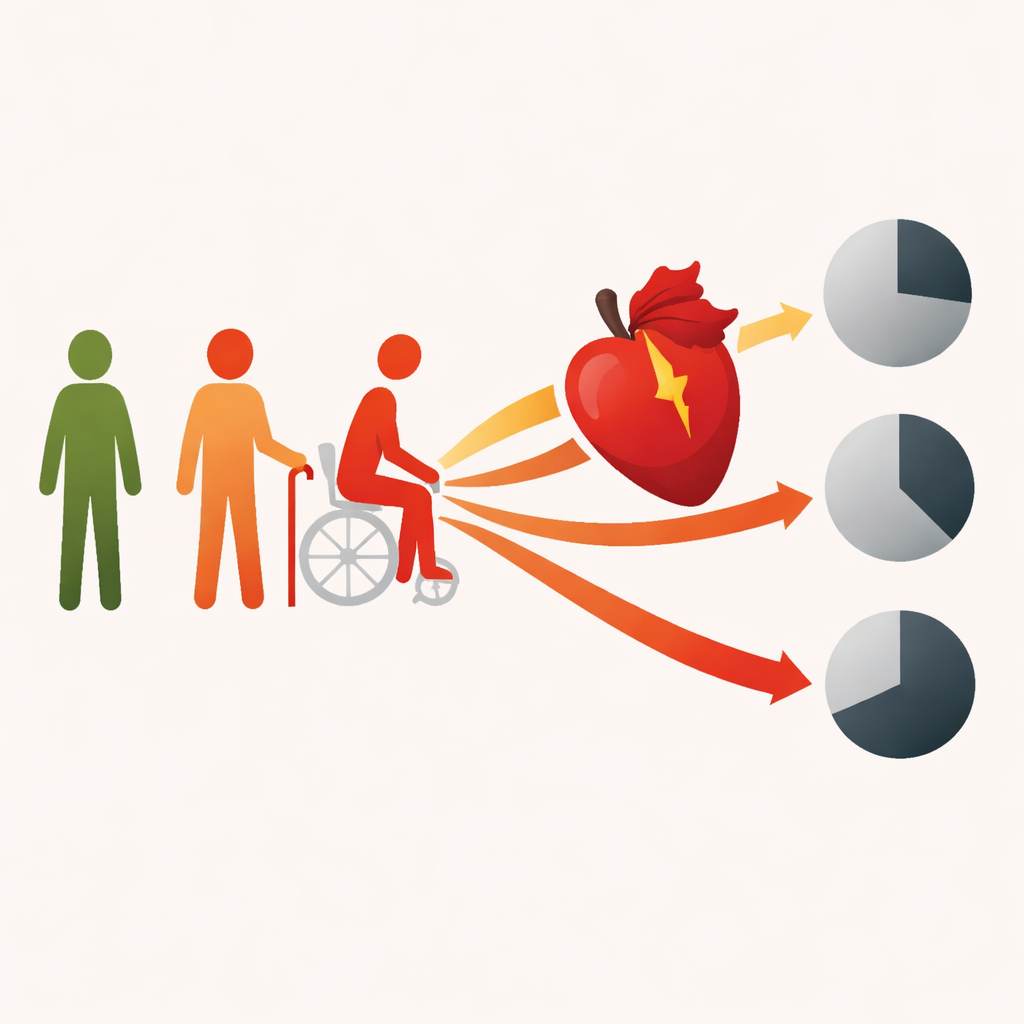
Three kinds of patients, three different risks
The researchers examined medical records from more than 10,000 people treated for acute myocardial infarction (heart attack) at a large Chinese hospital between 2015 and 2021. They grouped patients into three categories: those with no prior ischemic stroke; those who had a previous stroke but were living independently (mRS 0–1 on the modified Rankin Scale, a standard measure of disability); and those whose prior stroke left lasting disability (mRS 2–5). Everyone was then followed through national death registries for a median of just over five years, allowing the team to see not only who died, but also what they died from.
What happened over five years
Over the follow-up period, about 18% of all patients died, and most of those deaths were from cardiovascular causes such as heart disease and stroke. People with no history of stroke had the lowest death rate. Patients who had a prior stroke but no obvious disability already faced clearly higher risks: their chances of dying from any cause were about 40% higher than those without stroke, and their risks of dying from heart attack or stroke specifically were roughly 60% higher. The outlook was worse for patients whose earlier stroke left them disabled. Their overall risk of death was more than double that of patients without prior stroke, and their risk of dying from stroke was more than tripled. These patterns held steady across different statistical approaches, including methods that account for competing causes of death.
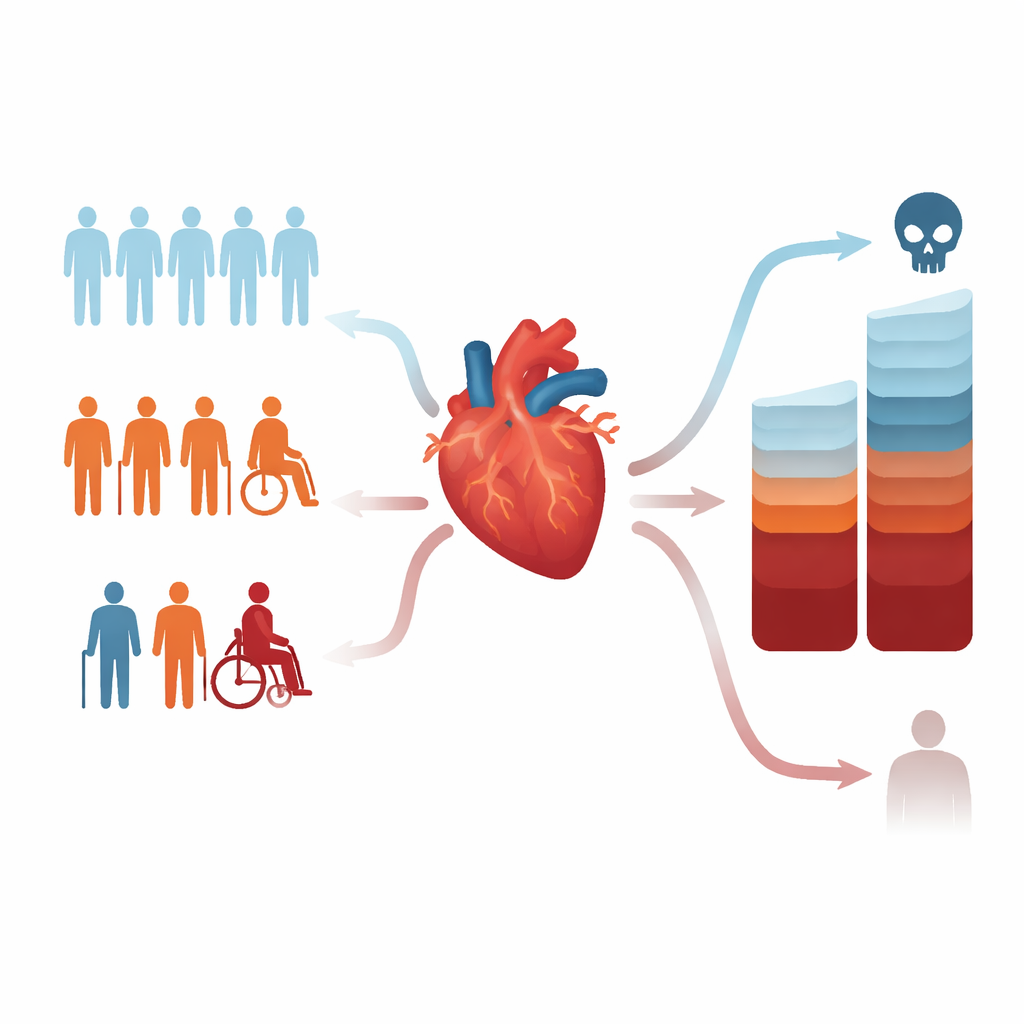
Peeling back the reasons behind the numbers
Why would a seemingly “recovered” stroke still cast such a long shadow over a later heart attack? The study points to several clues. Patients with prior stroke were older and had more high-risk conditions such as high blood pressure, diabetes, heart failure and kidney disease. They were also less likely to receive the most aggressive heart treatments—such as early opening of blocked arteries with primary percutaneous coronary intervention or stronger anti-clotting drugs—perhaps because doctors worried about bleeding in the brain. Inflammatory changes linked to aging and vascular damage may further increase the vulnerability of both the heart and the brain in this group. Even after carefully adjusting for many of these factors, however, prior stroke remained a powerful warning sign.
Who is hit hardest
The increased danger was not the same for everyone. Men with a prior, non-disabling stroke showed a clearer rise in risk than women. Younger patients with disabling stroke (those under 65) appeared to be especially vulnerable: their relative increase in risk, compared with similarly aged heart-attack patients without stroke, was larger than that seen in older adults. Across all ages and both sexes, one theme remained consistent—moving from no prior stroke, to prior stroke without disability, to prior stroke with disability produced a stepwise climb in long-term death rates.
What this means for patients and care
The study’s main message for non-specialists is straightforward: a history of ischemic stroke, even when it seems fully recovered, should be treated as a major red flag in people who later suffer a heart attack. These patients are more likely to die in the years that follow, mainly from heart and blood-vessel problems rather than unrelated illnesses. A quick check of stroke-related disability using the simple modified Rankin Scale—often available from past records or a brief interview—could help doctors identify who needs the strictest control of blood pressure, cholesterol and blood sugar, as well as careful use of modern heart treatments. In short, the brain’s past injury continues to shape the heart’s future, and recognizing that link can guide better long-term protection.
Citation: Feng, L., Qiu, M., He, L. et al. Prognostic impact of neurological dysfunction assessed by modified Rankin Scale in acute myocardial infarction. Sci Rep 16, 12537 (2026). https://doi.org/10.1038/s41598-026-43703-5
Keywords: heart attack, ischemic stroke, long-term survival, stroke disability, cardiovascular risk