Clear Sky Science · en
Capecitabine combined with fecal microbiota transplantation prevents colorectal cancer progression through correction of microbial dysbiosis and immune regulation
Why your gut may matter in colon cancer
Colorectal cancer is one of the world’s deadliest cancers, and most patients are treated with chemotherapy drugs that can be harsh on the body. At the same time, scientists have learned that the trillions of microbes living in our intestines help shape both cancer risk and the way our immune system behaves. This study asks a simple but powerful question: if we pair a standard colon cancer drug with a transplant of healthy gut bacteria, can we both tame the disease and repair the microbial community that chemotherapy and cancer disturb?
A new partnership between drug and microbes
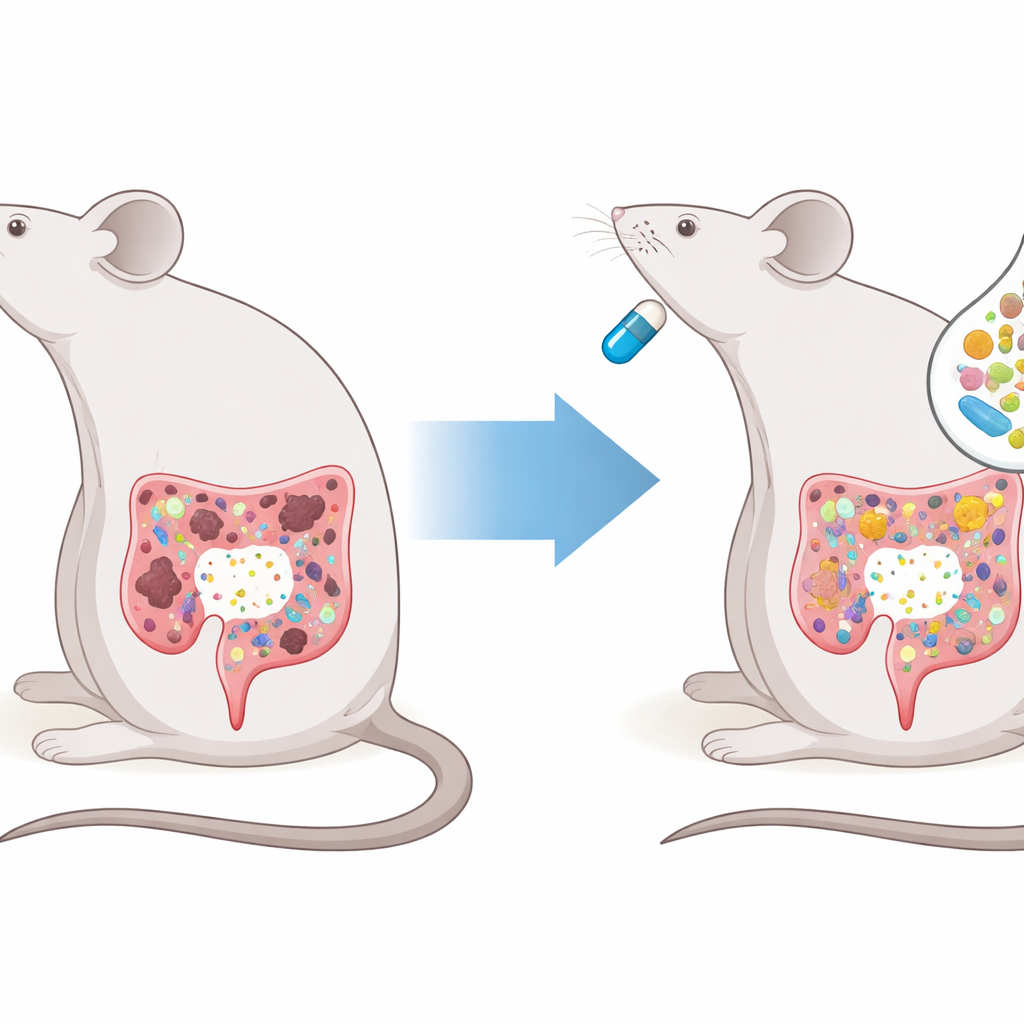
Researchers used a well-established mouse model of colorectal cancer and compared four groups: healthy mice, cancer-bearing mice, mice treated with the chemotherapy pill capecitabine, and mice treated with both capecitabine and fecal microbiota transplantation (FMT). FMT means delivering gut microbes from healthy donors into the colon, here by a gentle enema. Capecitabine alone cut down the number and size of cancer spots in the colon, but the combination therapy did even better. Mice receiving both treatments had fewer and smaller tumors, longer colons closer to normal, less tissue damage under the microscope, less weight loss, and a higher survival rate.
Fixing a disturbed gut community
Colon cancer and its chemical triggers disrupted the normal balance of gut bacteria in the mice. Beneficial groups that usually help break down fiber and produce protective short-chain fatty acids declined, while potentially harmful species that fuel inflammation and may damage DNA became more common. Capecitabine reduced several of these suspect bacteria but also further disturbed some helpful types, suggesting a mixed impact on the microbial community. Adding FMT shifted the system in a healthier direction: measures of richness and diversity rebounded, and the overall pattern of species moved closer to that seen in normal mice. Computer analysis of microbial genes suggested that disease-linked pathways became less active, while pathways tied to protection, repair, and controlled cell growth were restored.
How gut changes shape immune defenses
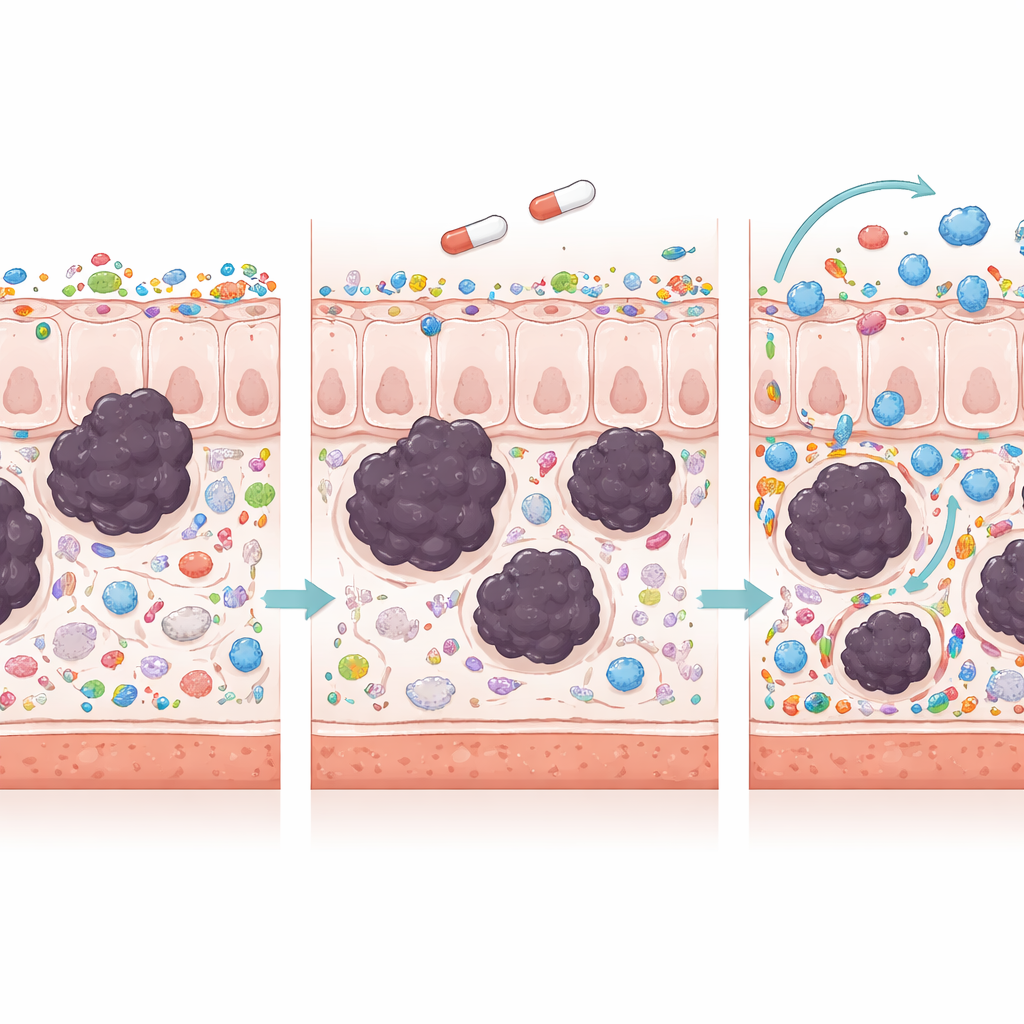
Because the immune system constantly scans the colon for abnormal cells, the team examined how immune cells behaved in the different groups. In untreated cancer-bearing mice, the colon wall was crowded with a mix of immune cells reflecting a chronic, disorganized battle. Some cell types that can directly kill cancer cells, such as certain T cells and neutrophils, were actually reduced. Capecitabine, as expected for chemotherapy, broadly lowered immune cell infiltration, which can help against cancer but also weakens defenses. When FMT was added, the picture changed: there was a selective increase in cancer-fighting cells, including helper and killer T cells, natural killer cells, and neutrophils, alongside a decrease in cells and macrophages associated with suppression and tumor support. This pattern suggests a more focused, effective attack on tumors rather than a chaotic inflammatory state.
Quieting harmful signals, boosting helpful ones
Cancer and disturbed gut microbes flood the colon environment with signaling molecules called cytokines, which can either fan the flames of disease or help control it. In the cancer-bearing mice, many inflammatory and tumor-promoting signals were elevated, including factors that drive blood vessel growth, block cell death, or help tumors evade immune attack through checkpoints such as PD-1 and PD-L1. Capecitabine alone dialed down many of these signals but also reduced some useful immune messengers. The combination of capecitabine and FMT went further: key inflammatory drivers dropped more strongly, while protective signals such as IL-10 and interferon-gamma rose, and molecules that guide immune cells into the tumor zone were increased. Statistical links between specific bacteria and specific cytokines hinted that certain friendly microbes may help reprogram the immune environment toward tumor control.
What this could mean for future treatment
Overall, the study shows that pairing a standard colon cancer drug with a carefully prepared transplant of healthy gut microbes can slow cancer progression in mice more effectively than chemotherapy alone. The dual approach works on two fronts: it restores a more balanced intestinal ecosystem and reshapes local immunity so that anti-cancer cells and signals are favored over tumor-promoting ones. While these results are in animals and FMT carries practical and safety considerations, they support the idea that treating colorectal cancer in the future may involve not only targeting tumor cells directly but also tending the “inner garden” of the gut to help the body fight back.
Citation: Arshad, M., Zhang, CY., Gao, ZK. et al. Capecitabine combined with fecal microbiota transplantation prevents colorectal cancer progression through correction of microbial dysbiosis and immune regulation. Sci Rep 16, 13531 (2026). https://doi.org/10.1038/s41598-026-43626-1
Keywords: colorectal cancer, gut microbiome, fecal microbiota transplantation, chemotherapy, immune response