Clear Sky Science · en
Exploring exosome-related genes as candidate biomarkers in primary immune thrombocytopenia through transcriptomics and preliminary experimental validation
Why this bleeding disorder matters
Bruising easily or experiencing frequent nosebleeds can sometimes signal a hidden problem with the blood’s platelets, the tiny cell fragments that help it clot. Primary immune thrombocytopenia (ITP) is one such condition, in which the body’s own defenses mistakenly destroy platelets. Doctors still diagnose ITP mainly by ruling out other causes because there are no simple, specific lab tests. This study asks whether tiny particles called exosomes, and the genes linked to them, could point the way to better blood tests and, eventually, new treatments.
Tiny carriers with big messages
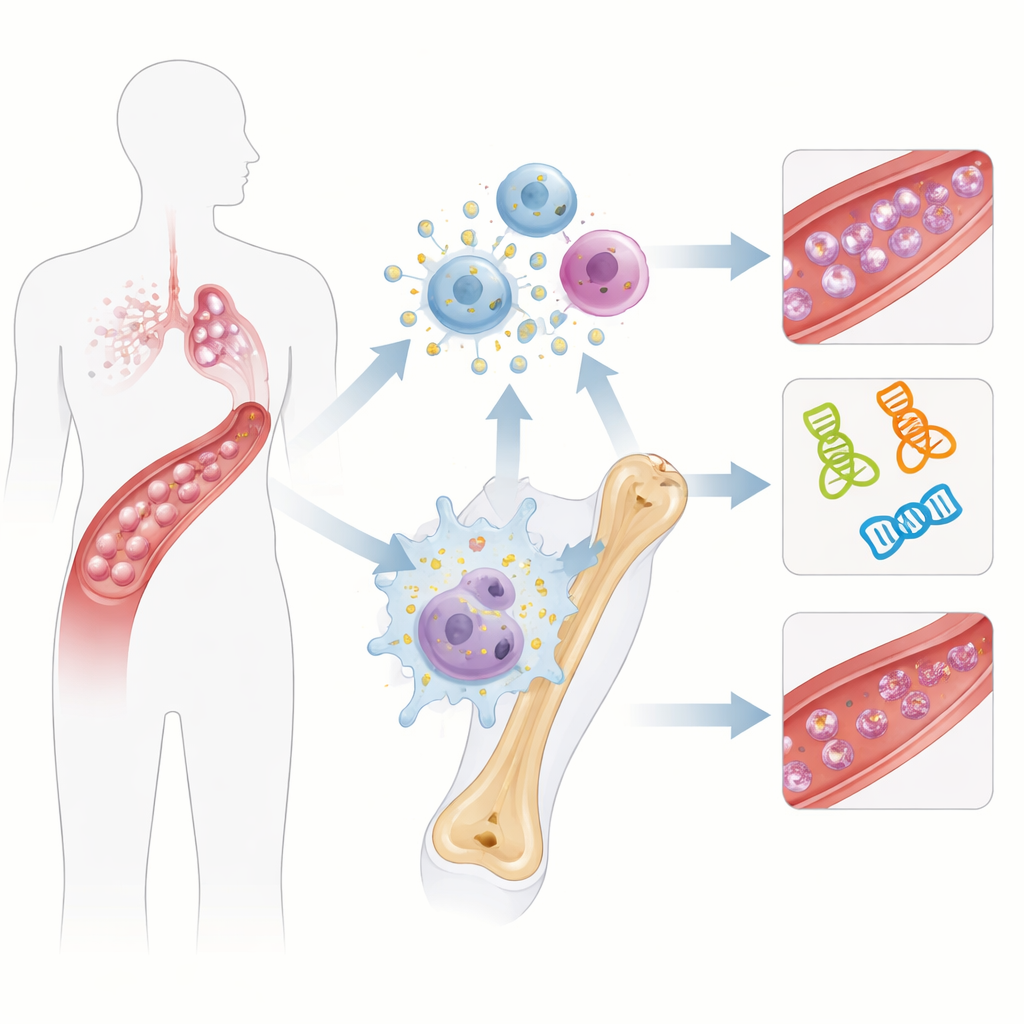
Exosomes are microscopic packets released by cells that ferry proteins and genetic material through the bloodstream, acting as couriers between cells. Earlier work suggested that in ITP, exosomes may carry signals that disturb the balance of the immune system and interfere with platelet production in the bone marrow. The authors reasoned that genes connected to exosomes might leave a recognizable fingerprint in the blood cells of people with ITP. By reading out which genes are more or less active, they hoped to uncover patterns that distinguish patients from healthy volunteers and offer clues to how the disease develops.
Sifting through thousands of genes
The team began with public databases containing gene activity profiles from T cells—a type of white blood cell—from people with ITP and from healthy controls. They compared these profiles to a curated list of genes known to be tied to exosomes. Using statistical tools, they first identified genes that were turned up or down in ITP. They then built networks showing which genes tend to switch on and off together, looking for large groups linked to exosome activity. From thousands of candidates, they narrowed the list down to 23 genes that were both altered in ITP and strongly connected to exosome-related networks.
Finding a core set of promising signals
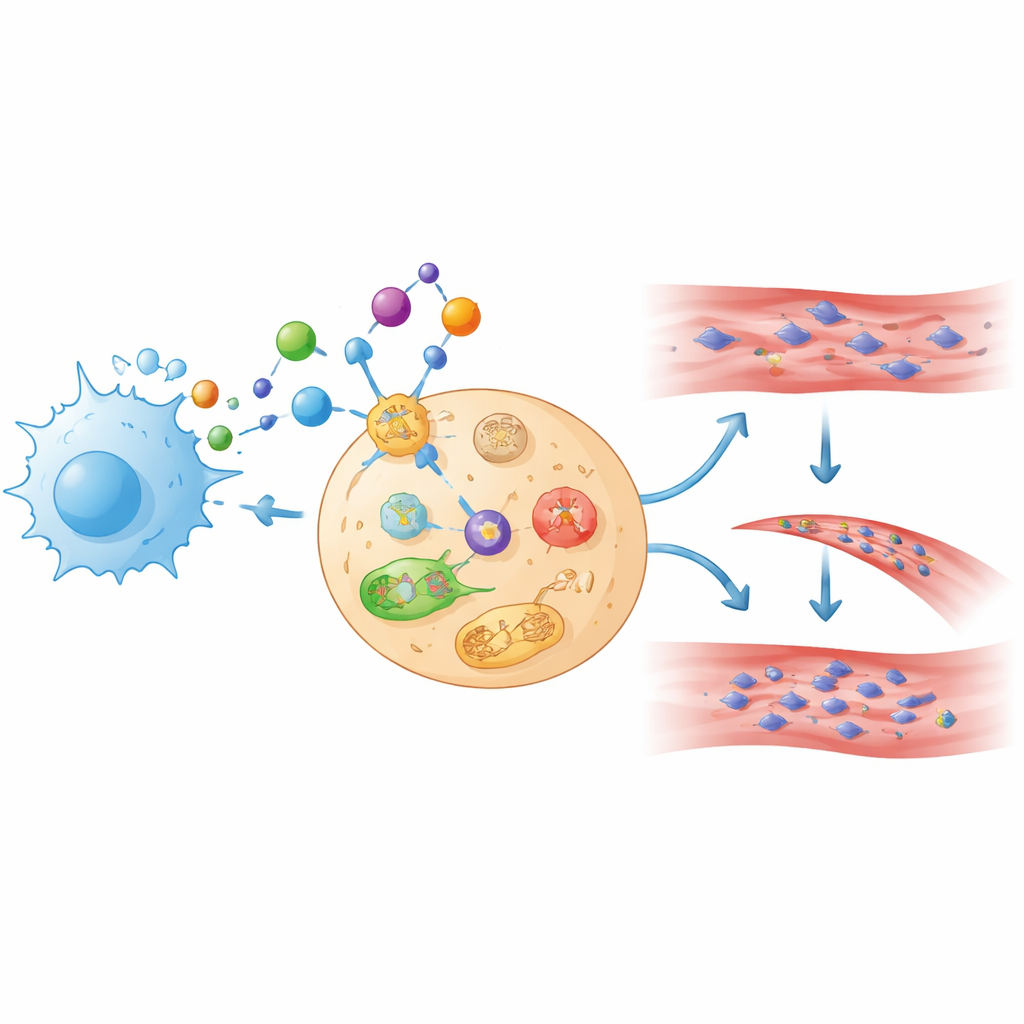
To refine this list further, the researchers applied two machine-learning methods designed to pick out the most informative features from complex data. Both methods independently pointed to the same four genes: GABARAPL1, SLC39A14, HIBADH, and GSR. These genes are involved in processes such as cellular recycling (autophagy), handling of the trace metal zinc, energy use, and protection against oxidative damage. The team then built a simple prediction tool that combined the activity levels of these four genes to estimate whether a sample came from a person with ITP or a healthy control. In the small dataset they used, this score separated the two groups reasonably well, suggesting that these genes capture important aspects of the disease.
Putting the candidates to the test
Bioinformatic predictions can be misleading if not checked in real-world samples, so the authors measured the activity of the four genes in blood from 20 ITP patients and 20 healthy volunteers. Three genes—GABARAPL1, SLC39A14, and GSR—were clearly less active in patients, while HIBADH did not show a consistent difference. The same three genes also behaved similarly in additional, independent gene datasets. Computer analyses hinted that they sit at the crossroads of pathways linked to RNA processing, cellular stress, and protein breakdown. Screening drug–gene databases and running docking simulations suggested that existing compounds might physically bind to proteins encoded by two of these genes, offering early hints for future drug repurposing studies, though no treatment recommendations can yet be made.
What this could mean for future care
This work does not deliver a ready-to-use diagnostic test, but it does spotlight three exosome-related genes—GABARAPL1, SLC39A14, and GSR—as especially promising leads. Their reduced activity in ITP patients, seen both in databases and in actual blood samples, suggests they may help explain why platelets are destroyed or fail to develop properly. Because the study involved relatively few participants and relies heavily on computational methods, its findings are best viewed as a starting point for more targeted laboratory and clinical research. If future studies confirm and extend these results, measuring the activity of these genes, or the exosomes that carry their signals, could eventually help doctors diagnose ITP more accurately and design treatments that restore a healthier balance in the immune system.
Citation: Lou, F., Chen, Z., Yuan, Z. et al. Exploring exosome-related genes as candidate biomarkers in primary immune thrombocytopenia through transcriptomics and preliminary experimental validation. Sci Rep 16, 14322 (2026). https://doi.org/10.1038/s41598-026-43618-1
Keywords: immune thrombocytopenia, exosomes, biomarkers, platelet disorders, gene expression