Clear Sky Science · en
Development and validation of an interpretable prediction model for the risk of unplanned reoperation in patients underwent intracranial tumor surgery
Why another brain surgery still matters
For people facing brain tumor surgery, the operation is only the beginning of a long and delicate recovery. One of the most serious setbacks is having to return unexpectedly to the operating room soon after the first procedure. This study from a major hospital in China asks a practical question with real human consequences: can doctors use information they already collect to spot, early on, which patients are most likely to need an unplanned second brain surgery, and act quickly enough to prevent it?
Problems after brain tumor surgery
Brain and central nervous system cancers are among the most devastating illnesses worldwide, with hundreds of thousands of new cases and deaths each year. Surgery is often the key step in treatment, giving doctors a chance to remove as much of the tumor as safely possible. Yet even when the operation goes well, serious complications such as bleeding, infection, fluid buildup, or swelling can force surgeons to operate again within a month. These unplanned reoperations are stressful, risky, and costly, and they are used internationally as a measure of surgical quality. Reported rates in brain tumor patients range from about 3 to 17 percent, but until now doctors have had only rough tools for estimating who is most at risk.
Turning hospital records into warnings
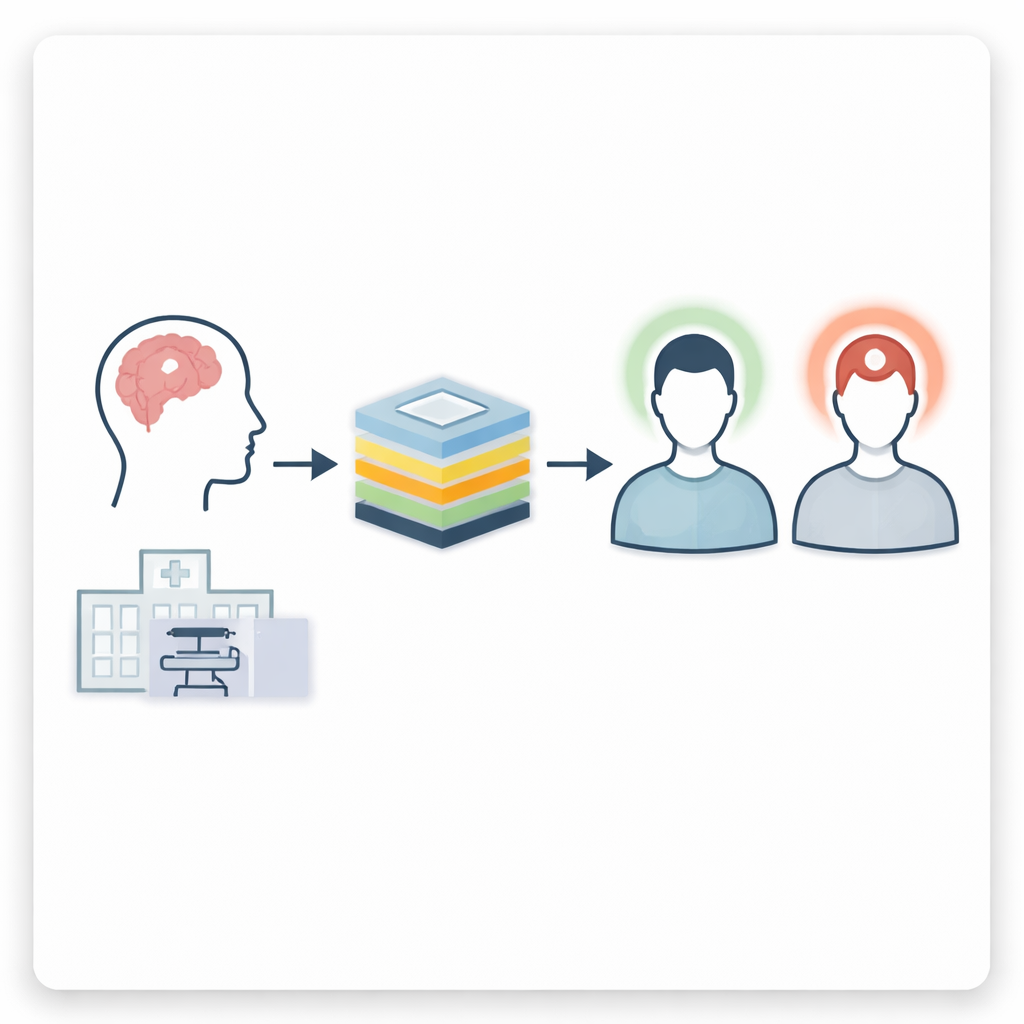
The research team examined electronic records from 825 adults who underwent intracranial tumor surgery at the First Affiliated Hospital of Xi’an Jiaotong University between early 2023 and early 2024. After applying strict inclusion criteria, 567 patients remained, of whom 49 (about 9 percent) needed an unplanned second operation within 30 days. The scientists split this group into a larger training set and a smaller test set, then fed dozens of routine clinical details into several computer-based prediction methods. These details included age, sex, other illnesses such as high blood pressure and diabetes, a short frailty score that reflects overall resilience, tumor type and location in the brain, and features of the surgery itself, such as how long it lasted and whether the patient went to intensive care.
Finding the most telling clues
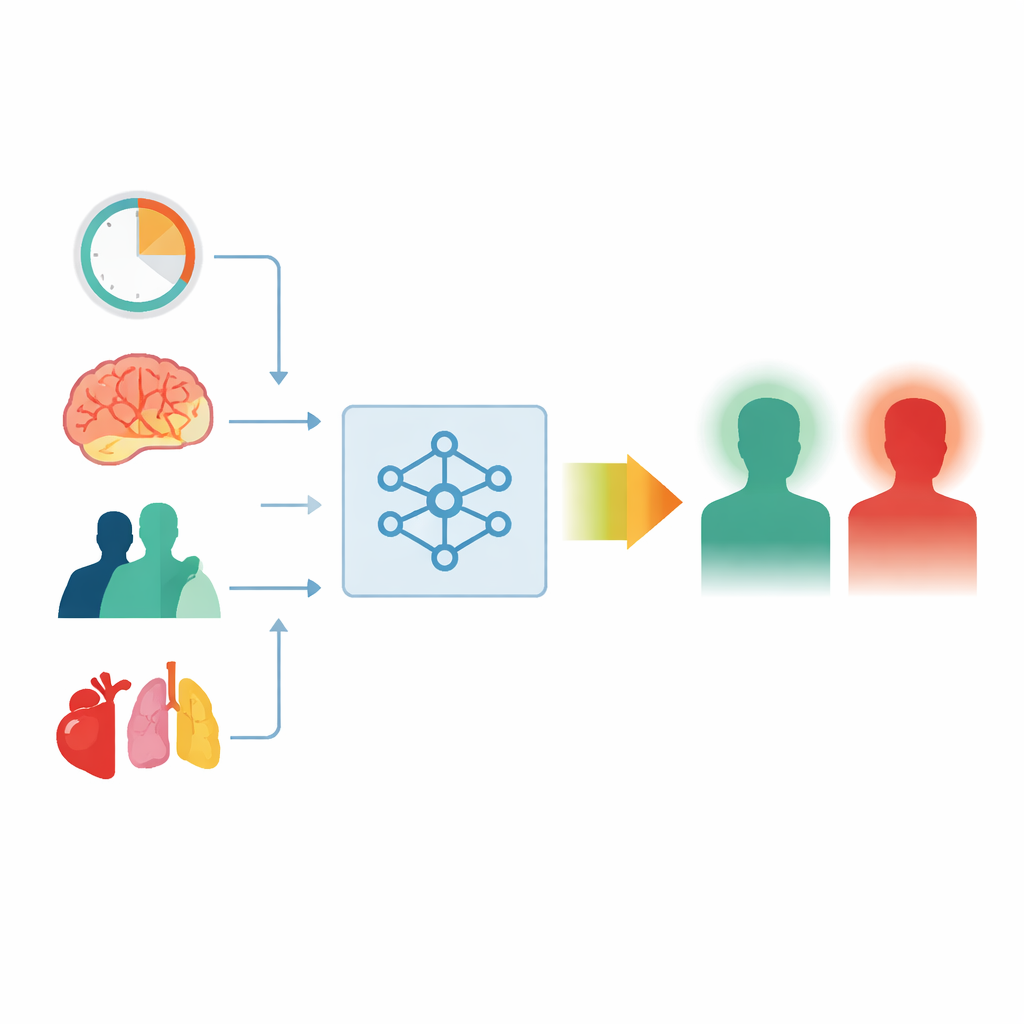
To avoid overloading their models with weak signals, the team first used a statistical method called LASSO to sift out the most informative predictors. This left 11 key factors, including duration of surgery, tumor location, tumor type, whether the tumor was benign or malignant, the frailty index, diabetes, heart failure, and need for intensive care. Five different prediction approaches were then built and compared, ranging from familiar logistic regression to more complex machine learning techniques such as random forests and gradient boosting. Surprisingly, the simplest model, logistic regression, performed the best. It correctly distinguished high- from low-risk patients with an accuracy measure (AUC) of 0.84 in the training group and 0.77 in the test group, with predicted risks closely matching what actually happened.
Making black boxes understandable
Doctors are understandably wary of computer systems that give answers without explanations. To open this “black box,” the researchers used a method known as SHAP, which shows how each factor pushes an individual patient’s risk up or down. Across the whole group, longer surgeries, certain hard-to-reach tumor locations, higher frailty scores, and malignant tumor types were the strongest signals of trouble ahead. At the bedside, SHAP diagrams for single patients revealed, for example, how a short operation and low frailty can offset other concerns, or how a combination of long surgery, diabetes, and intensive care stay can push risk very high. To bring this into daily practice, the team wrapped the final model into a simple web tool: clinicians can enter the 11 features at the time the patient leaves the operating room and receive an instant risk estimate along with a visual breakdown of why.
What this means for patients and care teams
The study shows that information already collected in everyday hospital care can be turned into a clear, understandable risk score for needing an unexpected second brain operation. Although the work comes from a single center and still needs to be tested in other hospitals and countries, it suggests a future in which surgical teams can quickly flag vulnerable patients, watch them more closely, and adjust treatment plans to head off serious complications. For patients and families, that could translate into fewer surprises after an already daunting surgery, shorter hospital stays, and a better chance that one brain operation will be enough.
Citation: Ye, X., Li, H., Zhang, X. et al. Development and validation of an interpretable prediction model for the risk of unplanned reoperation in patients underwent intracranial tumor surgery. Sci Rep 16, 14448 (2026). https://doi.org/10.1038/s41598-026-43594-6
Keywords: brain tumor surgery, unplanned reoperation, risk prediction, machine learning, frailty