Clear Sky Science · en
Application of MALDI-TOF-MS in the surveillance of microbial diversity in butter production: a case study of Polish dairy
Why the Bugs in Butter Matter
Butter looks simple: a familiar yellow block on the breakfast table. But behind every slice lies a long journey from cow to carton, and along that path tiny living passengers travel with the milk. This study follows those microbes step by step in a Polish dairy, using a rapid lab technique to see which organisms survive, change, or disappear as milk is turned into butter. The results show where contamination really happens, how well pasteurization works, and why careful hygiene keeps dairy foods safe.
Following Milk from Cow to Butter
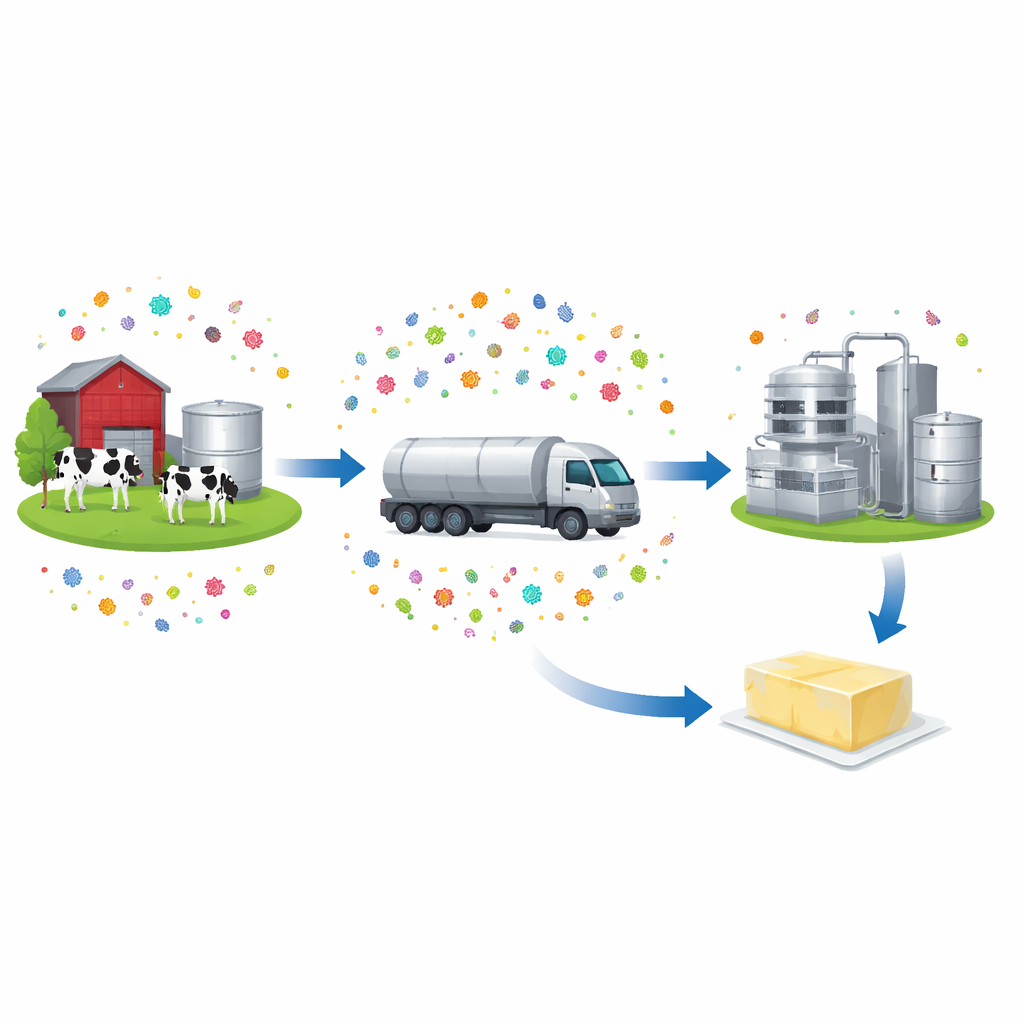
The researchers set out to monitor the microbiological safety of butter production from start to finish: from cows on the farm, through storage and transport, to processing in the dairy plant and the final butter. They focused on “culturable” microorganisms—those that can grow on standard lab media—because these are most likely to cause spoilage or disease. Over two months they collected 400 raw milk samples directly from cow udders and 63 samples from nine stages of the butter line, including farm cold rooms, tanker trucks, storage tanks, cream before and after pasteurization and crystallization, buttermilk, and finished butter.
A Fast Fingerprint for Invisible Life
To identify microbes quickly, the team used MALDI-TOF mass spectrometry, a method that shines a laser on a tiny amount of a colony and reads the pattern of its proteins like a barcode. Matching these “fingerprints” against a database let them name bacteria and fungi in minutes instead of days. In total they analyzed more than six thousand colonies and confidently identified 146 different microorganisms, mostly bacteria but also several yeasts. For a subset of strains, especially rare or doubtful ones, they confirmed results with a more traditional approach based on reading pieces of genetic material (16S rRNA sequencing), which largely supported the mass spectrometry identifications.
What Lives in Fresh Milk
Raw milk turned out to host a rich and mostly harmless—but not entirely innocent—community. Each sample carried on average seven to eight species, dominated by Gram-positive bacteria from groups called Staphylococcus and Corynebacterium, along with Aerococcus and the species Bacillus licheniformis. Some of these are linked to udder infections (mastitis) and can lower milk quality, while others may come from the animals’ skin or the barn environment. Potentially harmful Gram-negative bacteria such as Escherichia coli and Pseudomonas were present in a minority of samples but signaled hygiene problems when found. The mix of species shifted over the sampling period, reflecting changes in barn conditions such as springtime temperature rises.
Where Contamination Peaks and How Heat Helps
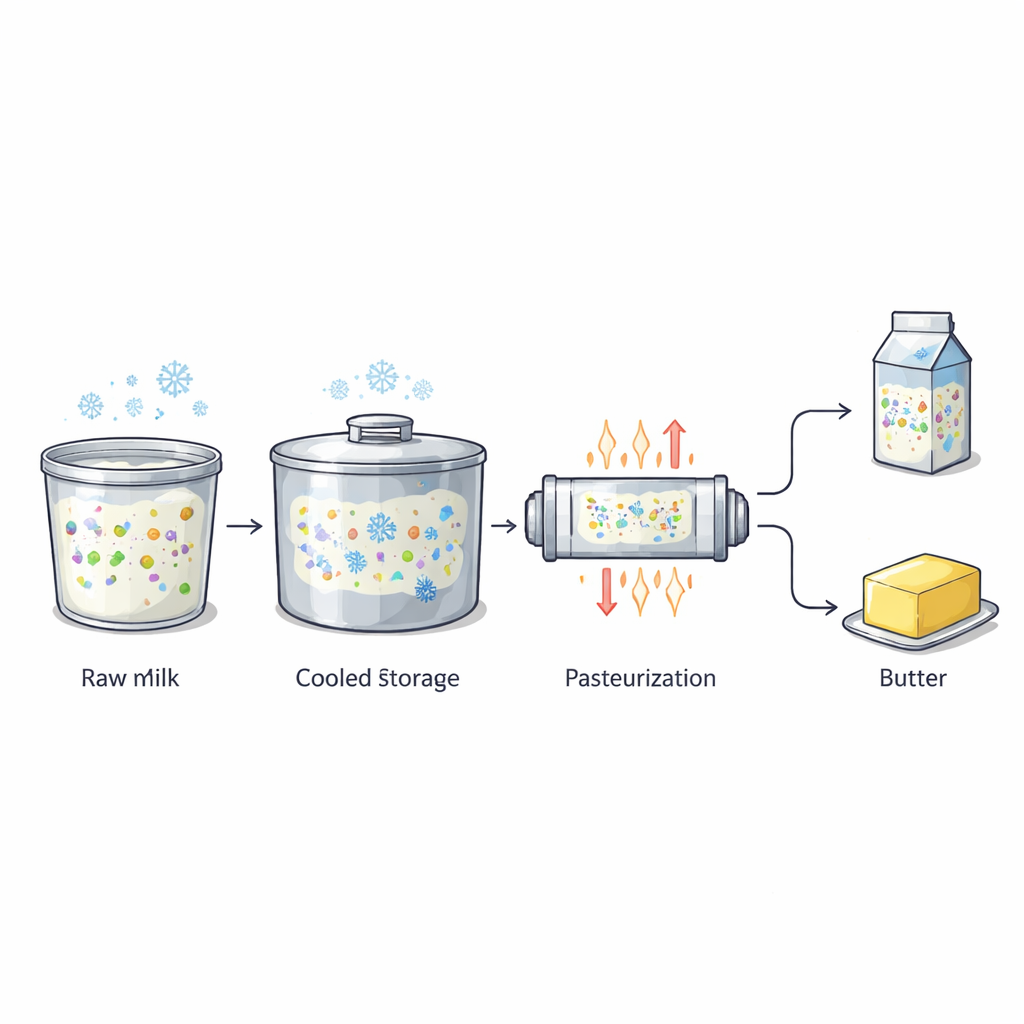
As milk moved from farm to factory, its microbiological profile changed in telling ways. The greatest diversity and highest counts appeared not at the cow, but in milk traveling inside tanker trucks, where dozens of additional bacterial and fungal species showed up compared with fresh milk. Cold storage, while slowing some germs, favored cold-loving species that can spoil milk during transport. Pasteurization—brief heating of the cream—dramatically reduced both the number of species and their balance, wiping out most organisms. Still, some heat-tolerant and spore-forming bacteria, such as B. licheniformis and certain Micrococcus strains, survived and could be found in later stages and in buttermilk. Butter itself, thanks to its high fat content, low water, and clean packaging, showed no detectable microbial growth.
What This Means for Everyday Dairy Safety
For non-specialists, the key message is that the safety of butter and related products depends heavily on what happens before the cream ever reaches the pasteurizer. Raw milk quality, milking hygiene, cleaning of transport tankers, and control of storage temperatures shape which microbes enter the plant and how many chances they have to grow. The study shows that a fast identification tool like MALDI-TOF can scan many samples cheaply and quickly, flagging trouble spots such as inadequately cleaned tankers or persistent heat-resistant strains. Used routinely, this approach can help dairies keep harmful microbes out of the products that end up on our tables, while refining processing steps to balance safety, shelf life, and quality.
Citation: Sibińska, E., Adamczyk, I., Ludwiczak, A. et al. Application of MALDI-TOF-MS in the surveillance of microbial diversity in butter production: a case study of Polish dairy. Sci Rep 16, 13092 (2026). https://doi.org/10.1038/s41598-026-43570-0
Keywords: dairy microbiology, butter production, milk safety, pasteurization, MALDI-TOF