Clear Sky Science · en
Regulation of the AKT/P53 signaling pathway by translated control tumor protein inhibits apoptosis and promotes hyperplasia of the mammary glands
Why breast tissue overgrowth matters
Many women experience breast pain, lumps, or a sense of fullness that turns out not to be cancer, but a condition called mammary gland hyperplasia—an overgrowth of normal breast tissue. Although considered "benign," this problem can be painful, distressing, and is increasingly common in young women. It can also raise the risk of later breast cancer. The study summarized here asks a simple but important question: what is happening inside breast cells that pushes them toward this abnormal overgrowth, and could turning a single key molecule up or down help bring the tissue back to normal?
A closer look at a quiet troublemaker
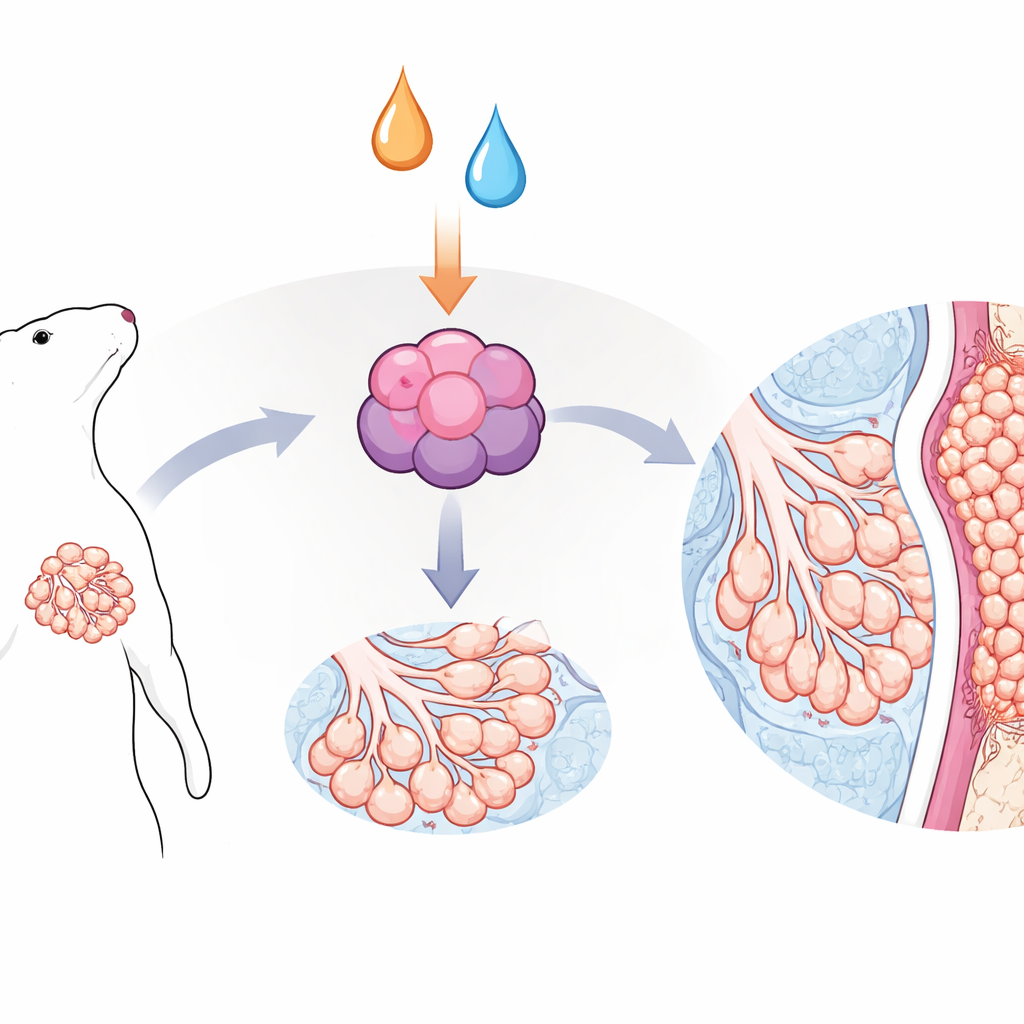
The researchers focus on a protein with a long name—translationally controlled tumor protein, or TCTP—that is found in nearly all living cells and is known to help cells grow and avoid self-destruction. Earlier work showed that TCTP levels are high in both mammary gland hyperplasia and breast cancer, hinting that it could be a common driver of unwanted cell growth. To test this idea in a living organism rather than in a dish, the team used specially bred mice in which TCTP could be either removed or boosted only in the mammary glands, leaving the rest of the body mostly unchanged.
Building a realistic model of breast overgrowth
To mimic the hormonal environment that often precedes breast problems in women, the scientists treated female mice with estrogen followed by progesterone, two key reproductive hormones. This treatment reliably triggered mammary gland hyperplasia: the ducts became widened, the number of tiny milk-producing sacs increased, and a marker of cell proliferation called Ki67 rose sharply. When TCTP was missing in the mammary tissue, these changes were noticeably milder; when TCTP was overproduced, the tissue changes were more severe. Blood tests showed that hormone imbalances—higher estrogen, follicle-stimulating hormone, and luteinizing hormone, plus lower progesterone—were also influenced by TCTP levels, and so were the receptors in the breast that sense these hormones.
How TCTP tips the balance between cell death and growth
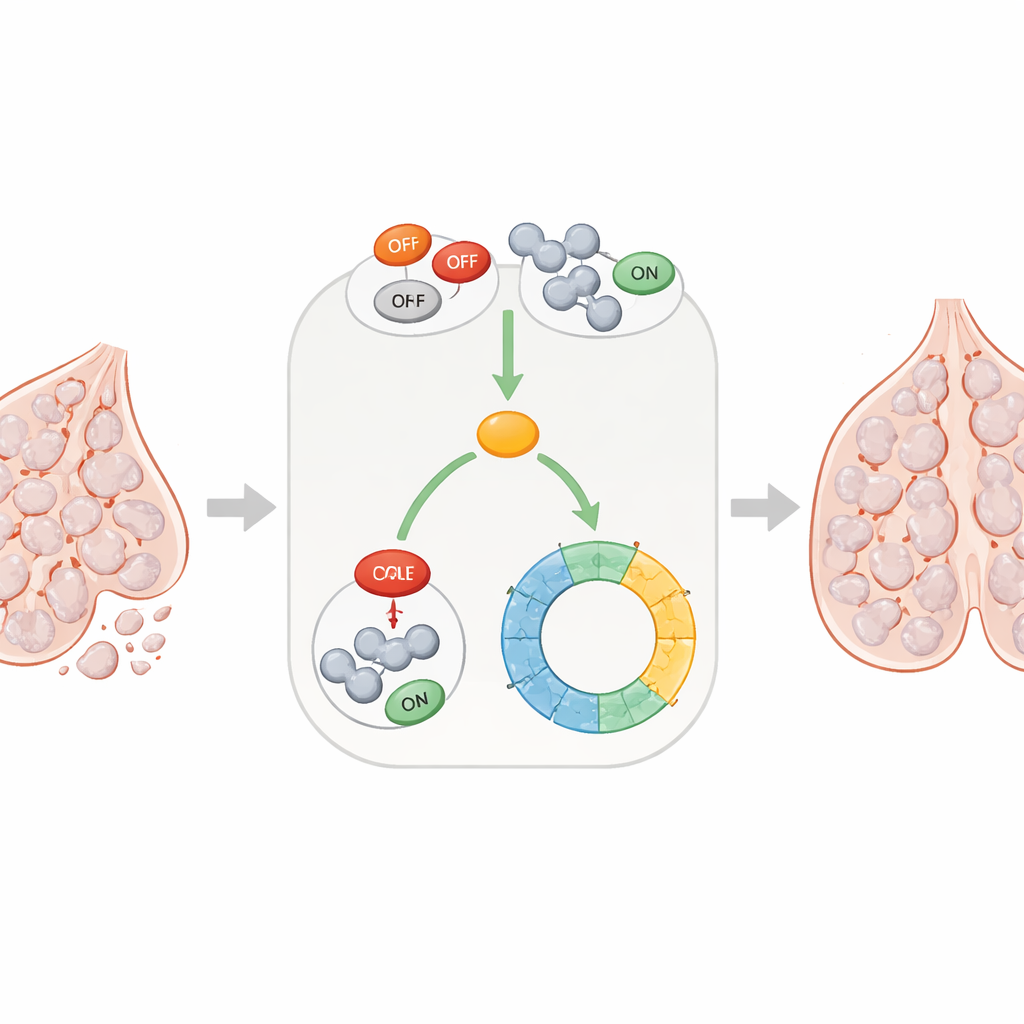
The team then dug into how TCTP interacts with internal safety circuits that normally keep cell growth in check. They examined a well-known pathway centered on two proteins: AKT, which encourages survival and growth, and P53, often called the genome’s "guardian," which can trigger cell death or halt the cell cycle when something goes wrong. In mouse mammary glands with hyperplasia, TCTP and activated AKT were elevated, while P53 was reduced. Removing TCTP reversed this pattern: AKT activity dropped and P53 rebounded; overproducing TCTP did the opposite. Downstream, the cell’s death machinery shifted as well: molecules that protect cells from dying (Bcl-2 and phosphorylated BAD) rose when TCTP was high, while a pro-death molecule (Bax) fell, and these trends flipped when TCTP was knocked out.
Driving the cell cycle into overdrive
The researchers also looked at the genes that control how quickly cells move through the cycle of growth and division. In hyperplastic mammary glands, several drivers of cell-cycle progression—including Cyclin D1 and the enzymes CDK4 and CDK6—were turned up, while P27, a natural brake, was turned down. Again, dialing down TCTP softened this pattern, lowering the drivers and boosting the brake; ramping up TCTP amplified it. These results suggest that TCTP not only helps cells avoid programmed death but also pushes them to divide more rapidly, together fueling the buildup of excess breast tissue.
What this means for women’s health
In everyday terms, this study shows that TCTP behaves like a master switch in the mammary gland: when it is turned up, it strengthens growth signals, weakens internal safeguards, and cooperates with hormonal imbalances to produce painful overgrowth of breast tissue; when it is turned down, these processes calm and tissue changes are eased. By mapping how TCTP feeds into the AKT and P53 pathways, the work points to a new strategy for prevention or treatment—drugs that gently lower TCTP activity or disrupt its key interactions might one day help manage mammary gland hyperplasia and possibly reduce the risk of progression to breast cancer, offering a more targeted alternative to current hormone therapies or surgery.
Citation: Ma, MY., Wang, S., Jin, XM. et al. Regulation of the AKT/P53 signaling pathway by translated control tumor protein inhibits apoptosis and promotes hyperplasia of the mammary glands. Sci Rep 16, 12830 (2026). https://doi.org/10.1038/s41598-026-43565-x
Keywords: mammary gland hyperplasia, breast cell signaling, TCTP protein, cell growth and death, breast cancer risk