Clear Sky Science · en
Design optimization and performance evaluation of semi-prefabricated UHPC-RC metro station structures
Why shrinking subway stations matters
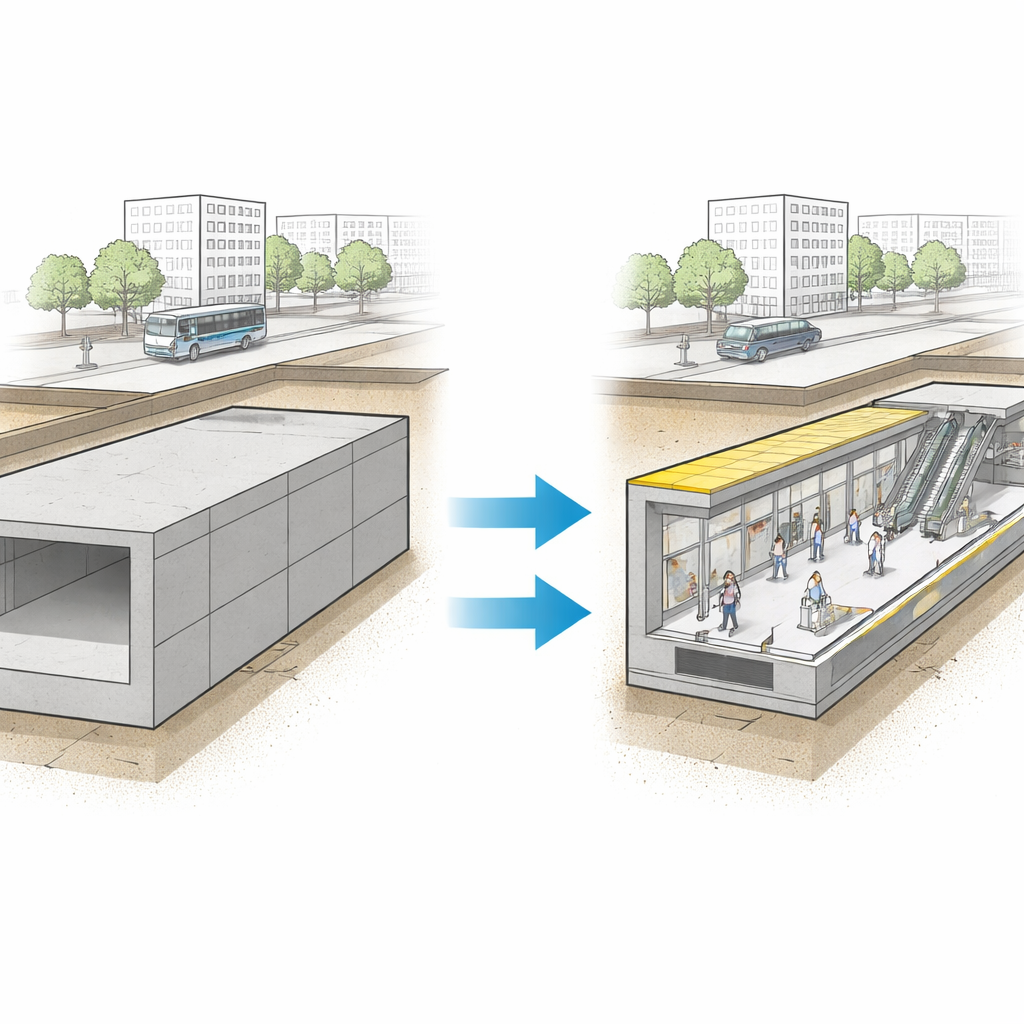
As cities grow denser, we keep digging bigger and deeper spaces for underground trains. That extra room helps move crowds, but it comes at a cost: thicker walls, longer construction times, more disruption at street level, and less space left over for shops, equipment rooms, and passengers. This study explores a new way to build metro stations that makes the structure slimmer, faster to construct, and more durable, without compromising safety.
A new kind of underground building shell
The researchers focus on a material called ultra-high performance concrete, or UHPC. Unlike ordinary concrete, UHPC is engineered with extremely dense particles and steel fibers so that it becomes both very strong and highly resistant to cracking and water penetration. The team combines thin factory-made UHPC panels with ordinary cast-in-place reinforced concrete to form a “composite” station box: UHPC pieces act as permanent outer shells, while regular concrete is poured inside on site. This semi-prefabricated approach aims to capture the best of both worlds—UHPC’s strength and durability, and the flexibility and lower cost of conventional concrete.
From factory to finished station
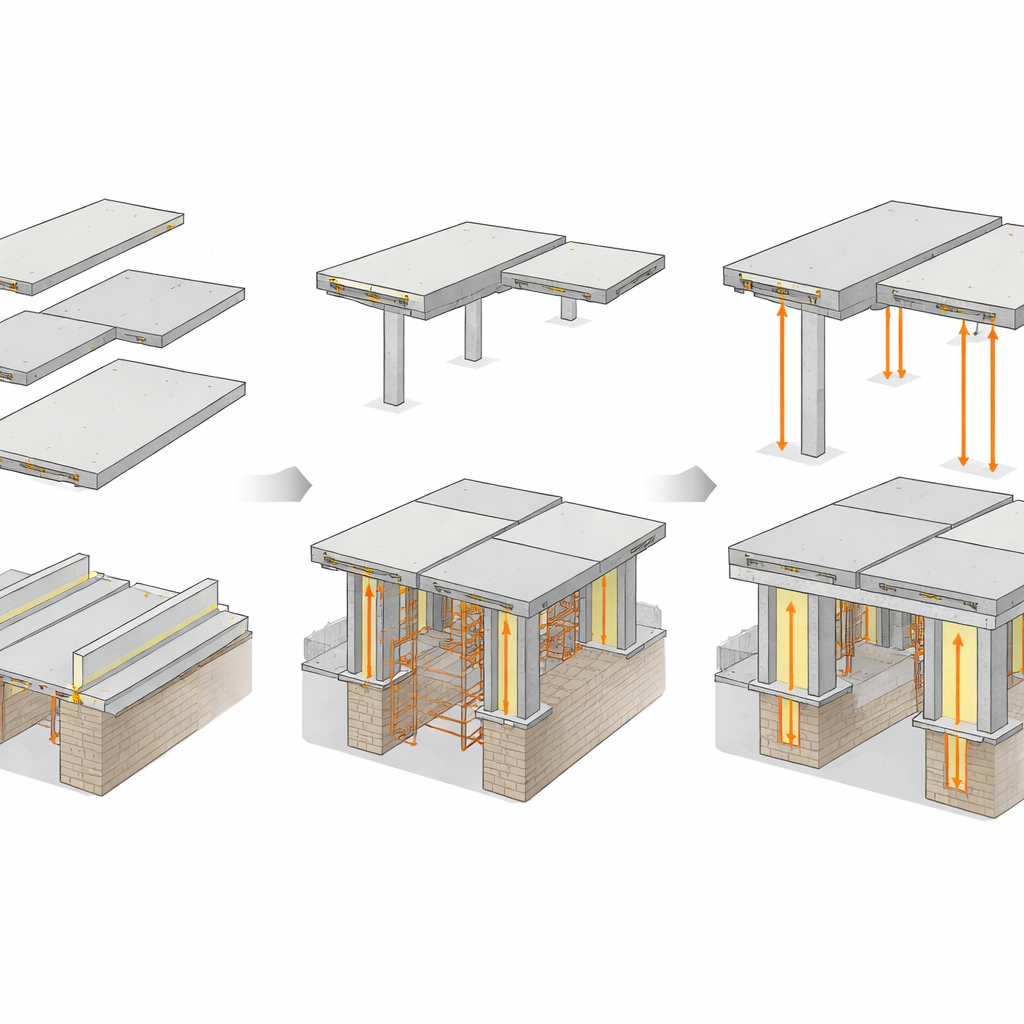
Instead of building the entire station frame in a muddy excavated pit using temporary formwork, the new method brings many elements in ready-made. After the base slab and bottom beams are poured, UHPC columns and sidewall panels are lifted into place. Hollow UHPC beams and slab formwork are then hoisted and supported, creating a rigid skeleton. Regular concrete is poured into and on top of these shells to form the final beams, floors, roof, and walls. Because the UHPC panels stay in place permanently, there is much less temporary support work and no need to strip large areas of formwork at the end, which shortens construction and reduces on-site noise, dust, and waste.
Thinner structure, more usable space
By relying on UHPC’s superior strength, the researchers redesign the roof and middle floors so they can be noticeably thinner while still carrying the same loads from soil, water, equipment, and crowds. In their case study station in Qingdao, China, the roof slab becomes about 12% thinner and the middle floor about 13% thinner, while the main beams also shrink in depth. Overall, the underground box occupies about 1.8% less space in cross-section, yet the usable area for people and facilities slightly increases and the fraction of space that can be actively used improves. The main structure can also be finished roughly four months sooner than with the traditional all-cast-in-place method, a significant time saving for a busy urban corridor.
Putting strength and safety to the test
To make sure the leaner station remains safe over decades of service, the team runs detailed computer simulations and engineering checks. Using three-dimensional finite element models, they examine how the composite station responds during construction, when temporary loads can be severe, and during long-term operation under soil pressure, water pressure, and passenger crowds. They track stresses, deformations, and any onset of permanent damage in the UHPC shells and the concrete core. The results show only tiny deformations—on the order of a few millimeters—and almost no plastic damage. When they compare the new station to a conventional one, the UHPC-based design consistently shows higher safety reserves against bending, shearing, and cracking, despite using less material.
What this means for future metro projects
In plain terms, the study finds that a metro station built with thin UHPC shells and regular concrete infill can be slimmer, roomier, and quicker to build, while still being safer and more durable than a traditional station. The structure keeps water out more effectively, protects its steel reinforcement better, and tolerates everyday loads with comfortable margins. Although these conclusions are based on a specific example and advanced simulations, they point toward a practical way to upgrade underground transit infrastructure, making better use of scarce urban space and reducing construction impacts on the city above.
Citation: Lei, G., Hua, F., Yang, Z. et al. Design optimization and performance evaluation of semi-prefabricated UHPC-RC metro station structures. Sci Rep 16, 12976 (2026). https://doi.org/10.1038/s41598-026-43527-3
Keywords: metro station design, ultra-high performance concrete, prefabricated construction, underground structures, urban rail transit