Clear Sky Science · en
Association of aerobic capacity and handgrip strength in obese and non-obese children aged 10–15 years in Riyadh region, KSA–a cross sectional study
Why this study matters for kids’ health
Parents, teachers, and health professionals around the world worry about how extra weight in childhood shapes future health. This study from Riyadh, Saudi Arabia, looks closely at two simple signs of fitness in children aged 10–15: how long they can run back and forth in a standard school fitness test, and how strongly they can squeeze a handgrip device. By comparing these measures in obese and non-obese children, the researchers ask a practical question: does being strong for your size matter more than just being strong, and how does that relate to heart and lung fitness?
Looking at schoolchildren in a changing society
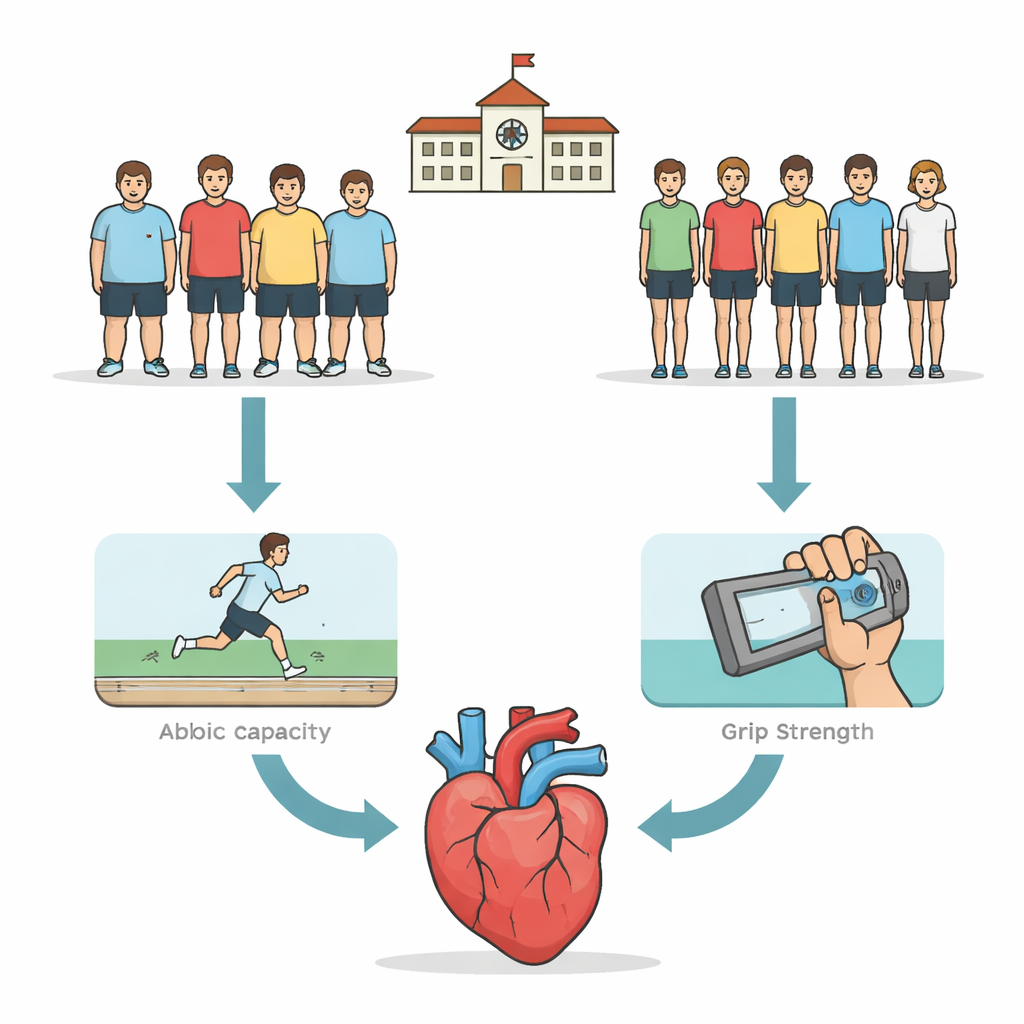
Saudi Arabia has undergone rapid lifestyle changes, with more time spent sitting and easier access to high-calorie foods. In cities like Riyadh, many children now live with overweight or obesity, raising alarms about long-term heart and metabolic diseases. To get a clear picture, the researchers tested 200 schoolchildren, evenly split between obese and non-obese, and balanced for age and sex. They focused on a key age window, 10–15 years, when bodies are growing quickly and lifelong habits are being formed. The goal was not only to see who was fitter, but also to understand how body weight, strength, and endurance are linked in this local Middle Eastern context.
How fitness and strength were measured
To gauge heart-and-lung fitness, the children performed the familiar 20-meter shuttle run. They ran back and forth between two lines, following beeps that gradually sped up, until they were too tired to keep pace. From the number of laps completed, the researchers estimated each child’s maximum oxygen use, a standard marker of aerobic capacity. To assess strength, the children squeezed a handheld device as hard as they could with each hand; the best readings from right and left were averaged to give overall grip strength. The team then looked at strength in two ways: the raw force (absolute strength) and that same force divided by body weight (relative strength), which reflects how strong a child is for their size. They used statistical tests and regression models to see how these measures related, while accounting for age and sex.
What the results revealed about weight, strength, and endurance
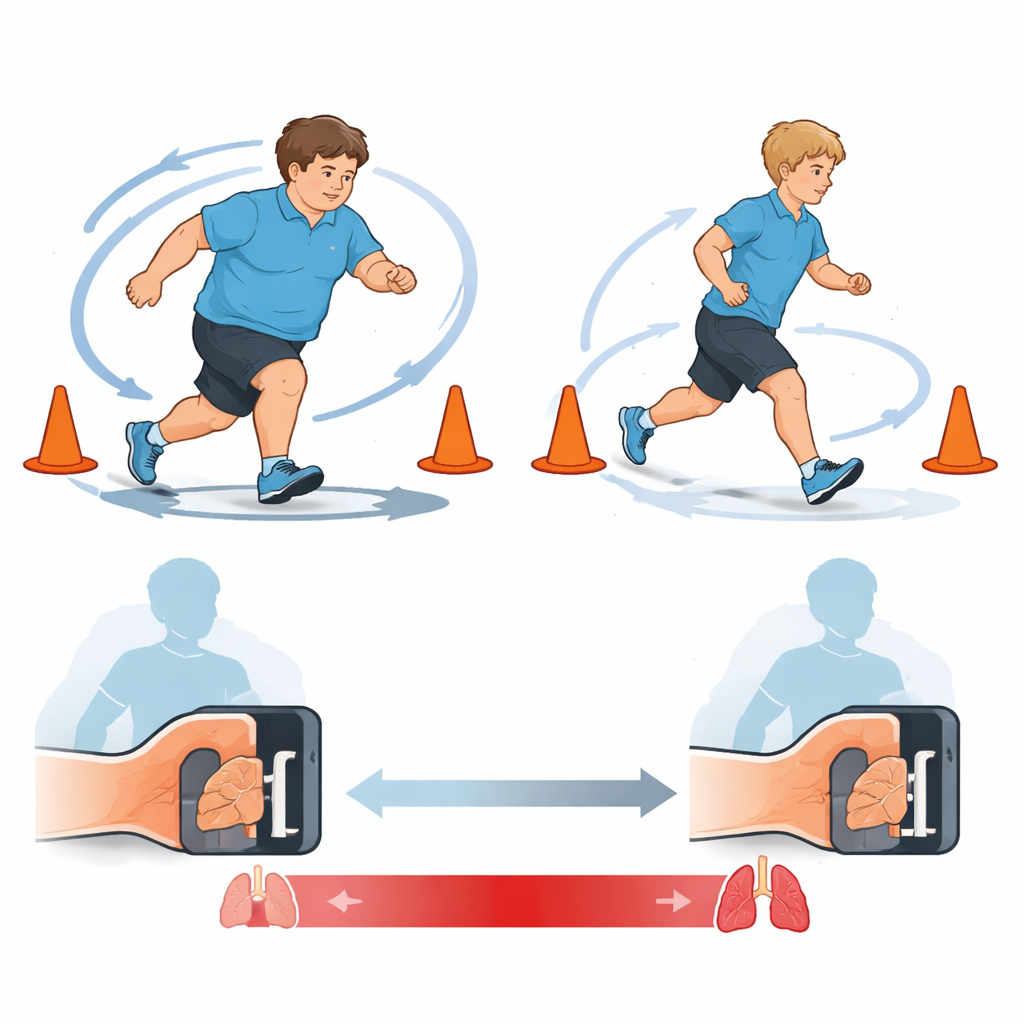
The findings painted a clear and somewhat paradoxical picture. Obese children were significantly less fit in the shuttle run and had lower estimated aerobic capacity than their non-obese peers. However, they actually showed higher absolute grip strength: on average, they could squeeze harder. Once strength was adjusted for body weight, the pattern flipped. Obese children were notably weaker relative to their size, meaning their muscles had to carry more weight for each unit of force they could produce. Across both groups, children who were stronger—especially those with higher relative strength—tended to have better aerobic capacity. Statistical models showed that strength relative to body weight predicted about half of the differences in aerobic fitness, while higher body mass index was strongly linked to poorer aerobic fitness when analyzed in a separate model.
Why being strong for your size matters
The study highlights why relative strength is more than just a number on a test sheet. Daily activities like running, climbing stairs, or playing games require moving one’s own body through space. A child who is heavy but not proportionally strong will tire more quickly, may find movement uncomfortable, and could be less inclined to be active. The Riyadh data suggest that this mismatch—low strength relative to body mass—helps explain why obese children show poorer endurance, even when their raw grip strength looks impressive. By distinguishing between absolute and relative strength, the researchers show that focusing on how efficiently muscles move the body is key to understanding children’s functional fitness.
What this means for helping children stay healthy
For families, schools, and health planners, the takeaway is straightforward. Programs for children with obesity should not rely on running and other endurance exercises alone. This study shows that improving strength relative to body weight is strongly tied to better aerobic fitness. Age-appropriate resistance exercises—such as body-weight movements, light weights, or elastic bands—can help children build the muscle needed to move more easily and confidently. In Saudi Arabia and elsewhere, combining regular aerobic activity with strength training in schools and community programs may help children not only lose excess fat but also become functionally stronger, making it easier for them to stay active and protect their hearts and metabolism over the long term.
Citation: Nambi, G., Alghadier, M., Vellaiyan, A. et al. Association of aerobic capacity and handgrip strength in obese and non-obese children aged 10–15 years in Riyadh region, KSA–a cross sectional study. Sci Rep 16, 13818 (2026). https://doi.org/10.1038/s41598-026-43515-7
Keywords: childhood obesity, aerobic fitness, muscular strength, Saudi Arabia, school-based exercise