Clear Sky Science · en
Glucocorticoid sparing in rheumatoid arthritis patients treated with Janus kinase inhibitors: insights from the Japanese patient registry
Why cutting back on steroid pills matters
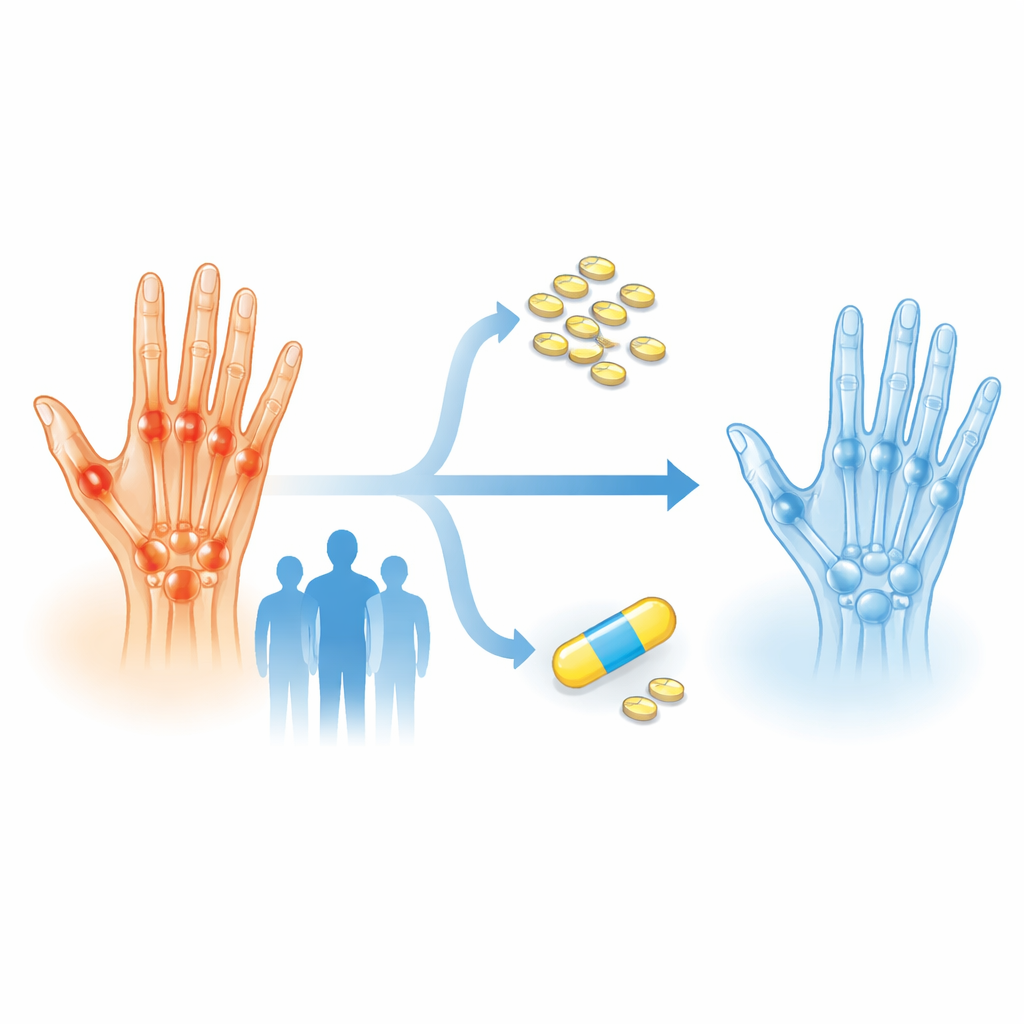
Many people with rheumatoid arthritis rely on steroid pills to quickly calm painful, swollen joints. These drugs, called glucocorticoids, can be lifesavers during flares but carry serious long-term risks such as fragile bones, infections, and heart problems. Doctors therefore look for treatments that control arthritis well enough that patients can lower or even stop steroid use. This study from a large Japanese registry asks whether a newer class of medicines, Janus kinase inhibitors, can help patients reach that goal in everyday clinical practice.
Arthritis, quick fixes, and long-term risks
Rheumatoid arthritis is an autoimmune disease in which the immune system attacks the lining of the joints, leading to chronic pain, swelling, and ultimately joint damage and disability. The cornerstone of treatment is disease-modifying anti-rheumatic drugs, which work on the underlying immune problem but may take weeks to show their full effect. In the meantime, doctors often prescribe low-dose glucocorticoids for fast relief. Guidelines recommend using these steroids only briefly and tapering them as soon as possible, because even daily doses above a few milligrams are linked to fractures, heart disease, and infections. For some patients, however, reducing steroids triggers flares, creating a difficult balance between symptom control and safety.
A nationwide snapshot of real patients
The researchers analyzed data from the 2022 National Database of Rheumatic Diseases in Japan, known as NinJa, one of the largest rheumatoid arthritis registries in the country. They focused on 8,555 adults whose clinical information was complete, including joint activity scores, physical function, and all current medications. About a quarter of these patients were taking glucocorticoids, at an average dose of just under 4 milligrams of prednisolone a day. Those on steroids were typically older, more disabled, and had more active disease than patients not using steroids, reflecting that doctors tend to reserve these drugs for people who are harder to control.
How newer drugs relate to steroid use
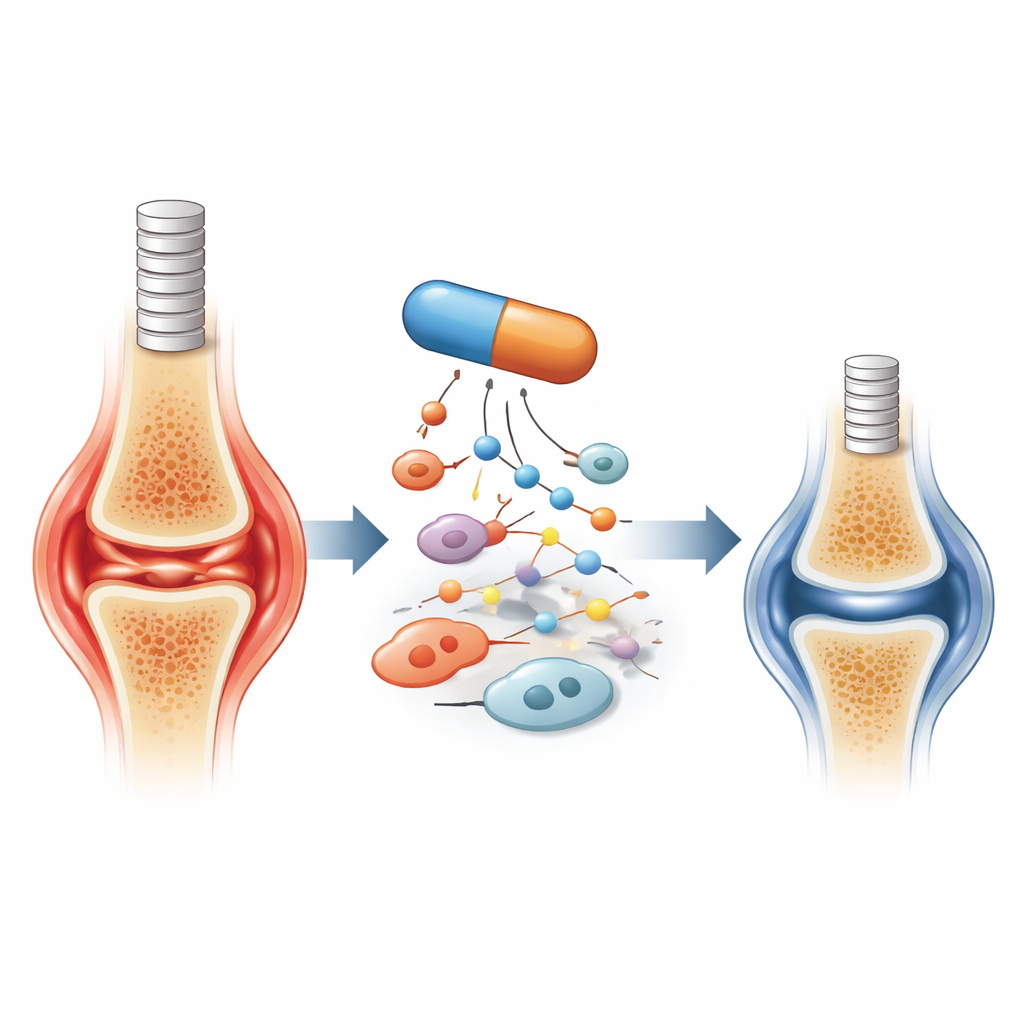
The team then examined how different arthritis treatments were linked to the odds of still needing steroids. They paid special attention to advanced medicines: biologic drugs that target specific immune molecules and Janus kinase inhibitors, a newer oral option that blocks key signaling pathways inside immune cells. After using statistical methods to balance out differences in age, disease severity, and other factors, they found that several treatments were associated with lower steroid use. Patients taking methotrexate, a standard first-line drug, and those on tumor necrosis factor or interleukin-6 inhibitors were less likely to be using glucocorticoids. Notably, people treated with Janus kinase inhibitors not only used steroids less often but, when they did, tended to be on lower daily doses than patients on other biologic drugs or on no biologic at all.
Zooming in on patients using Janus kinase inhibitors
Among the 410 patients receiving a Janus kinase inhibitor, the investigators asked what distinguished those who still needed steroids from those who did not. The answer was clear: higher disease activity and worse physical function strongly predicted ongoing steroid use. A widely used clinical score that combines joint swelling, tenderness, and patient and doctor assessments was closely tied to both the chance of being on steroids and the size of the dose. Measures of daily abilities, such as walking, personal care, and getting in and out of a car, were also linked to continued steroid use, suggesting that people who remain functionally limited are harder to taper off these drugs even when on modern targeted therapy.
What this means for everyday care
For patients and clinicians, these findings suggest that achieving very low disease activity and preserving day-to-day function are key steps toward living free of long-term steroid pills. In this large real-world Japanese cohort, treatment with Janus kinase inhibitors was consistently associated with lower steroid use and lower doses compared with several other options, even after careful adjustment for how sick patients were. While the study cannot prove cause and effect, it supports the idea that potent targeted therapies can help shift rheumatoid arthritis care away from chronic steroid dependence. Ultimately, tighter control of inflammation and better mobility may offer patients not only more comfortable joints but also protection from the hidden harms of long-term steroid exposure.
Citation: Shoda, H., Yamamoto, Y., Matsui, T. et al. Glucocorticoid sparing in rheumatoid arthritis patients treated with Janus kinase inhibitors: insights from the Japanese patient registry. Sci Rep 16, 13796 (2026). https://doi.org/10.1038/s41598-026-43504-w
Keywords: rheumatoid arthritis, glucocorticoids, Janus kinase inhibitors, steroid sparing, targeted therapy