Clear Sky Science · en
A comparative study on life cycle assessment and economic analysis of photovoltaic-based air heating systems based on machine learning prediction
Warming Homes with Sunshine
Keeping buildings warm in winter usually means burning fossil fuels or using electricity from power plants, both of which add greenhouse gases to the atmosphere. This study explores a different path: using the sun not just to make electricity, but also to directly heat air for buildings. The researchers compare three ways to harness sunlight for warm indoor air and ask two practical questions: which option is kindest to the environment over its whole lifetime, and which one makes financial sense for homeowners and building designers?
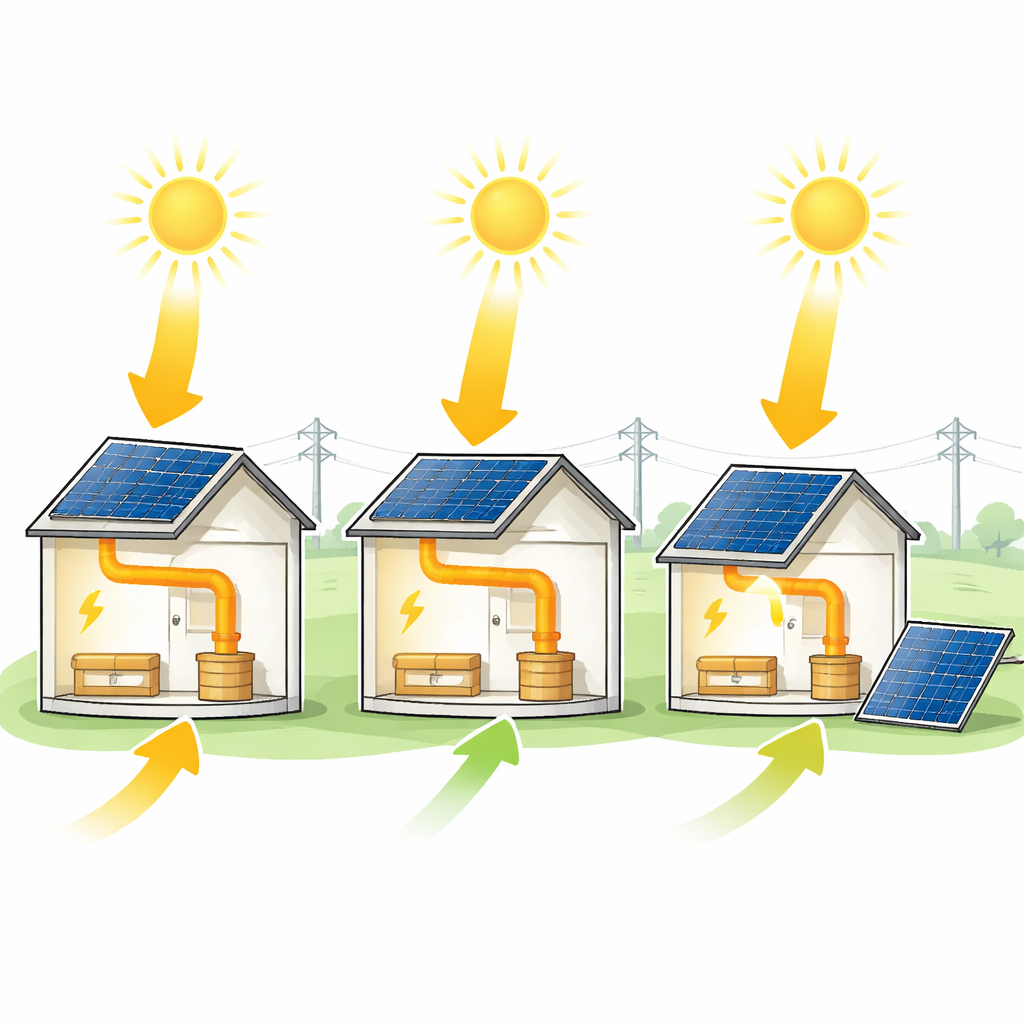
Three Ways to Turn Sunlight into Warm Air
The team built and tested three real-world heating setups. The first is a combined photovoltaic/thermal air heater, where a single rooftop unit both heats air and generates electricity from the same sunshine. The second is a more traditional flat plate solar air heater that only warms air. The third uses a standard solar panel to generate electricity, which then powers an electric resistance heater to warm the air indoors. All three systems were connected to the power grid so that any shortfall in solar energy could be made up by ordinary electricity, just as in a typical house.
Teaching Computers to Predict Winter Performance
Because it is impossible to run outdoor experiments under every possible winter weather condition, the researchers turned to modern pattern-recognition algorithms. They collected detailed measurements from the three systems over several sunny days in Yantai, China, recording temperatures, sunshine levels, wind, humidity and how much heat and electricity each system produced. These data were used to train and test three different machine-learning models. The best performer, a type of program called a convolutional neural network, reproduced the measured outputs with very high accuracy and successfully predicted how much heat and power each system would supply during a full winter heating season.
Following Each System from Factory to Operation
Armed with reliable predictions, the authors carried out a “cradle-to-operation” life cycle assessment. This approach tallies up the environmental burdens of making all components, transporting them to the building site, and running the systems over a ten-year lifetime, while also crediting them for the fossil fuel use and emissions they avoid. They used an established international database and a standard impact method to track effects on human health, ecosystems and resource use. For the combined photovoltaic/thermal unit, the biggest environmental costs came from manufacturing the solar cells and the power electronics, which require energy-intensive processing of metals and silicon. However, during operation this system produced enough heat and electricity that it actually offset some of those initial impacts.
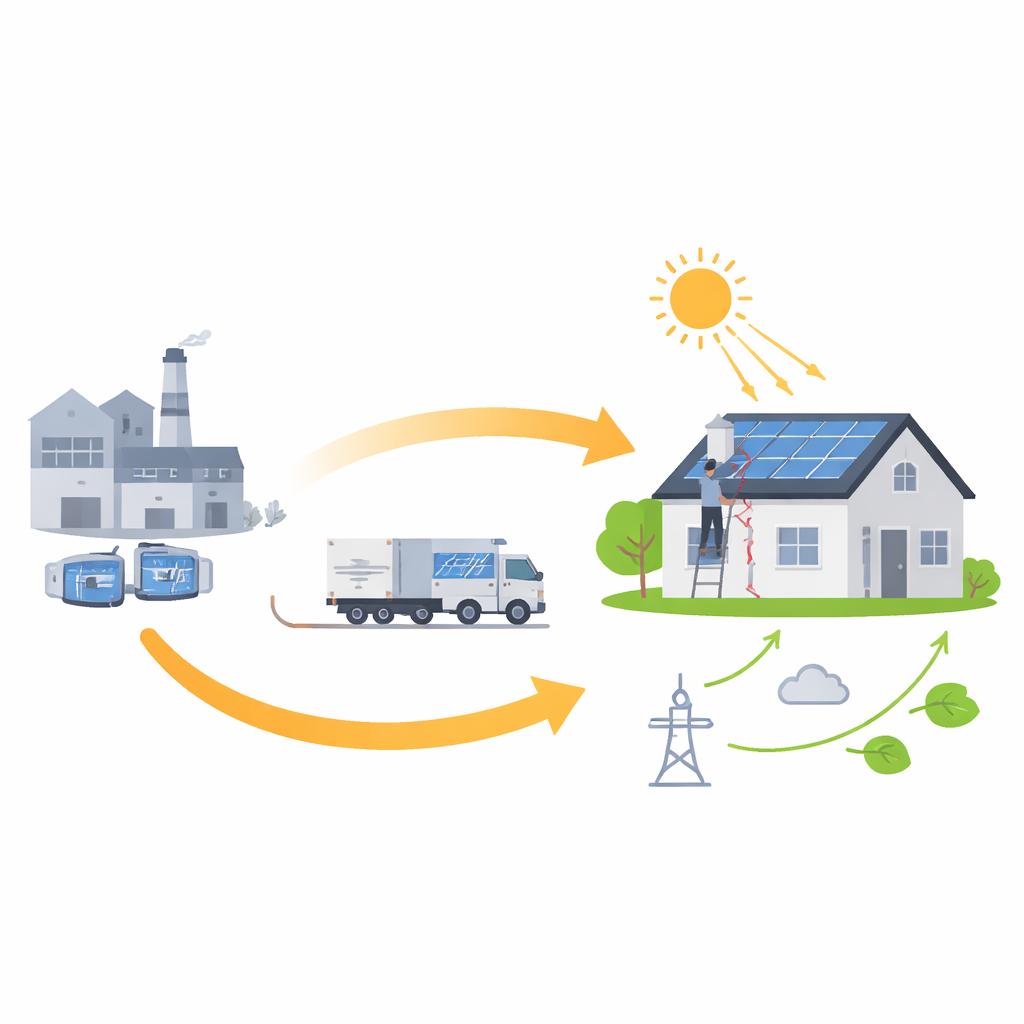
Which Solar Heater Is Cleanest and Most Cost-Effective?
When all impacts were combined into a single yearly score, the combined photovoltaic/thermal air heater came out clearly ahead. Its overall environmental impact was roughly half that of the flat plate air heater and also lower than that of the electric heater powered by a separate solar panel. The main advantage of the combined system is that it delivers both warm air and useful electricity, so it draws less power from the grid. The study also examined how results change if the systems last 20 or 30 years and how they perform in different climate zones across China. Longer lifetimes steadily improve the picture, and by 30 years the combined system actually shows a net environmental benefit per year. Economically, all three options pay back their investment in under two years, with the combined system slightly slower than the electric heater but offering greater long-term savings and emission reductions.
What This Means for Future Solar Heating
For non-specialists, the message is straightforward: if you want to warm buildings with the sun while cutting greenhouse gas emissions and health-related pollution, systems that produce both heat and electricity from the same solar surface are especially promising. Although they cost a bit more upfront than some alternatives, they use the sun more efficiently, rely less on grid electricity, and can eventually repay their environmental “debt” from manufacturing. The authors note that real-world recycling and regional power mixes will matter, but their results suggest that well-designed combined solar air heaters could become an important tool for cleaner, more sustainable winter comfort.
Citation: Xu, S., Zhou, X., Ma, J. et al. A comparative study on life cycle assessment and economic analysis of photovoltaic-based air heating systems based on machine learning prediction. Sci Rep 16, 14367 (2026). https://doi.org/10.1038/s41598-026-43488-7
Keywords: solar air heating, photovoltaic thermal, life cycle assessment, machine learning energy, building heating