Clear Sky Science · en
Efficient removal of AlN from secondary aluminum dross using binary fluoride: a theoretical and experimental study
Turning a Hidden Aluminum Waste into a Safer Resource
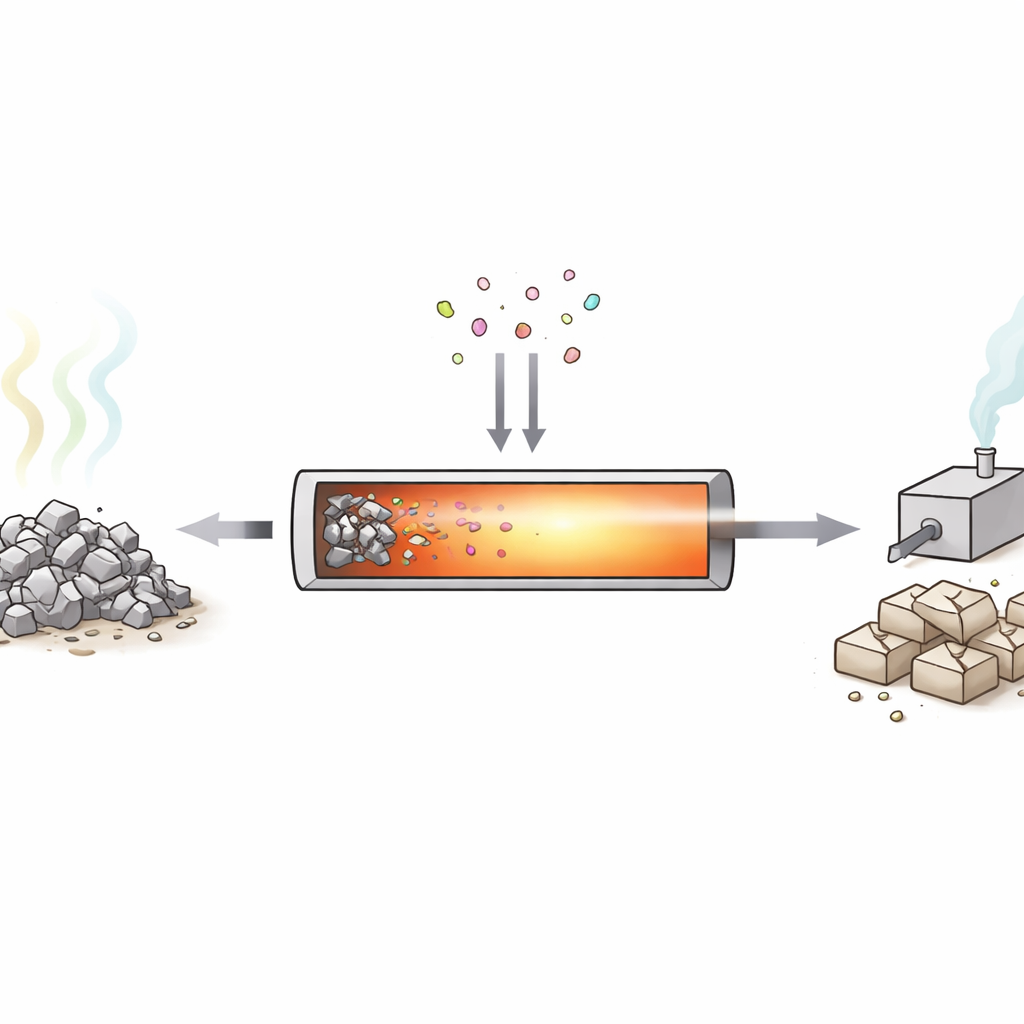
Every time aluminum is made or recycled, a crust of leftover material called secondary aluminum dross (SAD) forms on the surface of the molten metal. Around the world, millions of tons of this waste are produced each year and often end up piled in landfills. When SAD gets wet, it can release toxic and flammable gases, threatening nearby communities and contaminating soil and groundwater. This study explores how to make SAD much safer—and more useful—by transforming one of its most troublesome ingredients into a stable form using carefully chosen fluoride salts.
Why This Industrial Waste Is So Problematic
SAD is not just harmless ash. It contains unreacted aluminum metal, salts, and a nitrogen-rich compound called aluminum nitride (AlN). AlN is valuable because it still holds aluminum that could be recovered, but it is also the main source of dangerous gases like ammonia when SAD is exposed to moisture. Existing treatment methods either use water-based chemistry, which risks gas release and large volumes of salty wastewater, or high-temperature treatments, which are safer but energy-hungry and often waste much of the remaining aluminum. The key challenge is finding a way to convert AlN into stable aluminum oxide at moderate temperatures, quickly and efficiently, without creating new environmental problems.
How a Protective Skin Slows the Cleaning Process
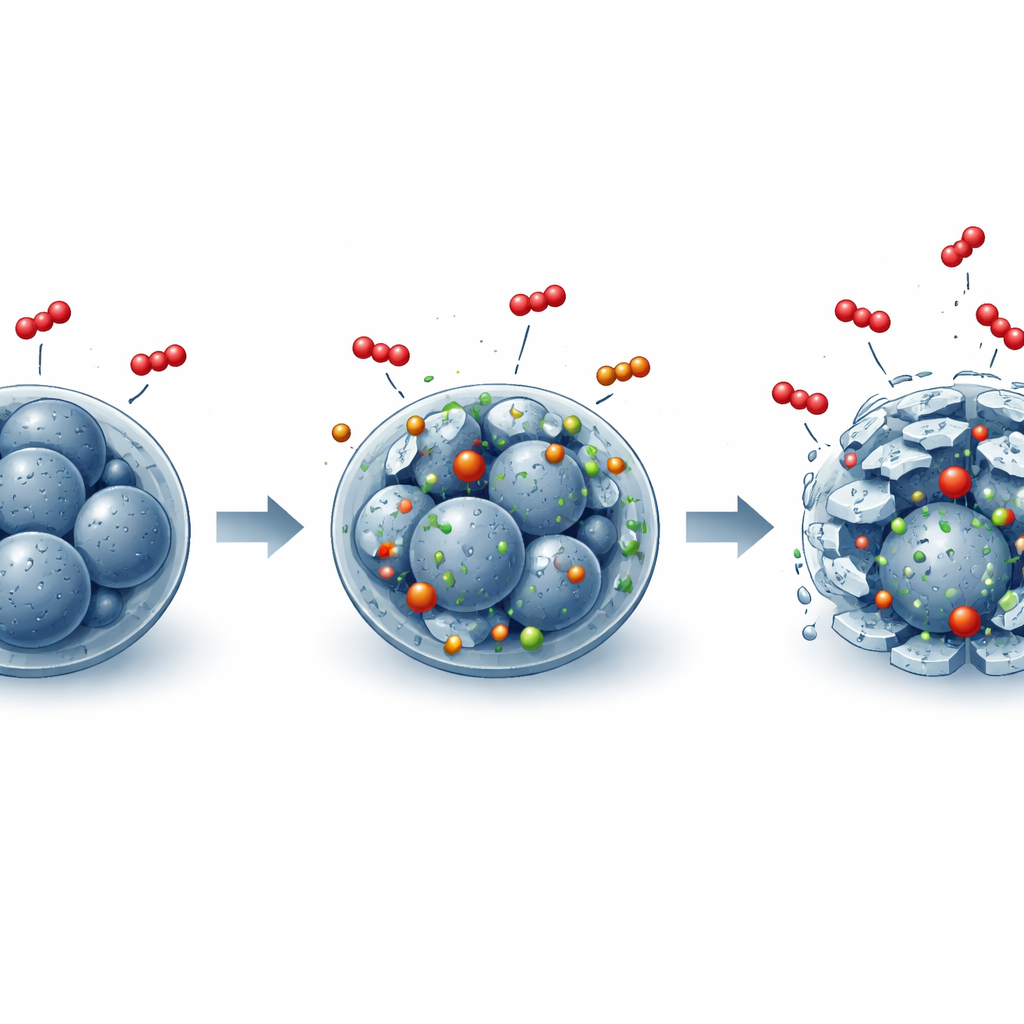
The researchers first asked a basic question: what actually happens when AlN meets oxygen at high temperature? Using advanced computer simulations of the atomic structure of AlN surfaces, they found that oxygen molecules latch onto certain parts of the surface and split apart, forming a tightly packed layer of aluminum and oxygen atoms. This thin but dense skin behaves like a shield that blocks further oxygen from reaching the AlN beneath. At lower and moderate temperatures, the shield remains orderly and unbroken, so only a small fraction of the AlN converts to harmless aluminum oxide. Only at extremely high temperatures, when the shield becomes more flexible and disordered, can oxygen squeeze through and fully consume the AlN—an option that is too energy-intensive for practical industrial use.
Using Fluoride Salts to Crack the Shield
To get around this natural self-protection, the team tested a range of common industrial additives during roasting—a dry heating step in air. They compared several oxides and carbonates with various fluoride salts. Measurements showed that most non-fluoride additives did little to help: after heating AlN alone at 900 °C for over two hours, less than one-fifth of it had been converted. In stark contrast, fluoride salts such as sodium fluoride, aluminum fluoride, and especially a mixed salt known as cryolite (Na3AlF6) dramatically boosted the reaction, with cryolite nearly eliminating AlN under the same conditions. Electron microscopy revealed why: instead of a smooth, continuous skin, the treated particles developed cracked, layered shells that no longer sealed off the interior.
Finding the Most Effective Salt Blend
The researchers then moved from pure AlN to real SAD from an aluminum recycling plant and optimized the recipe. They explored different roasting temperatures and combinations of fluoride salts, including mixtures of cryolite with sodium fluoride, aluminum fluoride, or potassium fluoride (KF). They discovered that a binary mixture of KF and cryolite was especially powerful. Roasting SAD at 800 °C for just one hour with 12 weight percent of this mixture (half KF, half cryolite) converted about 93 percent of the AlN—a high level of cleanup at a relatively moderate temperature and short time. Structural analysis indicated that these additives encourage the protective skin to reorganize into a more open form of alumina, known as beta-alumina, built from slabs separated by loosely packed layers. This fragile, layered structure cracks easily, allowing oxygen to penetrate and finish the job.
From Hazardous Waste to Recoverable Resource
Beyond simply destroying AlN, the study examined how the treated material behaves when later exposed to water or acidic and alkaline solutions. The roasted SAD released almost no gas and showed much smaller changes in pH than untreated samples, confirming that the dangerous nitrogen reactions had largely been removed. While some soluble salts such as sodium and chloride can still leach out and must be managed, the material now behaves more like a secondary raw resource than a hazardous waste. Because much of the aluminum ends up as stubborn but valuable alumina, future work can focus on improving ways to dissolve and recover this aluminum under controlled conditions. In practical terms, the study demonstrates that carefully chosen fluoride salt mixtures can break the natural barrier that slows AlN oxidation, making it possible to clean up aluminum dross more safely, more efficiently, and with better prospects for recycling its remaining metals.
Citation: Li, T., Guo, Z., Qin, H. et al. Efficient removal of AlN from secondary aluminum dross using binary fluoride: a theoretical and experimental study. Sci Rep 16, 12986 (2026). https://doi.org/10.1038/s41598-026-43443-6
Keywords: aluminum dross, industrial waste treatment, fluoride additives, aluminum nitride, metal recycling