Clear Sky Science · en
Inulin and multispecies probiotic effects on blood, liver and kidney biochemistry and metabolic and stress-related gene expression in pigs
Feeding Pigs for Healthier Bodies
Farmers are under growing pressure to raise animals without routine antibiotics, yet still keep them healthy and productive. This study explores whether two natural feed additives—inulin, a plant-based fiber, and a cocktail of beneficial microbes called probiotics—can support young pigs’ livers, kidneys, blood chemistry, and stress defenses. Because pigs share many features of human digestion and metabolism, the findings may also hint at how similar ingredients in our own diets could influence health.
A Closer Look at Special Fibers and Friendly Microbes
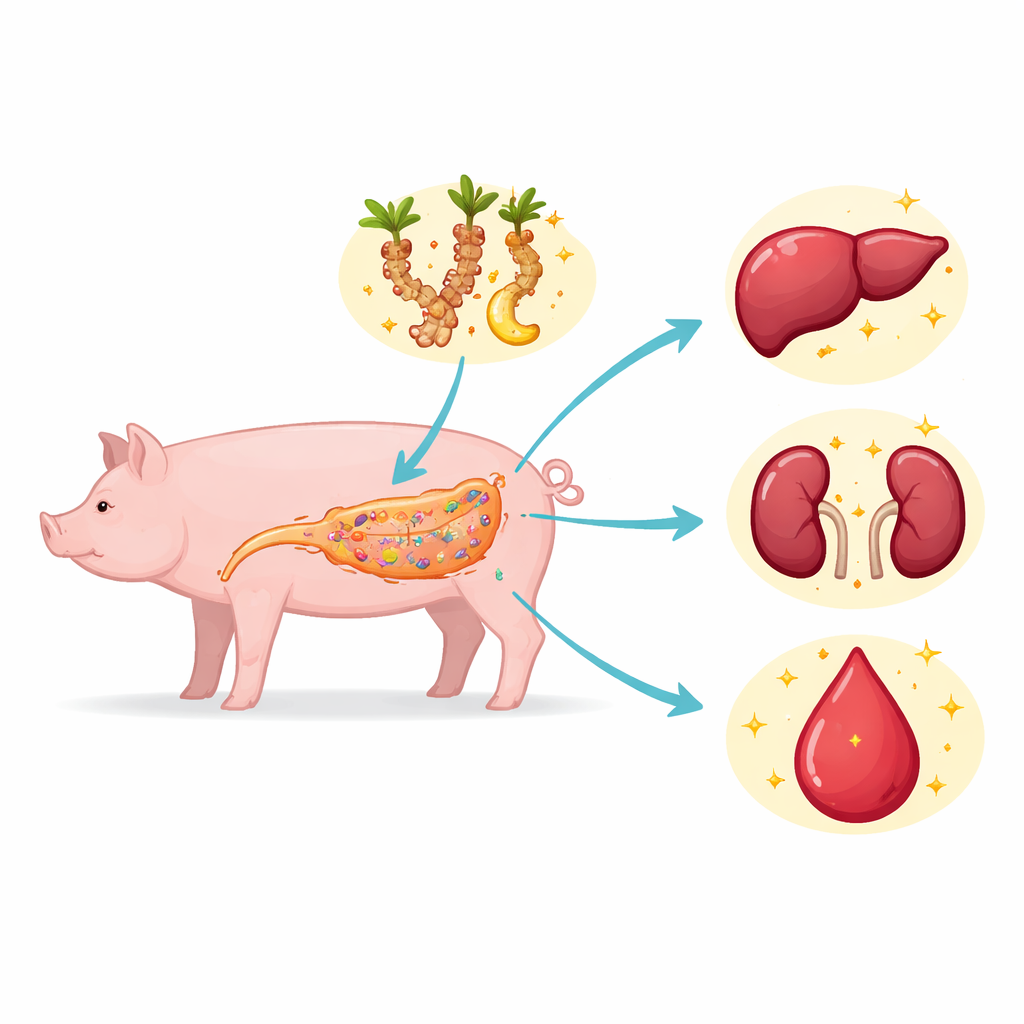
Inulin is a type of fiber extracted mainly from chicory roots. It passes through the small intestine undigested and is fermented by gut bacteria, acting as food for helpful microbes. Probiotics, by contrast, are live microorganisms—here, several species of bacteria plus a yeast—that are thought to support gut balance and immune function. The researchers wanted to know not only how each supplement works on its own, but also what happens when they are combined in a so-called synbiotic diet. Their focus was on key measures in the blood, liver, and kidneys that reflect fat handling, mineral balance, oxidative stress, and low-level inflammation, as well as patterns of gene activity in these organs.
How the Experiment Was Set Up
The team studied 32 young male pigs, all raised under the same conditions but fed four different diets for 40 days after weaning: a standard control diet, the control diet plus probiotics, the control diet plus 2% inulin, or a mix of both inulin and probiotics. At the end of the trial, the scientists collected blood, liver, and kidney samples. They measured common clinical markers such as liver enzymes and blood fats, quantified minerals like sodium, phosphorus, magnesium, copper, and selenium, and tested chemical signs of oxidative stress. They also examined which genes were turned up or down in the liver and kidneys, especially those involved in energy metabolism, antioxidant defense, and immune signaling.
Changes in Fats, Minerals, and Stress Defenses
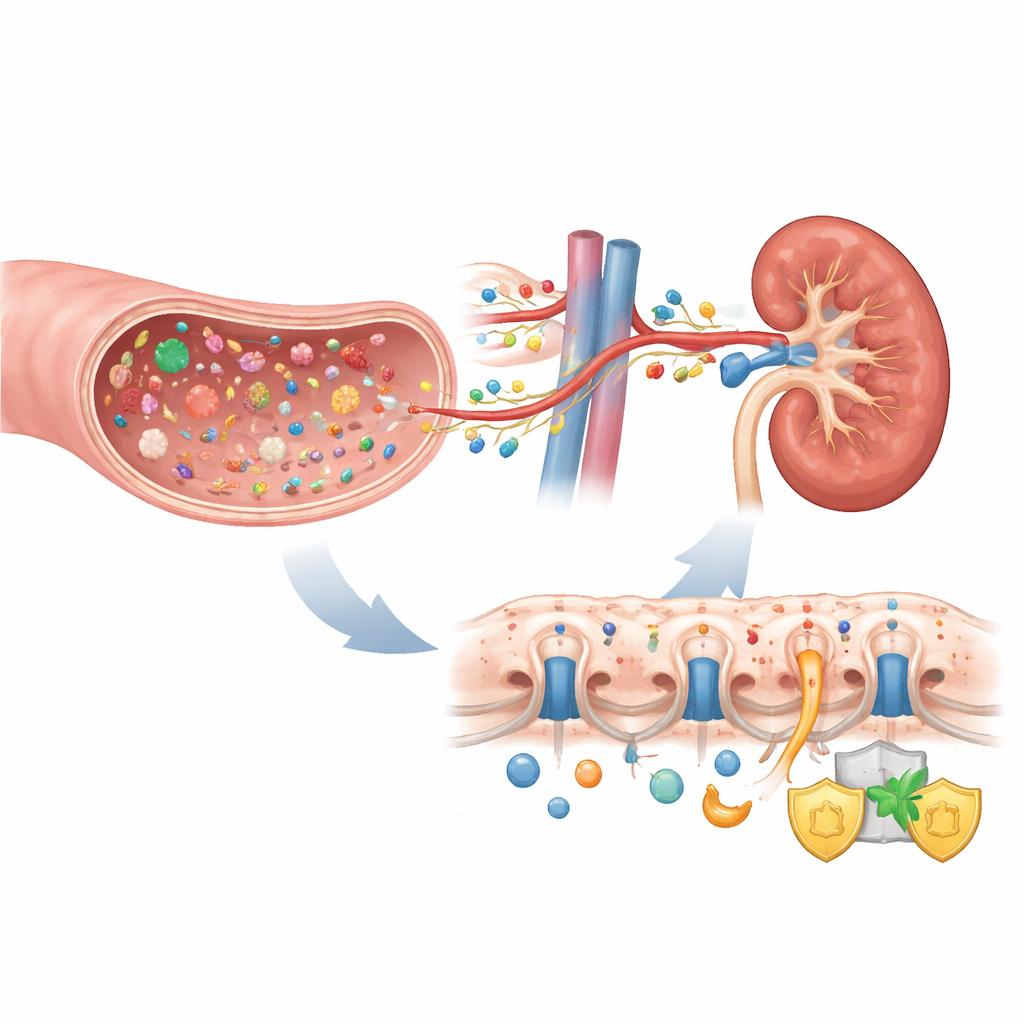
Inulin altered how pigs handled fats. It raised total and “bad” LDL cholesterol in the blood, but at the same time lowered cholesterol in the liver and triglycerides in the kidneys. In the liver, inulin boosted the activity of a gene called APOA1, which is important for moving cholesterol out of tissues, suggesting more efficient fat transport. Probiotics did not strongly change blood fat levels, but they improved standard markers of liver health: animals receiving probiotics had lower activities of liver enzymes in the blood, a sign of reduced liver strain. Both inulin and probiotics influenced mineral balance; for example, inulin increased sodium and phosphorus in the blood but reduced magnesium and copper stored in the liver, while probiotics raised selenium, iron, and phosphorus in blood or kidney tissue. These shifts matched changes in kidney genes involved in water channels and mineral handling, implying that the gut changes were rippling out to distant organs.
Fine-Tuning the Body’s Antioxidant and Immune Systems
Oxidative stress—damage from reactive oxygen molecules—is a common thread in many diseases. Here, inulin and probiotics each lowered the activity of catalase, an enzyme that typically ramps up when oxidative stress is high, suggesting the animals were under less chemical strain. Probiotics also reduced blood levels of TBARS, a marker of fat peroxidation, and in combination with inulin increased the expression of several kidney genes associated with antioxidant protection, such as those encoding glutathione peroxidase and other selenium-based defenses. Most immune-related changes pointed toward a balanced, not overactive, defense system. However, there were some surprises: inulin alone raised blood fibrinogen, a clotting-related protein, and the combined treatment increased kidney expression of the inflammatory signal interleukin-6. The authors suggest this may reflect a brief, controlled stimulation of innate immunity driven by microbial signals, rather than harmful inflammation.
What This Means for Pigs and Beyond
Overall, the study shows that adding inulin, probiotics, or both to pig diets did not harm growth or organ function and in many ways improved metabolic health. Inulin seemed to re-route fat processing and enhance cholesterol transport while helping tame oxidative stress. Probiotics supported healthier liver enzyme patterns, bolstered antioxidant defenses, and improved the handling of certain minerals, especially selenium. When combined, the two supplements activated additional protective pathways in the kidneys, though they also nudged some immune markers upward in ways that merit further study. For farmers, these results support the idea that carefully chosen fibers and microbial mixes can help keep pigs healthier without relying on antibiotics. For the wider public, they underscore how what we feed our gut microbes—whether in animals or humans—can subtly reshape the chemistry and gene activity of vital organs throughout the body.
Citation: Lepczyński, A., Herosimczyk, A., Ożgo, M. et al. Inulin and multispecies probiotic effects on blood, liver and kidney biochemistry and metabolic and stress-related gene expression in pigs. Sci Rep 16, 13343 (2026). https://doi.org/10.1038/s41598-026-43434-7
Keywords: inulin, probiotics, pig nutrition, liver and kidney health, oxidative stress