Clear Sky Science · en
Association between preoperative anemia and revision risk after total shoulder arthroplasty: a multi-institutional cohort study
Why Blood Counts Matter Before Shoulder Surgery
Total shoulder replacement has become a common way to relieve pain and restore movement in worn-out or badly damaged shoulders, especially in older adults. But not every patient faces the same odds of a smooth recovery. This study asks a simple but important question: if a person goes into surgery with low blood levels—known as anemia—does that raise their chances of needing a second shoulder operation or running into serious complications later on?
Looking at Real-World Patients Across Many Hospitals
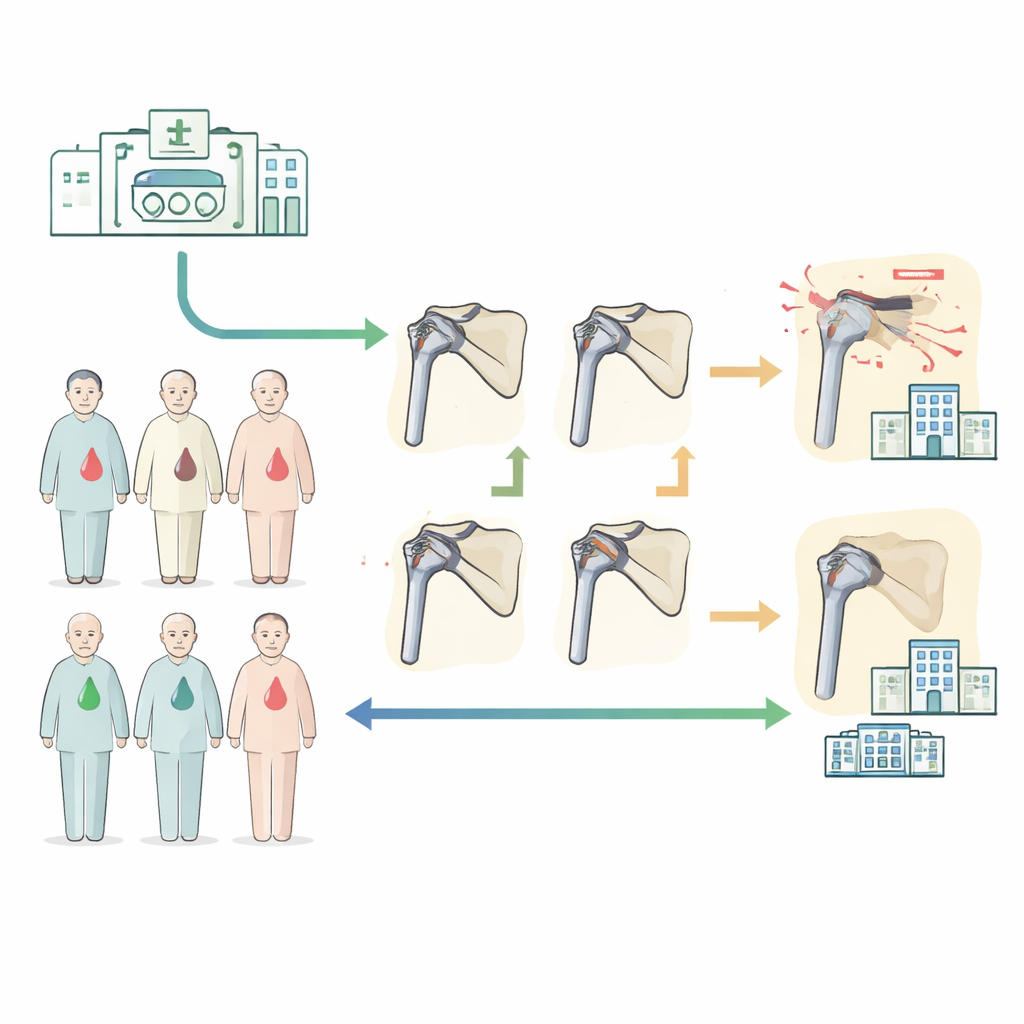
To explore this, the researchers tapped into a large network of electronic medical records from more than 140 healthcare organizations. They focused on people aged 50 and older who had their first total shoulder replacement between 2010 and mid-2024. Before surgery, each patient had a blood test measuring hemoglobin, the substance in red blood cells that carries oxygen. Those with noticeably low levels were grouped as anemic, while those with higher levels served as a comparison group. To make the two groups as similar as possible, the team carefully matched patients on age, sex, body size, other illnesses, and key lab results, ending up with over 10,000 patients split evenly between those with and without anemia.
Tracking Who Needed More Care After Surgery
Once the groups were set, the researchers followed patients for up to three years using the medical records network. They watched for several events: a repeat shoulder operation to fix or replace the implant, serious infection around the artificial joint, pneumonia, emergency room visits, and death from any cause. They also checked what happened within the first year after surgery, when complications are most likely to appear. Because some patients died during follow-up, the team performed extra analyses that looked only at those who survived at least three years, and they repeated the work in a second group of patients treated before the COVID-19 pandemic to see if the pattern held over time.
What Low Blood Levels Meant for Outcomes
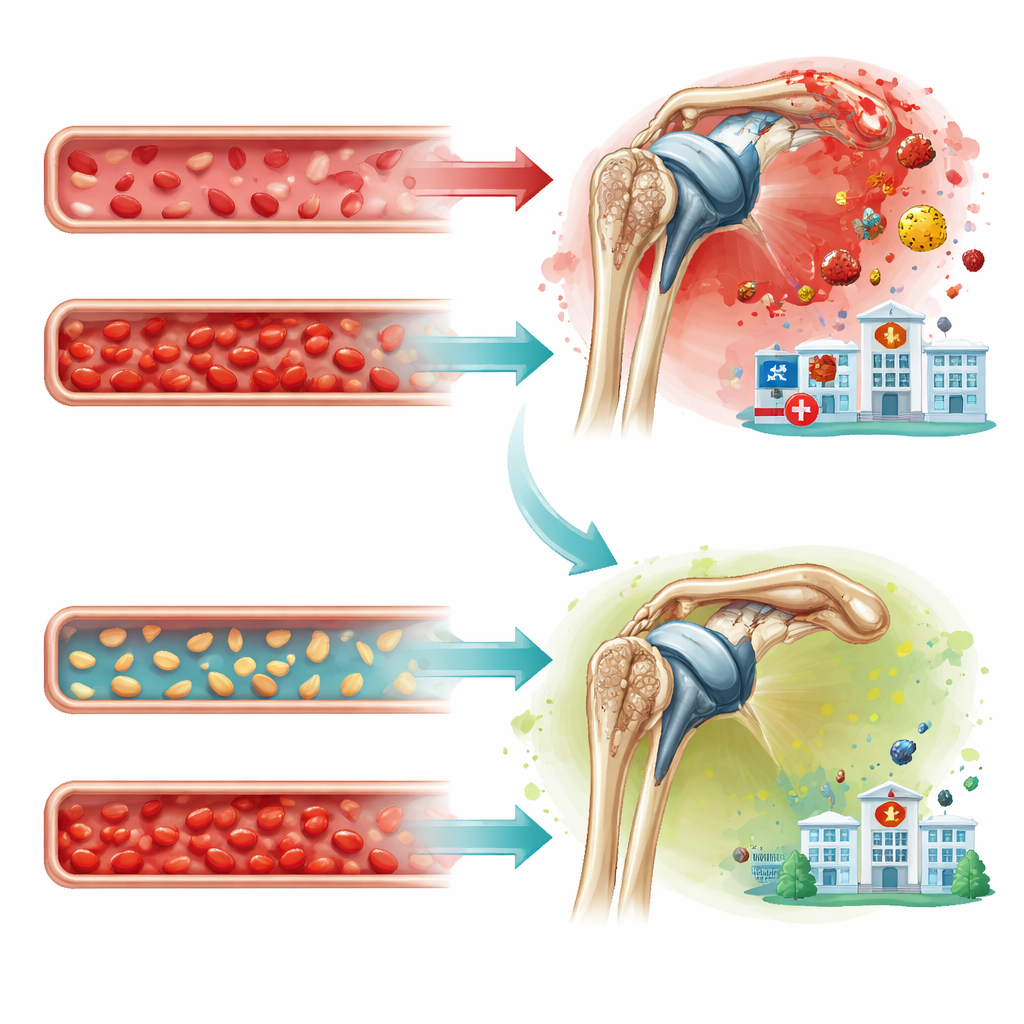
The results showed a consistent pattern: people who went into surgery with anemia fared worse over the next several years. At three years, they were about one and a half times more likely to need a second shoulder operation than similar patients with normal blood counts. They were nearly twice as likely to develop deep infection around the implant and more likely to get pneumonia, visit the emergency department, or die. These differences appeared as early as one year after surgery and remained visible at three years. Importantly, even patients with only mildly low hemoglobin levels—values that might easily be overlooked in a busy clinic—showed elevated risks. The same trends appeared when the analysis was limited to academic medical centers and when only pre‑pandemic surgeries were considered.
Possible Reasons Behind the Added Risk
Why might anemia worsen recovery from shoulder replacement? Low hemoglobin means less oxygen delivered to tissues, which can weaken the immune system and slow healing. That may help explain why anemic patients were more prone to deep joint infections, a major cause of early implant failure. Anemia often travels alongside other problems—such as poor nutrition, chronic inflammation, or heart and lung disease—that can sap the body’s reserves and make it harder to bounce back after major surgery. The study cannot prove that anemia itself directly causes these complications, but even after accounting for many other health conditions, low preoperative blood levels remained a strong warning sign.
What This Means for Patients and Clinicians
For people considering shoulder replacement, this work highlights that what happens before surgery can shape outcomes years later. The study suggests that any degree of anemia deserves attention, not only to help patients feel better day to day but also to lower the chances of repeat operations, infections, and serious medical setbacks. Doctors may wish to screen more carefully for anemia, investigate the underlying cause, and consider treatments—such as iron replacement or other therapies—before heading to the operating room. Future clinical trials will need to test whether correcting anemia actually reduces these risks, but for now, low hemoglobin stands out as a red flag that can help identify patients who may benefit from closer preparation and follow-up.
Citation: Hung, KC., Chang, LC., Lai, YC. et al. Association between preoperative anemia and revision risk after total shoulder arthroplasty: a multi-institutional cohort study. Sci Rep 16, 12430 (2026). https://doi.org/10.1038/s41598-026-43405-y
Keywords: shoulder replacement, preoperative anemia, surgical risk, joint infection, orthopedic outcomes