Clear Sky Science · en
Sarcopenia and fall-related outcomes in Chinese adults aged 45 years or older: a longitudinal cohort study
Why weaker muscles matter as we age
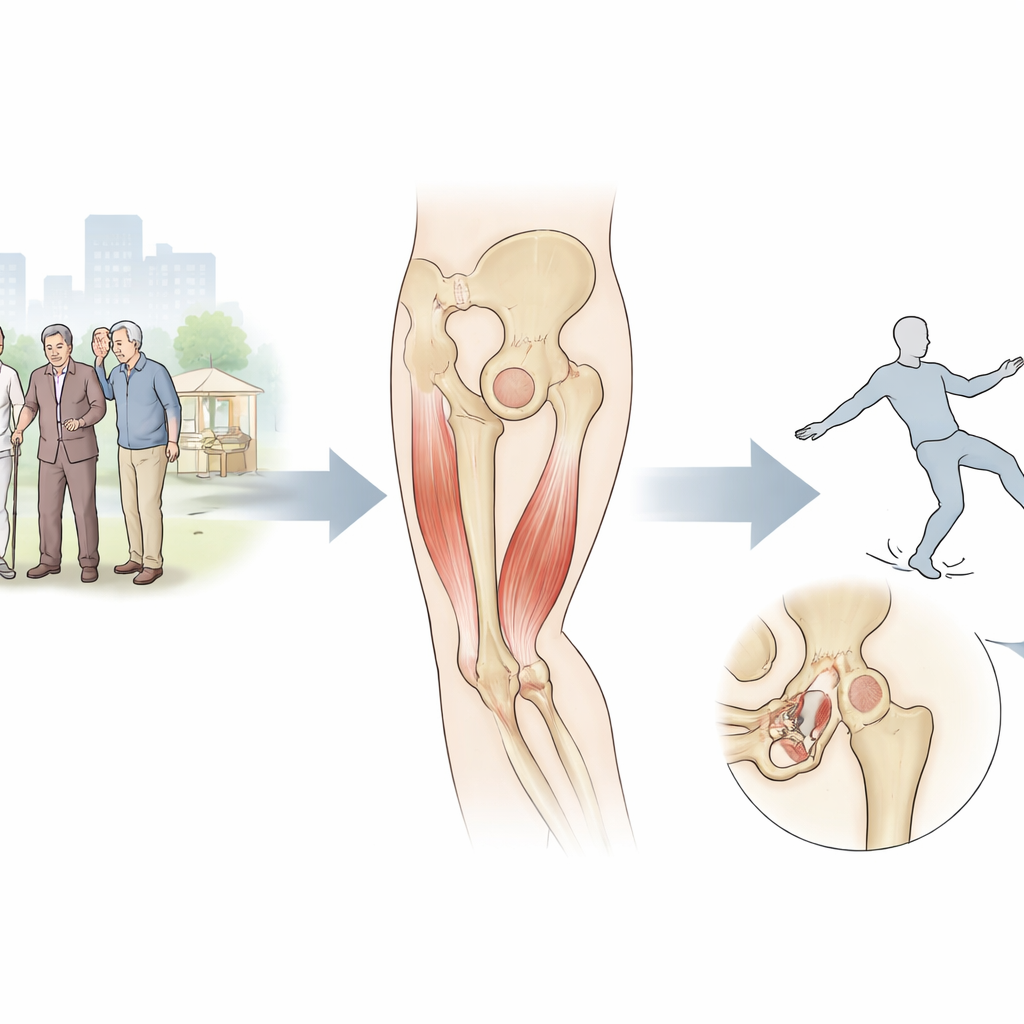
As people move into midlife and older age, many notice that simple tasks—climbing stairs, getting up from a chair, or carrying groceries—gradually become harder. This isn’t just an inconvenience: weaker muscles can make people unsteady on their feet and more likely to fall, sometimes leading to broken bones and long hospital stays. This study followed thousands of Chinese adults for a decade to ask a pressing question with real-world consequences: does age-related muscle loss itself raise the risk of falling or breaking a hip, and who is most at risk?
What the researchers set out to learn
The team focused on sarcopenia, a condition marked by loss of muscle strength, muscle mass, or physical performance. Using data from the large, nationally representative China Health and Retirement Longitudinal Study, they tracked 6,939 adults aged 45 and older who had no history of falls or hip fractures at the start. About 43% of them already met criteria for sarcopenia at baseline. Over roughly ten years, participants were regularly asked whether they had experienced a fall or a hip fracture, allowing the researchers to see who developed problems and how this related to their muscle health.
How muscle health and injuries were measured
Because advanced hospital scans were not practical in such a large community study, the researchers estimated muscle mass from people’s height, weight, age, and sex, and combined this with direct tests of strength and function. Grip strength measured how powerfully someone could squeeze a handheld device, while a timed chair-stand test and walking speed captured how quickly they could move. If a participant had low strength, low estimated muscle mass, or slow performance, they were labeled as having sarcopenia. Falls and hip fractures were reported by the participants themselves at each follow-up; while this can miss some events, it is a common approach in large population studies.
What happened over ten years
During the decade of observation, about four in ten participants reported at least one fall, and a smaller fraction reported a hip fracture. After carefully adjusting for age, sex, medical conditions, lifestyle habits, and blood test results, sarcopenia clearly stood out as a risk factor for falls: people with sarcopenia were about 20–26% more likely to experience an isolated fall than those without it, depending on the analysis method. This link held up across several statistical techniques designed to make the muscle-weak and muscle-strong groups as comparable as possible. In contrast, the relationship between sarcopenia and hip fractures was less stable. Some models suggested a higher fracture risk, but when the researchers used stricter matching methods, sarcopenia no longer predicted hip fractures on its own.
Who was most affected and why
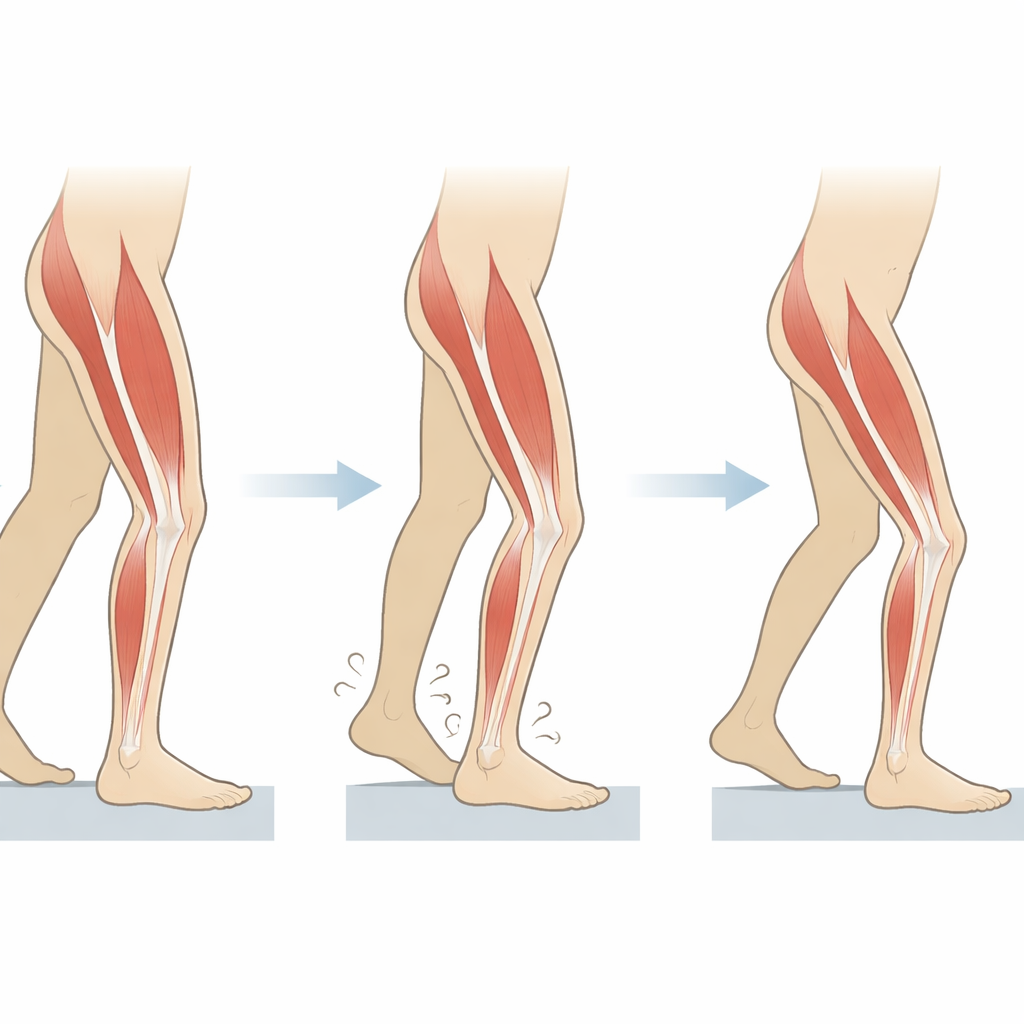
When the team looked more closely at subgroups, sex emerged as an important factor. Men with sarcopenia faced a notably higher risk of future falls, while women with sarcopenia did not show a clear rise in fall risk after accounting for other influences. The authors suggest several overlapping reasons: men may lose muscle more rapidly with age, especially as male hormone levels decline, and may also have lifestyle patterns—such as higher rates of smoking or drinking and lower participation in strength training—that further erode muscle quality and balance. The study also highlights broader pathways linking weak muscles to falls, including low physical activity, poor nutrition, and frailty, all of which can sap strength and slow reflexes.
What this means for everyday life
The findings deliver a clear take-home message: in Chinese adults aged 45 and older, weaker muscles are not just a sign of aging—they are a warning sign for future falls. Sarcopenia reliably predicted falls even after accounting for many other health and lifestyle factors, making it a useful early marker for who might benefit most from preventive steps. In contrast, whether sarcopenia truly drives hip fractures by itself remains uncertain and may depend on other factors such as bone strength or fall circumstances. For individuals and health systems alike, the study underscores the value of protecting muscle through regular resistance exercise, adequate protein and calorie intake, and attention to early signs of declining strength, long before the first serious fall occurs.
Citation: Zhao, X., Wang, C., Wang, J. et al. Sarcopenia and fall-related outcomes in Chinese adults aged 45 years or older: a longitudinal cohort study. Sci Rep 16, 12774 (2026). https://doi.org/10.1038/s41598-026-43398-8
Keywords: sarcopenia, falls, hip fracture, older adults, China