Clear Sky Science · en
Epidemiology and risk factors of urolithiasis in the Turkestan region: a case-control study
Why kidney stones matter
Kidney stones are small, hard deposits that can cause intense pain and repeat attacks. This study looks at why people in the hot, dry Turkestan region of southern Kazakhstan are especially prone to these stones, and which everyday factors like water, diet, medicines, and local climate raise or lower the risk. Understanding these patterns can help people reduce their chances of suffering from kidney stones in the first place.
Life in a hot, dry region
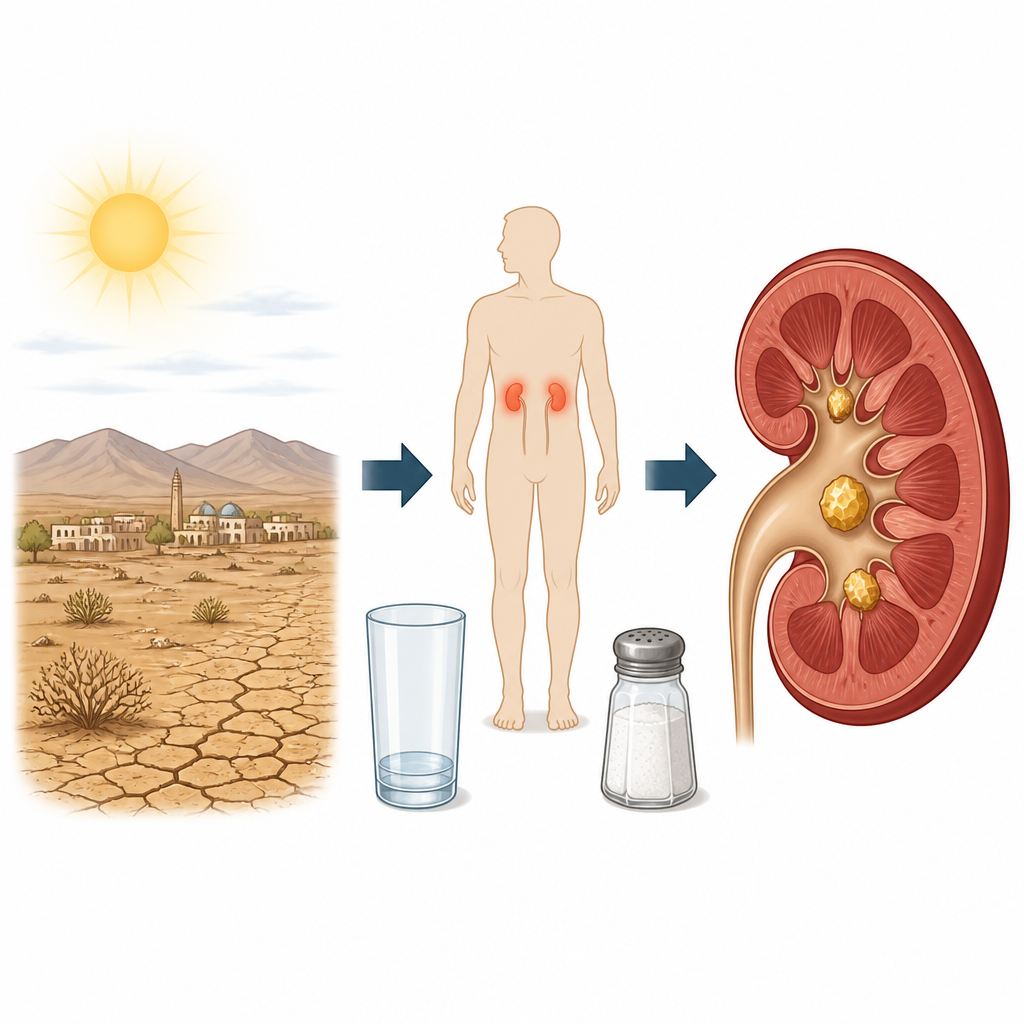
The Turkestan region has long, very hot summers, little rainfall, and drinking water that is moderately hard, meaning it contains a fair amount of minerals such as calcium and magnesium. Many residents do physical work in the heat and follow traditional diets rich in meat, salty foods, and refined carbohydrates, with fewer fresh vegetables at some times of the year. The researchers suspected that this mix of climate, water, and diet could help explain why kidney stones are common and often come back after treatment.
Who took part in the study
The team carried out a case-control study in three major medical centers between 2023 and 2024. They compared 410 adults diagnosed with kidney stones to 1,250 similar adults who had never had the disease. Everyone answered detailed questionnaires on their lifestyle, work conditions, medical history, and medicine use. About 300 people in each group also had blood and urine tests, and the researchers tested local drinking water from city supplies, private wells, and open sources. This allowed them to link personal habits and body chemistry with the type and frequency of stones.
Everyday habits that raise risk
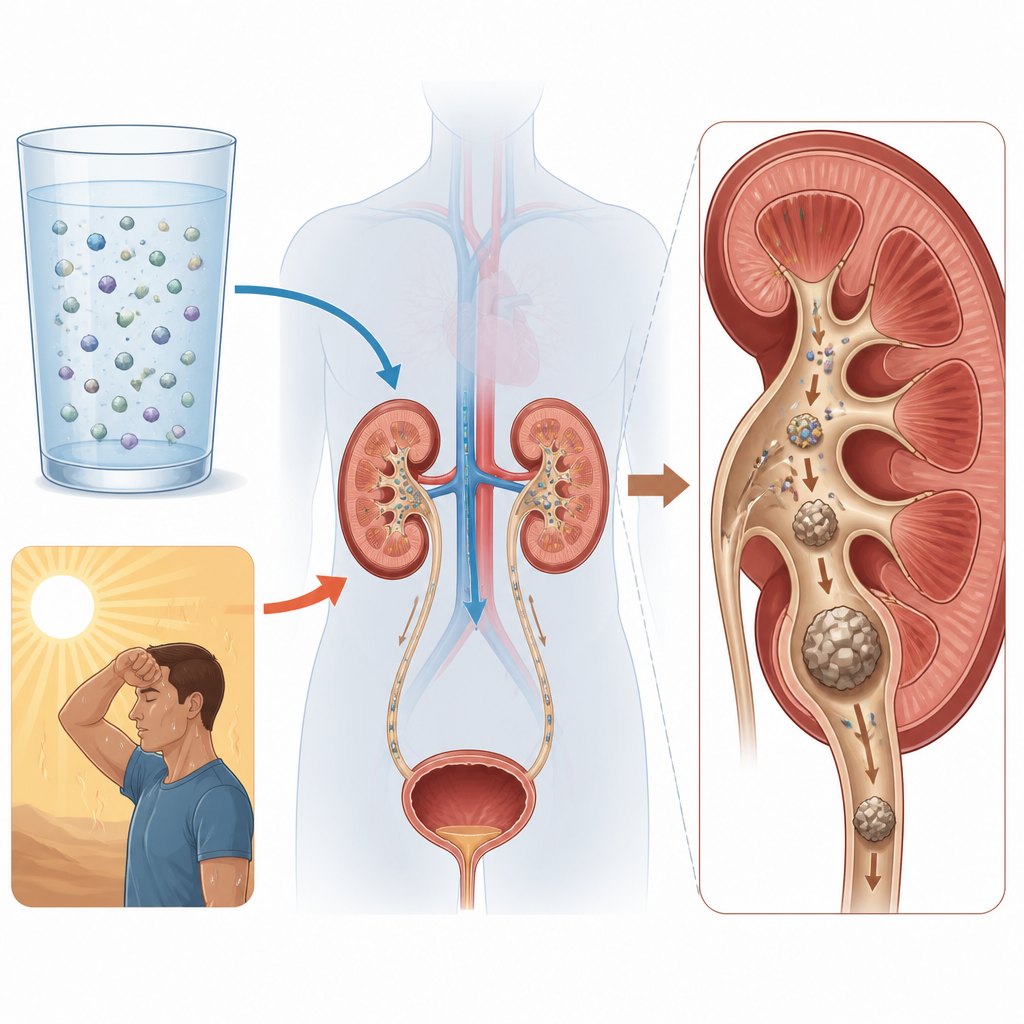
Several clear patterns emerged. People with kidney stones drank far less water on average, about 0.6 liters a day compared with 2.5 liters in the control group, and had a lower daily urine volume. They were more likely to work in high temperatures and to eat a lot of salt. Extra body weight, diabetes, stomach and gut problems, and frequent urinary tract infections were also more common among stone formers. Many of these factors act together by making the urine more concentrated or changing its chemical balance, which encourages crystals to grow into stones.
Body chemistry, water quality, and medicines
Laboratory tests revealed that patients with stones had much higher levels of oxalate in their urine, higher levels of parathyroid hormone in their blood, and more acidic urine. These changes especially favored oxalate stones, which made up over half of all cases. The region’s drinking water had mineral levels within usual limits but was on the harder side, and areas with harder water showed more repeat stones, suggesting that water composition adds to the risk. Certain long-term medicines, including some antacids, anticonvulsants, vitamins D and C, blood pressure drugs, diuretics, and steroid drugs, were used more often by stone patients and were linked to changes in calcium, oxalate, and uric acid handling by the body.
Steps that showed benefit
Among a group of 140 patients who were given simple advice to drink more fluids and adjust their diet, follow-up tests after six months showed that their urinary oxalate levels fell by about one fifth and their urine became slightly less acidic. Although these changes did not remove stones already present, they point toward a lower chance of new stones forming. Taken together with the water and climate findings, the results support focusing on both how much people drink and what is in their water.
What this means for everyday life
For residents of hot, dry regions like Turkestan, the study suggests that kidney stones are shaped by a mix of environment, lifestyle, body chemistry, and medication use rather than by fate alone. While factors such as family background or local climate cannot be changed, others can. Drinking more water, limiting salt, watching weight, checking for hormone problems such as overactive parathyroid glands, and regularly reviewing long-term medicines with a doctor may all help reduce the risk of painful stone attacks and their return. Region-specific public health programs that combine these measures with monitoring of drinking water quality could have a real impact on kidney stone burden.
Citation: Nakipova, Z., Oshibayeva, A. & Babayeva, G. Epidemiology and risk factors of urolithiasis in the Turkestan region: a case-control study. Sci Rep 16, 15113 (2026). https://doi.org/10.1038/s41598-026-43383-1
Keywords: kidney stones, urolithiasis, water hardness, dehydration, Kazakhstan