Clear Sky Science · en
Logistics equipment condition monitoring and prediction based on digital twin and machine learning
Why smarter warehouses matter
Behind every online order is a maze of forklifts, conveyor belts, robots, and sorting systems that must run almost nonstop. When any one of these machines breaks down unexpectedly, deliveries are delayed, costs spike, and workers may be put at risk. This paper explores how a powerful mix of virtual replicas, sensors, and machine learning can keep logistics equipment healthier for longer—turning maintenance from a frantic firefight into a well-planned, almost invisible background process.
Virtual mirrors of real machines
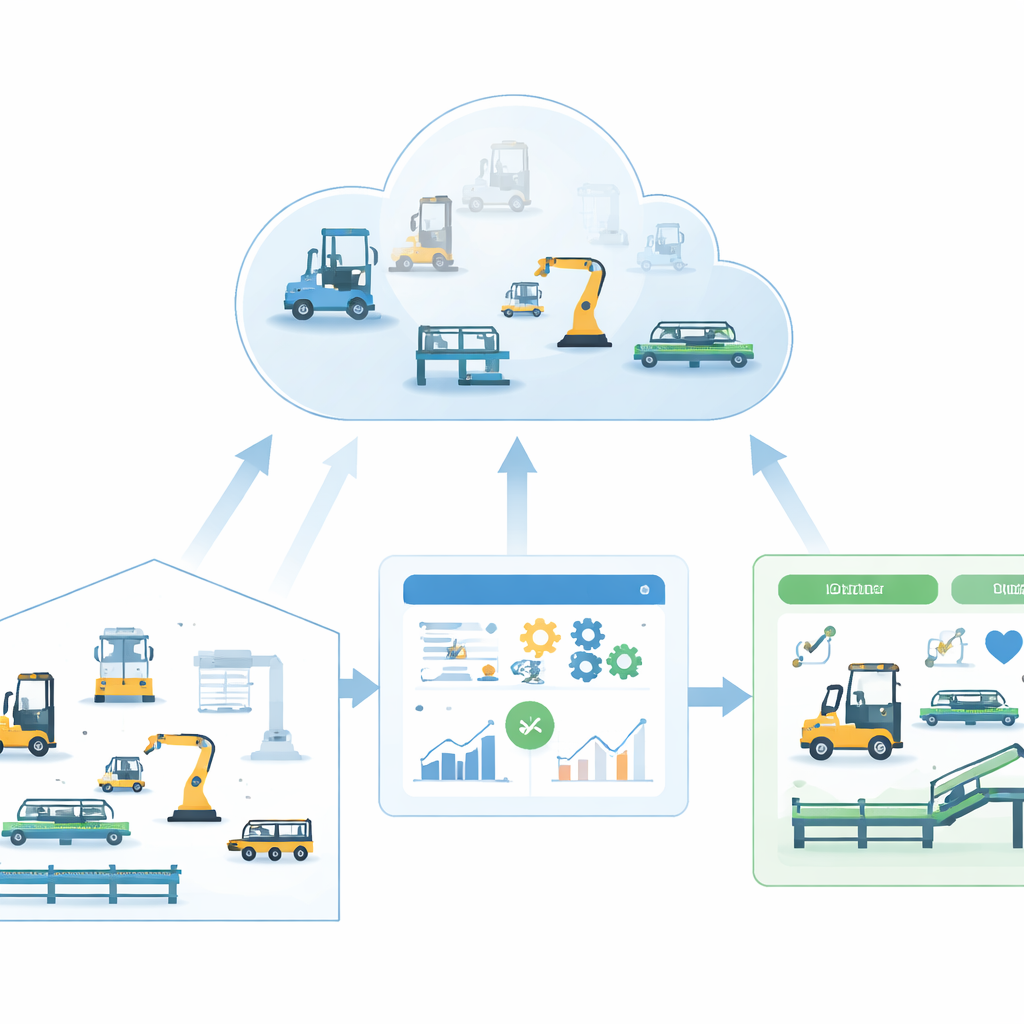
The authors build their approach around “digital twins” of warehouse equipment: detailed virtual versions of forklifts, conveyors, automated guided vehicles, cranes, and robots. These twins are kept in sync with the real machines using networks of sensors that measure vibration, temperature, sound, electrical current, location, and load. Data streams travel through lightweight communication protocols so that the virtual models are refreshed roughly every tenth of a second. This constant mirroring allows the digital twin to behave like a flight simulator for each asset, reflecting not just its current state but also how it is likely to age and eventually fail.
Teaching machines to spot trouble early
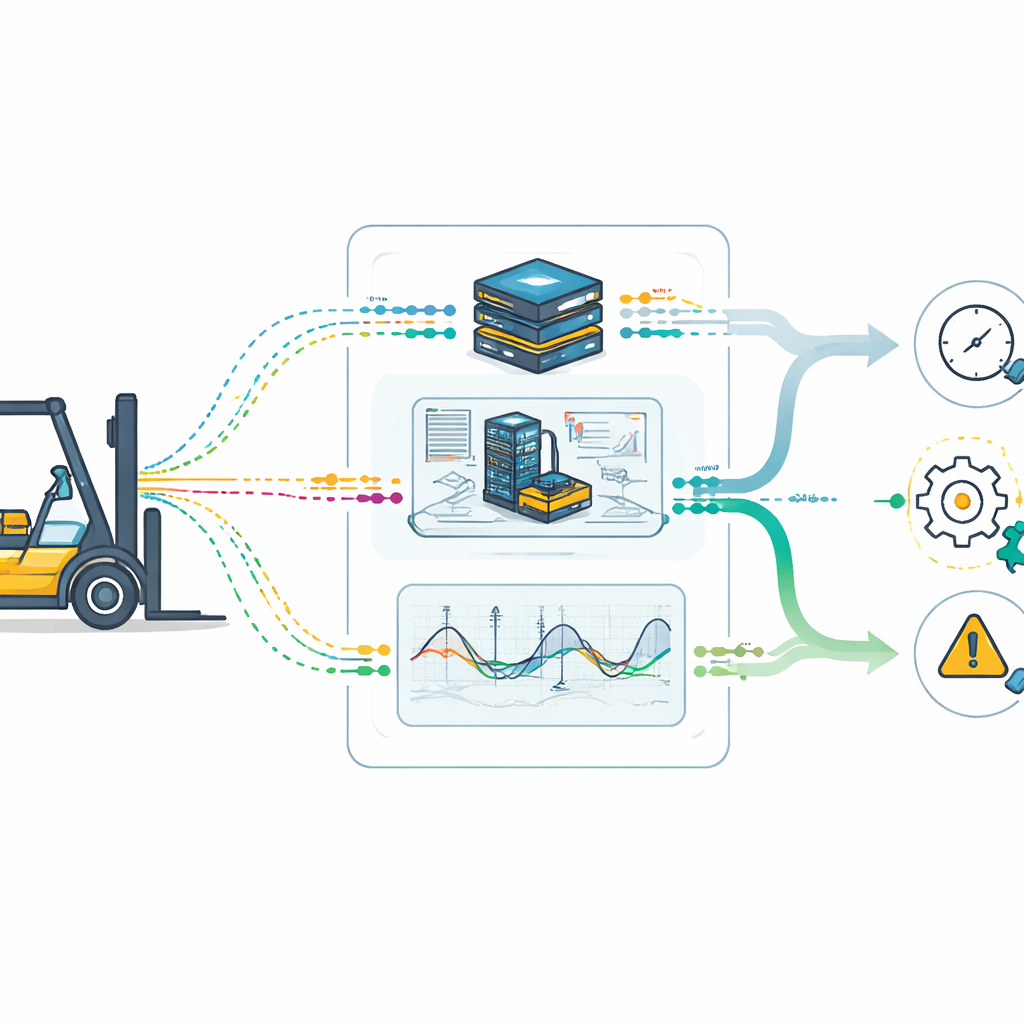
On top of this live digital layer, the researchers add machine learning models that specialize in three key tasks. First, they perform anomaly detection: learning what “normal” looks like and flagging subtle deviations that might signal early wear, misalignment, or sensor problems. Here they use techniques that isolate rare, odd behavior in the data, as well as neural networks trained to reconstruct healthy patterns and treat large reconstruction errors as warning signs. Second, they estimate remaining useful life, asking how many operating cycles or hours are left before a component is likely to fail. For this, they rely on models that are especially good at understanding sequences, such as recurrent neural networks, along with tree-based methods that highlight which sensor readings matter most. Third, they classify the likely fault type—distinguishing, for example, between a worn belt, a failing bearing, a hydraulic leak, or an electrical issue—so that technicians can bring the right parts and skills to the job.
From raw data to reliable predictions
To make these models trustworthy, the team combines a year’s worth of real operating logs from 150 pieces of equipment with synthetic failure scenarios generated inside the digital twin. They carefully clean and align the data, smooth out noise, fill in gaps, and normalize measurements so that no single sensor dominates the learning process. The result is a rich picture of how different components age under varying workloads and conditions. In tests, an ensemble of anomaly detection methods catches over 90% of true problems while keeping false alarms low. Remaining-life predictions are typically accurate to within a small fraction of a component’s lifespan, especially for parts such as bearings and motor windings that show consistent wear patterns. Fault classification models reach around 90% accuracy overall, and do particularly well on the most common and disruptive mechanical issues.
What this means for warehouses and costs
When the full system is deployed in a distribution center, the impact is striking. Unplanned downtime drops by more than 40%, and emergency repair calls nearly halve, as more work shifts into planned maintenance windows. Machines run longer between failures, and repair times shorten because crews arrive already knowing what is likely wrong. Overall equipment effectiveness, a key industrial score that blends availability, speed, and quality, climbs by nearly 11%. Financially, the site saves about 1.4 million dollars per year in avoided production losses, rush parts, overtime, and safety incidents, paying back the initial investment in only a few months and yielding a multi-year return many times the upfront cost.
Where this technology is headed next
For non-specialists, the takeaway is that warehouses and distribution centers are becoming more like living, learning organisms. Every forklift or conveyor can soon have a virtual shadow that notices unusual behavior, estimates how long it can keep working safely, and suggests the best moment to intervene. The study shows that such a setup can realistically cut downtime by 30–50% and maintenance costs by 20–40%, while improving safety and extending machine lifetimes. Looking ahead, the authors envision digital twins that collaborate across many sites, learn securely from each other, and not only predict failures but also help plan inventory, staffing, and energy use—quietly making the global flow of goods more resilient and efficient.
Citation: Han, F., Liu, L. & Sun, J. Logistics equipment condition monitoring and prediction based on digital twin and machine learning. Sci Rep 16, 12790 (2026). https://doi.org/10.1038/s41598-026-43380-4
Keywords: digital twin, predictive maintenance, logistics automation, IoT sensors, machine learning