Clear Sky Science · en
Monitoring treatment response using an ultra-sensitive ctDNA assay in advanced esophagogastric cancer patients
Why this blood test study matters
Cancer doctors often rely on scans to see whether treatment is working, but these images are taken only every few months and may miss early warning signs. This study explored a highly sensitive blood test that looks for tiny traces of tumor DNA in the bloodstream of people with advanced cancers of the esophagus and stomach. By tracking these signals over time, the researchers asked whether they could tell sooner who was benefiting from chemotherapy plus immunotherapy and who might need a change in treatment.
A closer look at esophagus and stomach cancers
Cancers that begin where the esophagus meets the stomach are common worldwide and are often found only after they have already spread. Standard treatment for many of these patients combines chemotherapy drugs with modern immune-based therapy. While this approach helps some people live longer, others gain little benefit and may endure side effects without much payoff. Doctors currently lack simple tools to predict who will respond and to spot returning disease as early as possible.
Turning tumor DNA in blood into a tracking tool
Many tumors shed fragments of their DNA into the blood. These bits, called circulating tumor DNA, can be detected with a blood draw, a type of test often called a liquid biopsy. In this study, the team used an especially sensitive version of such a test, built individually for each patient. They first sequenced the DNA from each person’s tumor and normal tissue, then designed a custom panel that could recognize up to about 1,800 tumor-specific changes in the blood. This allowed them to measure vanishingly small amounts of tumor DNA, down to a few parts per million among all DNA fragments in a blood sample. 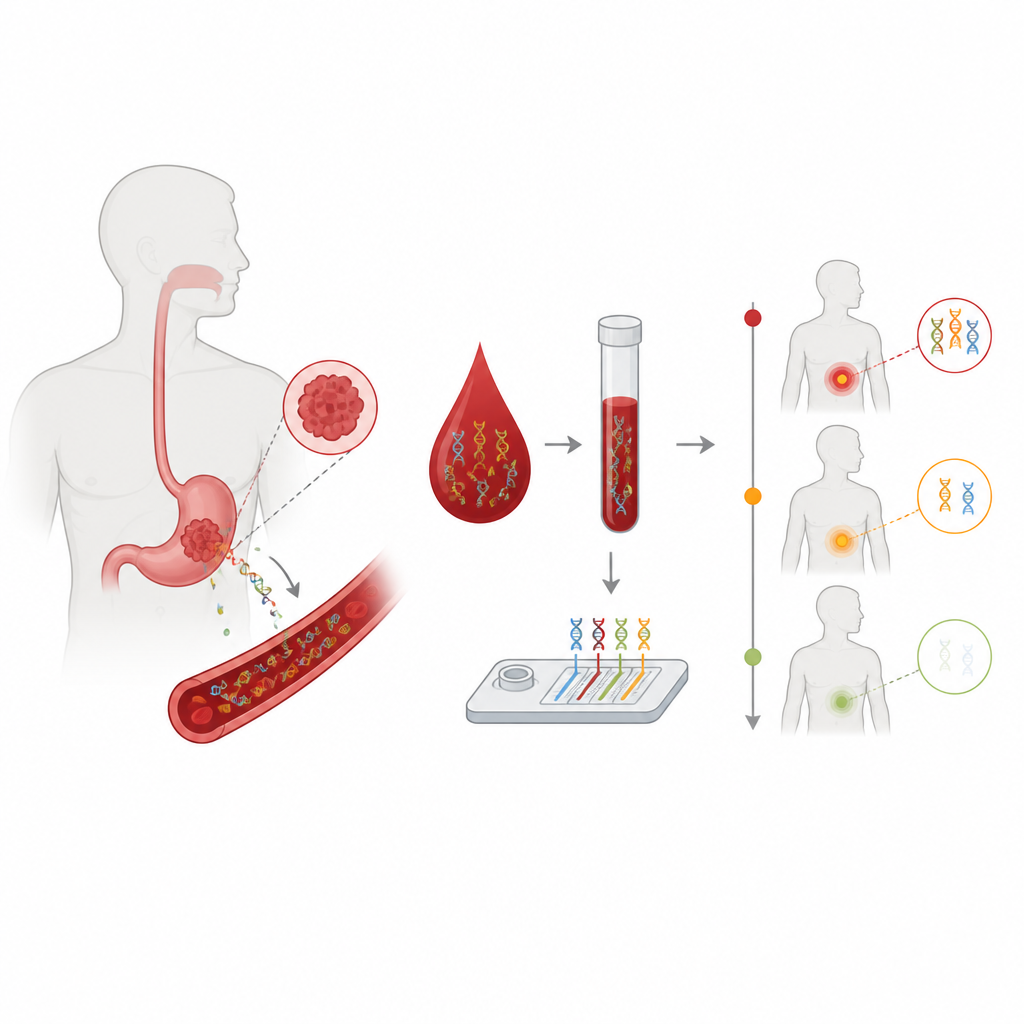
Following patients through treatment
The researchers applied this approach to 24 people with advanced esophagogastric cancer who were treated in a clinical trial known as KeyLargo. All had detectable tumor DNA in their blood before therapy, and three out of four blood samples taken during follow-up remained positive. Patients had blood drawn at several key times, including one week after starting immunotherapy and about one month after treatment began. The team compared changes in tumor DNA levels with scan-based measurements of tumor size and with how long patients lived without their disease worsening.
Early drops in tumor DNA signal better response
Within roughly 30 days of starting treatment, a clear pattern emerged. Patients whose blood showed a drop of at least half in tumor DNA levels were much more likely to have their tumors shrink on scans and to live longer without progression. Those whose tumor DNA did not fall by this amount had worse overall and progression-free survival, and none had meaningful shrinkage on imaging. Over the entire course of treatment, changes in tumor DNA closely mirrored changes in tumor size on scans, and in most cases tumor DNA levels started rising again about two months before scans showed that the cancer was growing. 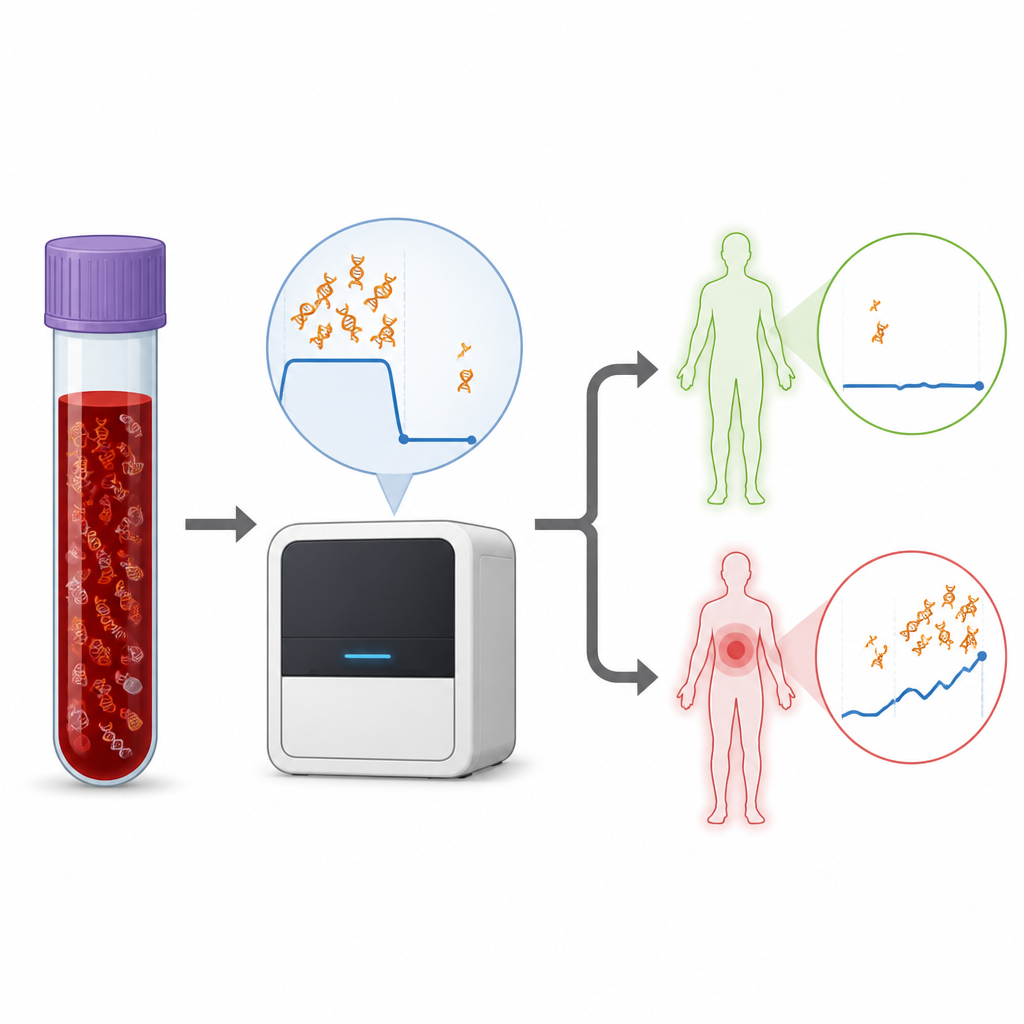
Why extreme sensitivity matters
The custom test could pick up tumor DNA at levels far below what many current commercial tests can detect. About one fifth of all positive samples in this study contained very low levels of tumor DNA that would likely have been missed by less sensitive methods. When the researchers reanalyzed their data as if they had a less sensitive test, some early warnings of progression disappeared, the lead time before scan-detected growth shrank, and the link between clearing tumor DNA from the blood and longer survival became weaker.
What this means for patients
For people with advanced esophagus and stomach cancers, a highly sensitive blood test that tracks tumor DNA over time could offer an earlier and more detailed view of how well treatment is working. In this study, early drops and eventual disappearance of tumor DNA were tied to better outcomes, while rising levels often signaled trouble weeks to months before scans. Although the results need confirmation in larger groups, they suggest that regular, ultra-sensitive blood monitoring could help doctors tailor therapy sooner, reduce unnecessary side effects, and respond more quickly when a cancer begins to return.
Citation: Nixon, A.B., Navarro, F.C.P., Zhou, K.I. et al. Monitoring treatment response using an ultra-sensitive ctDNA assay in advanced esophagogastric cancer patients. Sci Rep 16, 14766 (2026). https://doi.org/10.1038/s41598-026-43178-4
Keywords: circulating tumor DNA, liquid biopsy, esophagogastric cancer, treatment monitoring, immunotherapy response