Clear Sky Science · en
Intranasal delivery of bryostatin-1 using surface charge-engineered lipid nanoparticles to modulate mucosal defense for allergic rhinitis treatment
Why Sneezing and Sniffles Need Smarter Treatments
Seasonal allergies and year-round hay fever are more than just annoyances; for many people, constant sneezing, a runny nose, and congestion interfere with sleep, work, and school. Most current treatments simply quiet symptoms for a few hours rather than fixing the misfiring immune response that causes them. This study explores a new nose-delivered strategy that aims to retrain the immune system lining the nasal passages, using tiny fat-based particles to carry a powerful marine-derived compound directly to local defense cells. If successful, this approach could offer longer-lasting relief with far lower drug doses than today’s allergy medicines. 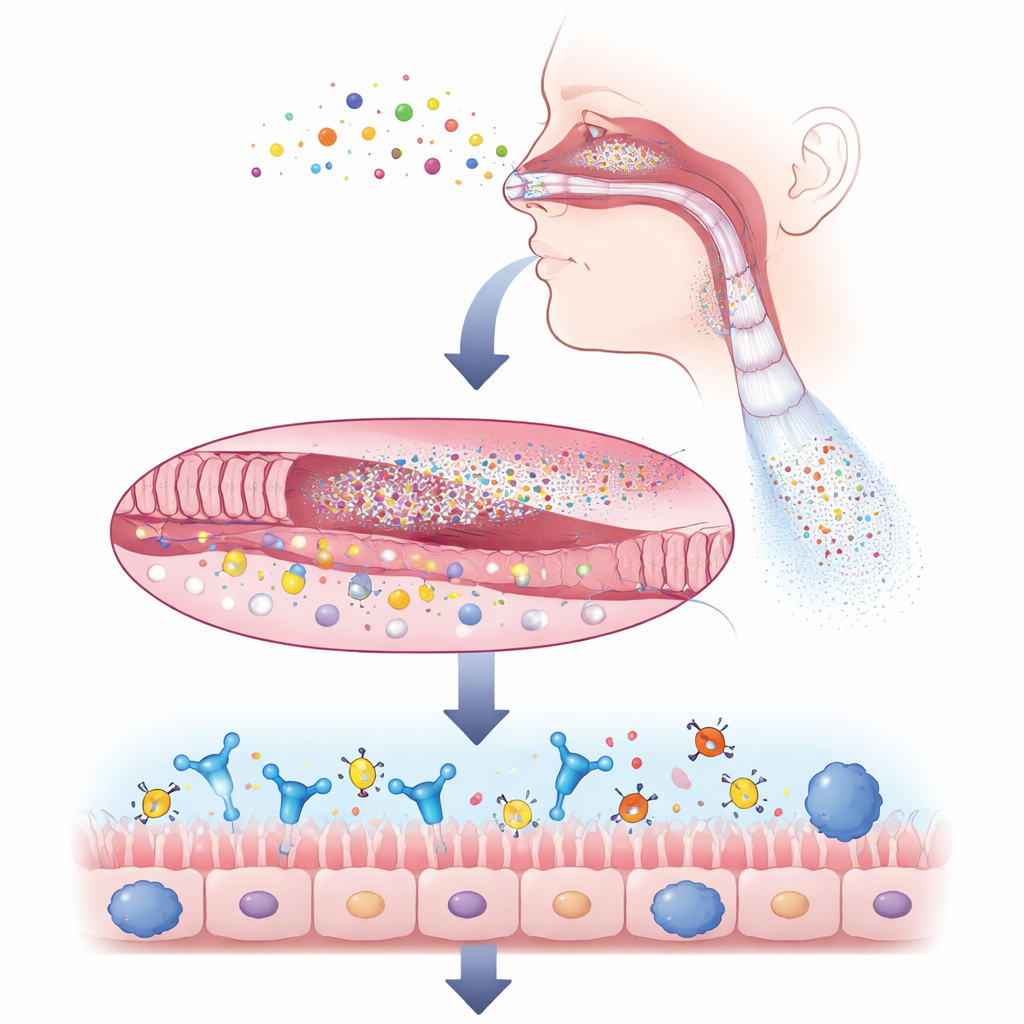
A Marine Molecule With Hidden Allergy-Fighting Power
The work centers on bryostatin-1, a complex natural compound originally isolated from a sea-dwelling animal. Bryostatin-1 can fine-tune a family of cell switches called protein kinase C, which in turn influence how immune cells behave. Earlier research showed that when bryostatin-1 is given into the nose of mice, it nudges antibody-producing B cells to favor making IgA antibodies, which patrol mucosal surfaces like the nose and mouth, while at the same time dialing down IgE antibodies, the main triggers of allergic flare-ups. In animal models of hay fever, a moderate dose of bryostatin-1 reduced symptoms for months, suggesting it could address the root immune imbalance rather than just masking discomfort.
Why Delivering the Drug Through the Nose Is So Hard
Despite its promise, bryostatin-1 is tricky to use in practice. It is expensive to produce, poorly soluble in water, and tends to stick to glass and plastic. The nose also has built-in defenses: a slippery mucus layer with tiny pores and constant ciliary motion that sweeps foreign material toward the throat. These features, while vital for health, cause many intranasal drugs to be cleared away before they can reach immune cells in the nasal lining. The researchers reasoned that encapsulating bryostatin-1 inside carefully engineered lipid nanoparticles—tiny droplets with a fatty shell similar to cell membranes—might protect the drug, help it slip through mucus, and deliver it more efficiently to the right immune cells.
Tuning the Charge on Tiny Carriers
To test this idea, the team built a family of lipid nanoparticles with different electrical charges on their surfaces: neutral, positively charged (cationic), and negatively charged (anionic). They kept the particles small—around 130 to 150 nanometers—so they could pass through the mucus mesh. In cell culture, all formulations held bryostatin-1 efficiently and remained stable in size and charge for weeks in the refrigerator. When the researchers exposed mouse immune cells to fluorescently labeled particles, they discovered an important pattern: negatively charged particles entered certain antigen-presenting cells and B cells very effectively, without harming them, while highly positive particles could become toxic at higher charge levels. 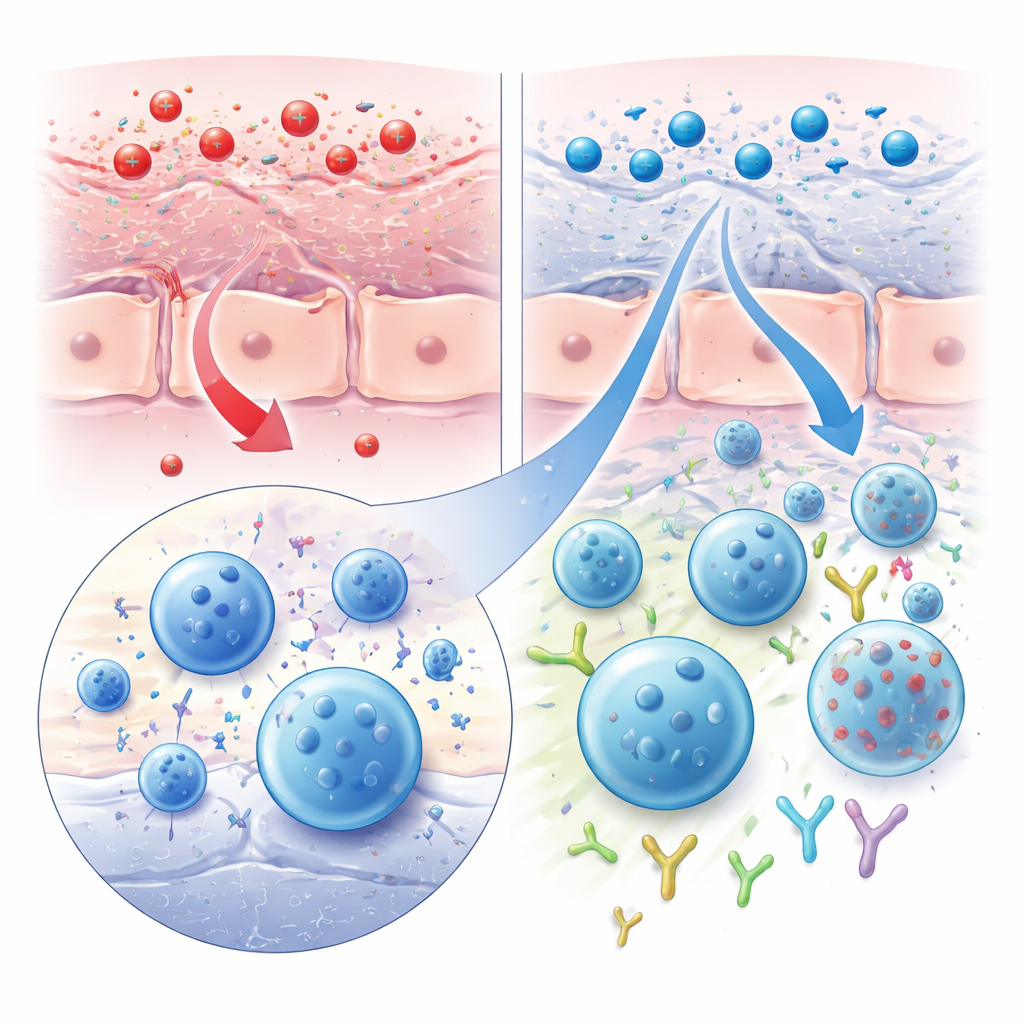
Guiding the Immune Switch From Allergy to Protection
The crucial test was whether these particles could actually shift antibody production. In dishes of mouse B cells, bryostatin-1 alone already promoted the switch toward IgA and away from IgE, but loading the drug into lipid nanoparticles amplified this effect. The strongest and safest responses came from the most negatively charged formulation, which boosted early gene signals associated with IgA while further suppressing those linked to IgE. The team then moved to a mouse model of allergic rhinitis, where animals were sensitized to a model allergen and then treated intranasally with either free bryostatin-1 or bryostatin-1-loaded nanoparticles. Remarkably, when the same tiny dose of bryostatin-1 (just 0.5 nanograms) was packaged into anionic particles, saliva levels of allergen-specific IgA rose significantly, whereas the same dose of free drug had little effect.
What This Could Mean for Future Allergy Care
Overall, the study shows that by matching a promising but difficult drug with a smartly designed lipid nanoparticle—especially one with a negative surface charge—it is possible to enhance drug delivery through the nasal mucosa, favor protective IgA antibodies, and slightly curb allergy-driving IgE, all using extremely low doses. For lay readers, the key idea is that instead of endlessly blocking histamine or shrinking swollen tissues, future nasal therapies might train the immune lining of the nose to react more calmly to allergens while keeping its barrier strong against real threats. Although more work is needed in larger animal studies and eventually humans, this charge-tuned nanoparticle approach suggests a new path toward longer-lasting, cause-targeted treatments for hay fever and related allergic conditions.
Citation: Li, J., Morita, N., Miura, R. et al. Intranasal delivery of bryostatin-1 using surface charge-engineered lipid nanoparticles to modulate mucosal defense for allergic rhinitis treatment. Sci Rep 16, 14052 (2026). https://doi.org/10.1038/s41598-026-43174-8
Keywords: allergic rhinitis, intranasal nanoparticles, bryostatin-1, mucosal immunity, IgA antibodies