Clear Sky Science · en
Enhancing trustworthiness of Arabic online health information quality evaluation using an enhanced BERT architecture with PCA and ICA feature weighting
Why online health advice needs a smart filter
More people than ever search the internet for answers about heart disease, strokes, blood pressure, and other urgent health problems. Yet many Arabic-language websites give advice that is incomplete, outdated, or simply wrong. This paper describes how researchers built an artificial intelligence system that reads Arabic medical web pages and judges whether their information is trustworthy, with an accuracy close to that of human experts. Their goal is to help patients, families, and even future digital assistants avoid misleading health advice online.
Sorting good health information from bad
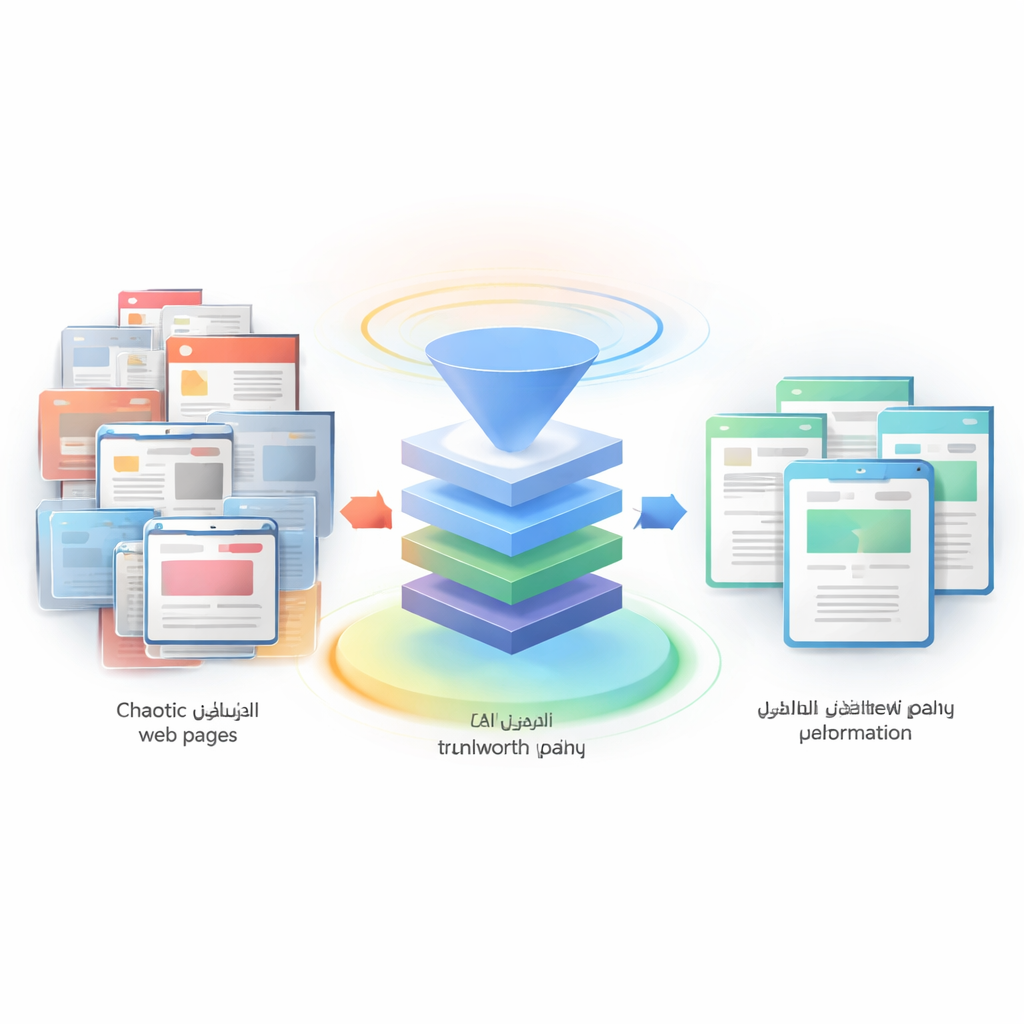
The authors begin by highlighting a serious problem: most online health information is of low quality, but people often treat it as if it were reliable, sometimes using it instead of seeing a doctor. Past attempts to automatically rate web pages have mostly focused on English, used narrow definitions of quality, and paid little attention to how confident or well-calibrated the AI systems were. This study focuses on Arabic content and uses a richer view of quality that includes who wrote the information, how up to date it is, whether it is based on evidence, and how clearly it explains treatment benefits and risks. Human reviewers scored hundreds of Arabic web pages on emergency conditions like heart attacks and strokes, creating a detailed reference dataset of “high-quality” and “low-quality” pages.
Teaching a machine to read Arabic medical text
To judge new pages, the researchers turned to modern language models—AI systems trained to understand text. They started with Arabic BERT, a powerful model that represents each word as a point in a high‑dimensional space capturing meaning and context. They then created a specialized medical version, trained on over 100 million words from Arabic medical books and websites, so the model could better grasp technical phrases and common ways symptoms and treatments are described. Because web pages can be long, the team summarized them into manageable chunks and cleaned the text so that spelling variations and special characters would not confuse the model.
Making sense of complex patterns
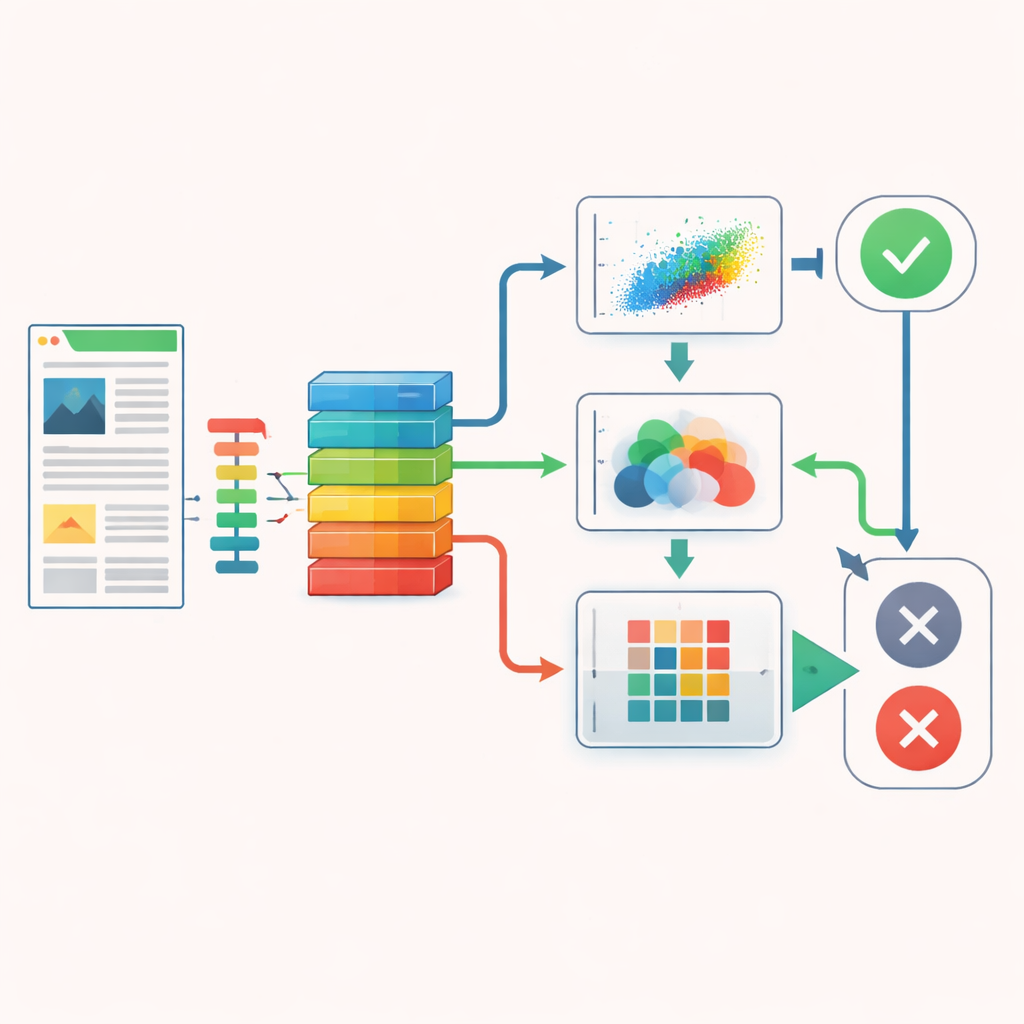
Even after BERT converts a web page into numerical patterns, the result is huge and partly redundant. The authors therefore used mathematical tools called Principal Component Analysis (PCA) and Independent Component Analysis (ICA) to compress these patterns into smaller, more informative sets of features. PCA finds directions that capture the biggest differences in the data, while ICA tries to untangle overlapping signals into more independent pieces. These reduced feature sets are then fed into a final layer that decides whether a page is likely to be high or low quality. The team also experimented with a modified training rule that penalizes the model when its predictions are vague, nudging it toward clearer, more confident decisions.
How well the system performs
Because low‑quality pages greatly outnumber high‑quality ones, the authors used several data‑augmentation techniques, such as translating text back and forth between languages, to balance the training examples. They evaluated multiple versions of their system using standard measures like accuracy and F1‑score, and also newer measures of how well the model’s confidence matches reality. The standout design combined Arabic BERT with PCA-based feature weighting, reaching about 94.7% accuracy—on par with, or slightly better than, human raters on comparable tasks. Other versions, including the medical-specialized model and the entropy‑based loss, offered trade‑offs between pure accuracy and how evenly they treated high- and low‑quality pages or how cautiously they expressed confidence.
What this could mean for patients and doctors
From a layperson’s perspective, the key message is that it is now possible to build AI tools that act like skilled reviewers for Arabic health websites, highlighting trustworthy pages and flagging dubious ones. While the authors stress that such systems should support, not replace, medical professionals, their work points toward practical applications such as browser plug‑ins that warn users, search engines that push reliable sources up the results list, or health chatbots that quietly filter the information they draw on. With further testing and safeguards, these techniques could become an important layer of protection between vulnerable patients and misleading online advice.
Citation: Baqraf, Y., Keikhosrokiani, P. & Cheah, YN. Enhancing trustworthiness of Arabic online health information quality evaluation using an enhanced BERT architecture with PCA and ICA feature weighting. Sci Rep 16, 12434 (2026). https://doi.org/10.1038/s41598-026-43158-8
Keywords: online health information, Arabic language, health misinformation, deep learning, BERT