Clear Sky Science · en
Biochromatic potential of Pseudomonas aeruginosa from grapes: molecular profiling, antimicrobial action and eco-friendly dye applications
Color from an Unexpected Source
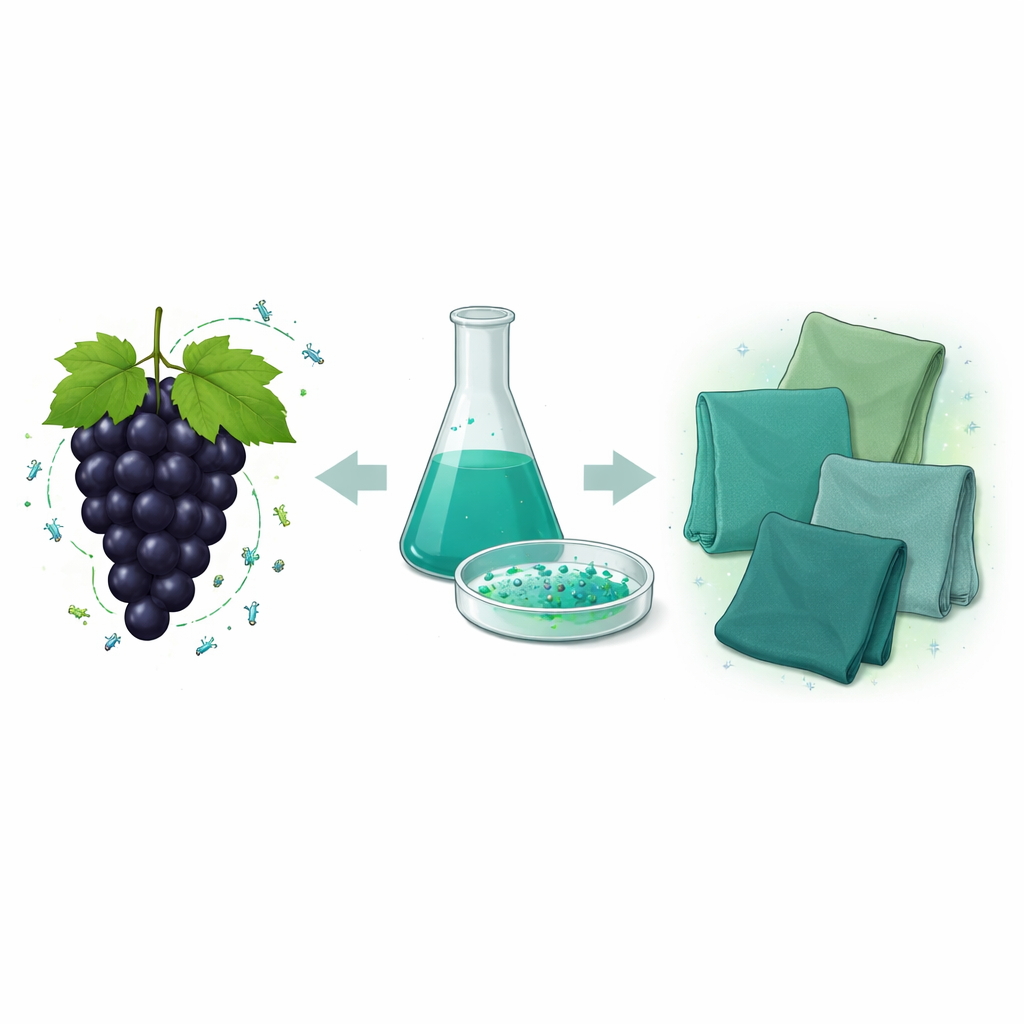
Most of the colors that brighten our clothes come from synthetic dyes made from petroleum, which can pollute waterways and pose health risks. This study explores a very different source of color: a blue‑green pigment made by bacteria living on black grapes. The researchers asked whether this natural color could safely replace some synthetic dyes in textiles, while also offering the bonus of fighting harmful microbes.
Finding Helpful Bacteria on Grapes
The team started with ordinary black grapes bought from local markets. After carefully washing and crushing the fruit under sterile conditions, they spread tiny amounts of grape material onto nutrient gel in petri dishes. Among the many microbes that grew, two strains formed striking blue‑green colonies. Detailed tests of their shape, staining behavior, chemical reactions, light‑absorption pattern, and genetic sequence showed that one standout strain, named SK4, belonged to the species Pseudomonas aeruginosa. This bacterium is known to make a vivid pigment called pyocyanin, which dissolves well in water and has a distinctive color.
Turning Microbial Color into a Usable Dye
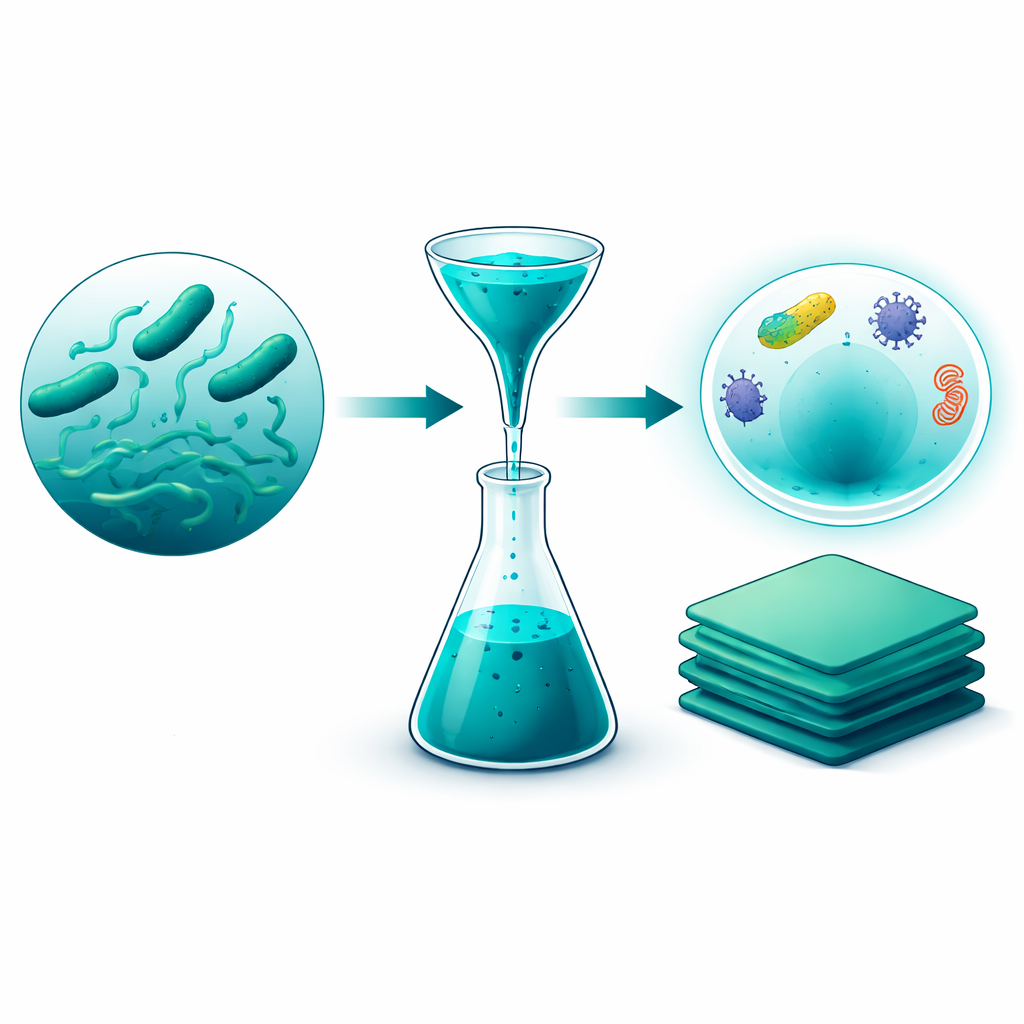
To harness the pigment, the scientists grew the SK4 strain in liquid nutrient broth enriched with glycerol, which encouraged both rapid growth and strong color production. They tracked the bacteria’s growth over time and found it doubled roughly every two hours, a pace that supports efficient pigment manufacture. After several days, the culture turned noticeably blue‑green. The researchers then compared four common solvents to pull the pigment out of the cells. Chloroform worked best, yielding the greatest amount of stable, intensely colored material. Light‑absorption measurements confirmed that the extracted pigment matched the optical fingerprint expected for pyocyanin.
Natural Color That Fights Germs
Beyond providing color, the pigment showed clear antimicrobial power. Using a standard test in which wells of pigment are placed in bacteria‑coated agar plates, the team checked its effect on four medically important microbes: Salmonella typhi, Escherichia coli, Klebsiella pneumoniae, and another strain of Pseudomonas aeruginosa. Around each well, visible clear zones appeared where the test bacteria could not grow. The sizes of these zones revealed that the pigment consistently hindered all four pathogens, indicating broad‑spectrum activity. This suggests that fabrics colored with such a dye might not only look attractive but also help reduce surface contamination.
Putting the Bio‑Dye on Real Fabrics
The researchers then treated four types of fabric—cotton, silk, crepe, and satin—with the bacterial pigment. All took on a blue‑green shade, but not equally. Crepe absorbed the color most strongly, followed by satin, while silk and cotton showed gentler, pastel tones. Standard tests measured how well the color survived washing, rubbing, and exposure to light, using a rating scale from very poor to excellent. Crepe performed best, keeping its color extremely well during washing and handling. Satin showed good durability, whereas silk and cotton faded more readily. For all fabrics, resistance to sunlight was the weakest point, with noticeable fading under long light exposure, a known limitation of many natural dyes.
Safety on Skin and Promise for the Future
Because Pseudomonas aeruginosa can cause infections in vulnerable patients, the team checked whether pigment‑dyed fabrics were safe on human skin. Small squares of colored cloth were taped to volunteers’ wrists for repeated eight‑hour periods over three days. None of the participants developed redness, swelling, or rash, indicating that the purified pigment, free of live bacteria, was not irritating under these conditions. Overall, the study shows that a blue‑green pigment from grape‑associated bacteria can act as a non‑toxic, eco‑friendly dye that also hampers harmful microbes. With further work to boost light resistance and scale up production, such microbial colors could help the textile industry move away from polluting synthetic dyes toward cleaner, bio‑based alternatives.
Citation: Kour, S., Dutta, U., Mahajan, T. et al. Biochromatic potential of Pseudomonas aeruginosa from grapes: molecular profiling, antimicrobial action and eco-friendly dye applications. Sci Rep 16, 10859 (2026). https://doi.org/10.1038/s41598-026-43143-1
Keywords: microbial pigments, natural textile dyes, Pseudomonas aeruginosa, antimicrobial fabrics, pyocyanin