Clear Sky Science · en
Clinical, radiological, and CSF features distinguishing spinal dural arteriovenous fistula from idiopathic transverse myelitis and seropositive NMOSD-/MOGAD-associated myelopathy: a retrospective observational study
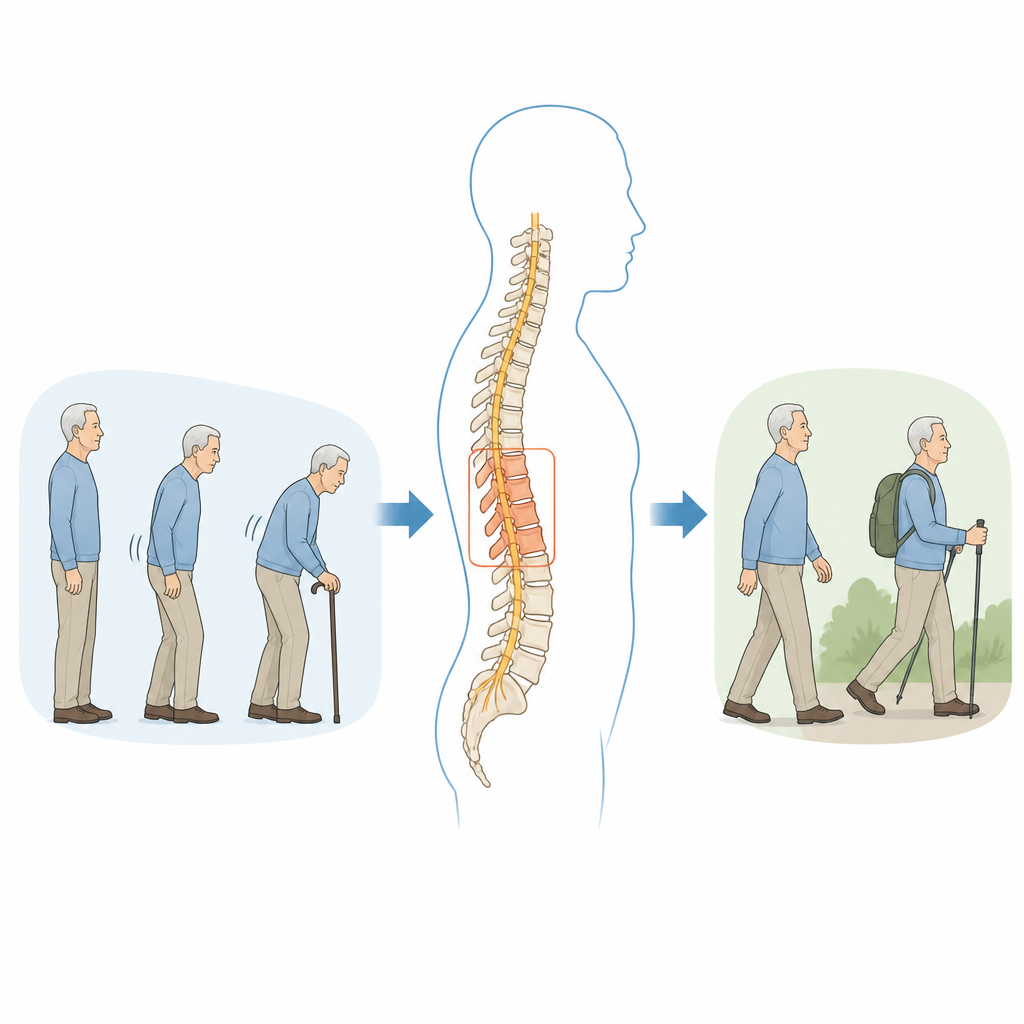
Why slow changes in walking and bladder control matter
Many people assume that gradually worsening leg weakness or bladder problems are signs of aging, a slipped disc, or an inflammatory disease like multiple sclerosis. Yet in a small number of people these symptoms are caused by a hidden blood vessel problem on the covering of the spinal cord that is actually treatable. This study looks at how doctors can tell this condition apart from certain immune-related spinal cord illnesses that look very similar at first glance.
A rare but important spinal cord blood vessel problem
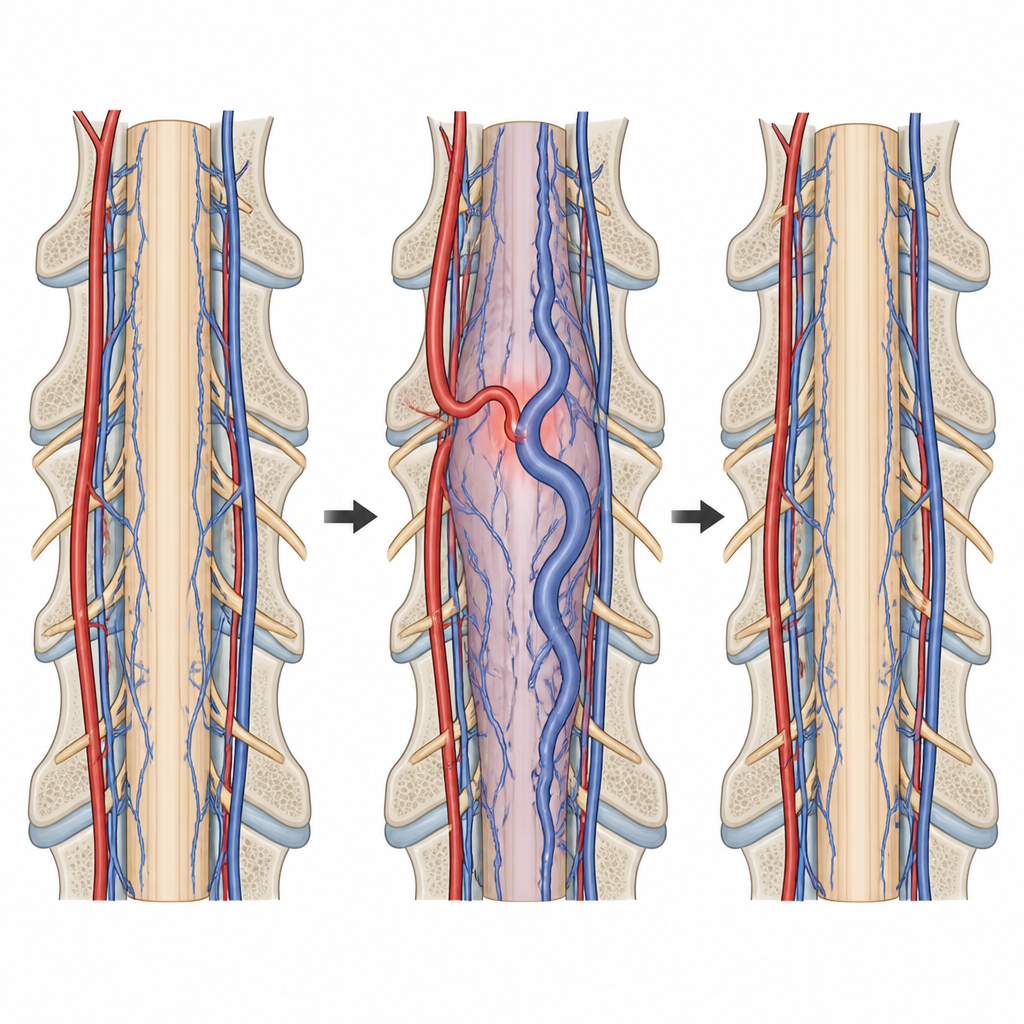
The condition at the heart of this work is called a spinal dural arteriovenous fistula, a tiny abnormal link between an artery and a vein on the outer covering of the spinal cord. Instead of blood flowing smoothly through the normal pathway, pressure builds up in nearby veins and slowly chokes the cord. People often notice trouble walking, numbness, and problems with bladder control that creep up over months or years. Because the early signs are vague and overlap with many other disorders, misdiagnosis is common and treatment can be delayed long enough to leave permanent disability.
Comparing look-alike spinal cord diseases
The researchers reviewed medical records from three centers, covering 49 people who all had spinal cord problems that stretched over several segments. Fifteen had the blood vessel problem, while the others had one of three immune-related conditions: idiopathic transverse myelitis, neuromyelitis optica spectrum disorder, or disease linked to antibodies against a protein called MOG. For every patient, neurologists and radiologists carefully recorded age, sex, symptom pattern, triggers, bladder and bowel function, spinal scans, and spinal fluid test results. They then compared these groups to see which everyday clinical clues, rather than rare or high-tech findings, could reliably flag the blood vessel disorder.
Clues from everyday symptoms and timing
Several clear patterns emerged. People with the blood vessel problem were more often men in their fifties or sixties and tended to have other medical conditions. They waited much longer before reaching the hospital, with a typical delay of about three months compared with days or weeks for those with immune diseases. Their symptoms more often worsened in a stepwise, fluctuating fashion instead of a single attack followed by partial recovery. Everyday activities or medical treatments that affect pressure in the veins, such as strenuous exercise or high-dose steroid therapy, seemed to temporarily worsen symptoms only in the blood vessel group. Urinary problems such as difficulty starting or fully emptying the bladder were strikingly more frequent as well.
What scans and spinal fluid do and do not reveal
Standard spinal fluid tests, often used to separate infections and immune conditions from other causes, did not provide reliable hints. Mild changes in sugar, protein, or cell counts were seen but were not unique to any one diagnosis. On magnetic resonance imaging, the overall appearance of damaged spinal cord tissue looked broadly similar across groups. However, where along the spine the damage appeared turned out to be informative. In people with the blood vessel problem, the lower part of the chest spine was commonly involved, while the segment between the lower neck and upper chest was usually spared. In contrast, that neck–upper chest zone was more commonly affected in the immune-related conditions.
Why these findings matter for patients
The study suggests that a simple checklist based on symptom pattern, triggers, bladder function, and the exact level of spinal involvement can help doctors think of this rare blood vessel disorder sooner. While the number of patients was modest and the authors caution that the findings need confirmation in larger groups, the message is practical. When a middle-aged person, especially a man, develops slowly worsening or fluctuating walking problems and urinary trouble, with lower chest spinal damage and no earlier attacks on the brain or optic nerves, doctors should strongly consider a spinal blood vessel cause. Because this condition is treatable once recognized, using these clues could shorten the road to the right diagnosis and help preserve movement and independence.
Citation: Sarıdaş, F., Özpar, R., Ceylan, D. et al. Clinical, radiological, and CSF features distinguishing spinal dural arteriovenous fistula from idiopathic transverse myelitis and seropositive NMOSD-/MOGAD-associated myelopathy: a retrospective observational study. Sci Rep 16, 15235 (2026). https://doi.org/10.1038/s41598-026-43104-8
Keywords: spinal cord, arteriovenous fistula, transverse myelitis, neuromyelitis optica, myelopathy