Clear Sky Science · en
Comparative environmental and economic assessment of greenhouse cucumber and opuntia ficus-indica cultivation in arid regions
Why This Matters for Dry Lands
Across much of the world, farmers in hot, dry regions are struggling to grow enough food as water becomes scarcer and energy prices rise. In many of these places, greenhouses packed with popular vegetables like cucumbers use large amounts of irrigation water, fuel, and electricity. This study asks a simple but timely question: what happens if we use the same greenhouse structures to grow a very different crop — the hardy cactus Opuntia ficus-indica — instead? By comparing the full environmental and economic "tab" for each option in eastern Iran, the authors explore how farmers might keep earning a living while easing pressure on fragile lands and dwindling water supplies.
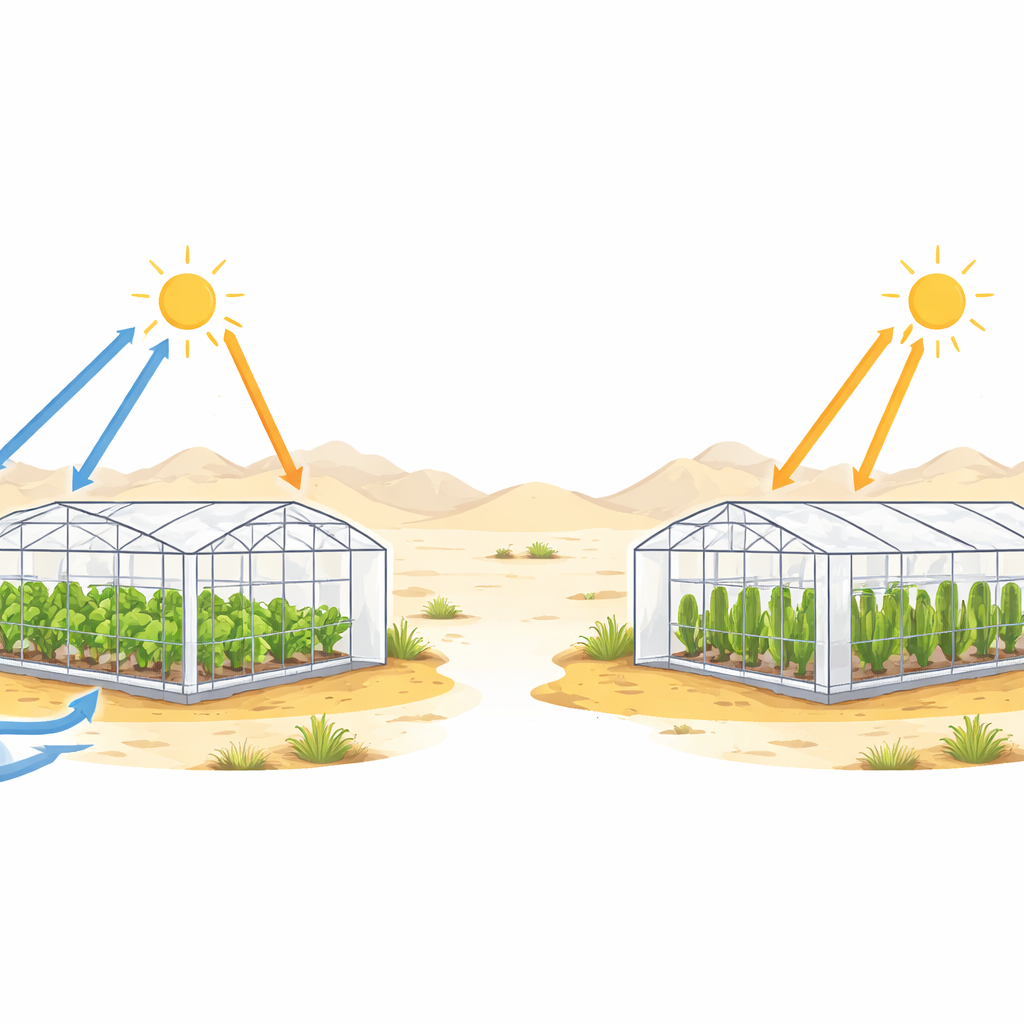
Two Greenhouses, One Harsh Climate
The research took place in Sistan, a region on the Iran–Afghanistan border marked by long droughts, shrinking wetlands, frequent dust storms, and falling groundwater. Here, many greenhouses are already built but often sit idle when wells run low or water turns too salty for delicate vegetables. The team compared two real greenhouse systems in this setting: a conventional cucumber operation that needs frequent irrigation, heating on cool nights, and many fertilizer and pesticide applications, and a greenhouse growing Opuntia ficus-indica, a cactus whose pads can be used as food and animal feed. Both systems were evaluated for all stages from building the greenhouse to harvesting one ton of product.
Following Impacts from Construction to Harvest
To make the comparison fair and comprehensive, the authors used life cycle assessment, a method that tracks environmental impacts from raw materials and construction through daily operation. They calculated climate-warming emissions, damage to water and ecosystems, resource use, and water consumption for both crops. They also ran a parallel life cycle cost analysis over 25 years, tallying up building costs, fuel and electricity, water, fertilizers, labor, and expected income. In addition, they measured antioxidant activity in the cactus pads to better understand how this plant copes with harsh conditions, helping explain why it can thrive with such low inputs.
Environmental Burden: Thirsty Cucumbers vs. Tough Cactus
The results show that cucumbers are far more demanding on the environment than the cactus. Per ton of harvest, cucumber production caused 4.5 times more climate-warming emissions and more than eight times the water use compared with Opuntia. Heavy diesel and electricity use in cucumber greenhouses dominated global warming, air pollution, and toxicity categories. Construction of the greenhouse itself — concrete foundations, cables, and metal pipes — also had a surprisingly large footprint for both crops, accounting for over 95% of several toxicity and resource-use impacts. Even so, when construction and operation were viewed together, switching to Opuntia reduced total environmental impacts by about 75%, mainly because the cactus needs far less water, fertilizer, and energy once the greenhouse is in place.
Money Matters: Fast Payback vs. Long-Term Security
On paper, cucumbers initially looked more attractive financially. Over 25 years, the cucumber system showed a higher internal rate of return and paid back its investment in about six and a half years, compared with more than twelve years for the Opuntia system. But this apparent advantage depends on steady access to large amounts of irrigation water and fuel — precisely what is disappearing in Sistan. The study found that water and fuel use for cucumbers were nearly ten times higher than for cactus, driving up long-term costs and risk. The cactus system had lower total costs overall — about one-third less than cucumbers — and requires fewer labor hours, freeing time for processing or selling additional cactus-based products such as animal feed or food ingredients.
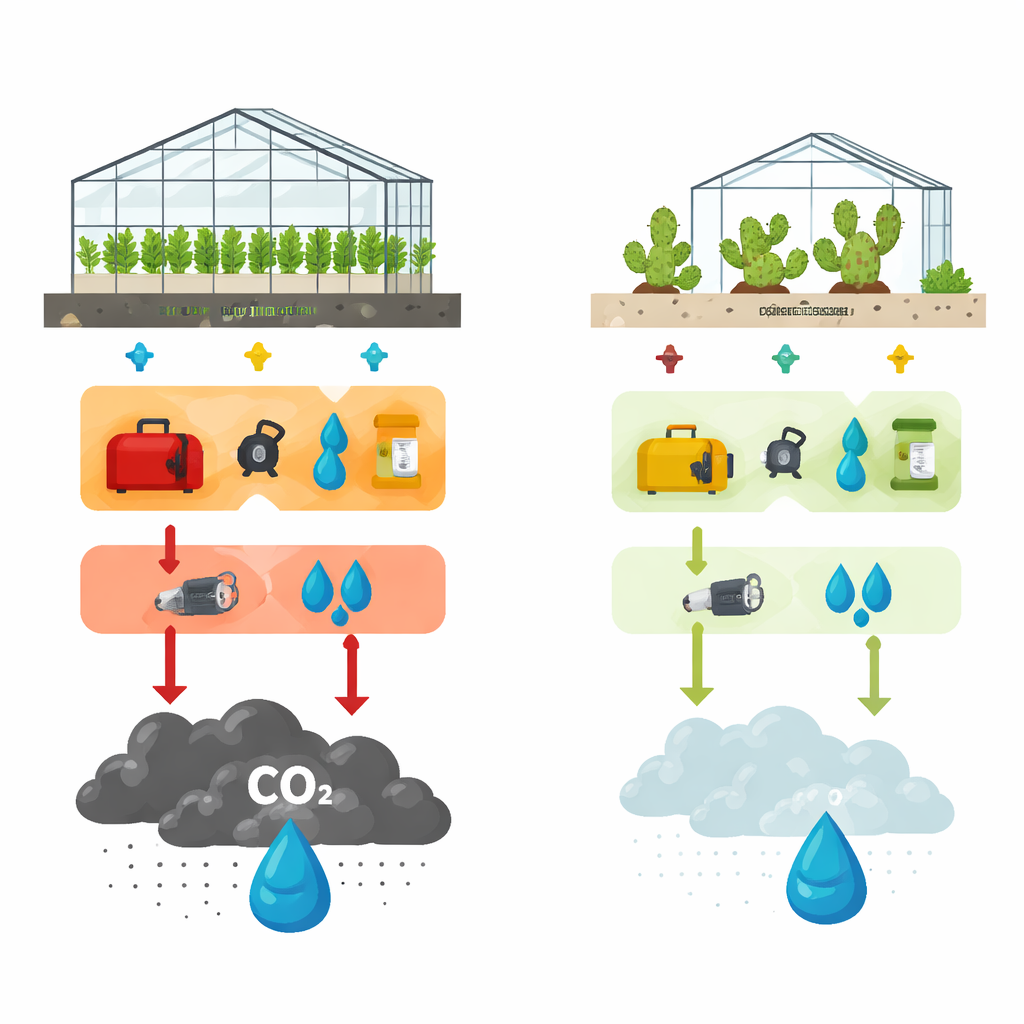
A New Role for Idle Greenhouses
For farmers and planners in arid regions, the study’s conclusion is straightforward: using existing greenhouses to grow Opuntia ficus-indica instead of water-hungry cucumbers can sharply cut environmental damage while offering a more stable economic path under water and energy stress. The cactus greenhouse needs less irrigation, fertilizer, and chemical treatment, yet still produces useful food and feed in poor soils and with salty water. Although earnings build more slowly, the system better matches the realities of a drying climate and can help keep farm incomes afloat when conventional vegetables are no longer viable. In short, turning greenhouse space over to hardy cactus crops offers a practical way to conserve water, lower emissions, and build resilience in some of the world’s most climate-vulnerable farming regions.
Citation: Abyar, H., Pakzad-Toochaei, S. & Einollahipeer, F. Comparative environmental and economic assessment of greenhouse cucumber and opuntia ficus-indica cultivation in arid regions. Sci Rep 16, 11736 (2026). https://doi.org/10.1038/s41598-026-43088-5
Keywords: arid agriculture, greenhouse farming, water scarcity, life cycle assessment, Opuntia ficus-indica