Clear Sky Science · en
First molecular characterization and antimicrobial resistance profiles of Campylobacter jejuni isolated from poultry meat in Yemen
Why this matters for your dinner table
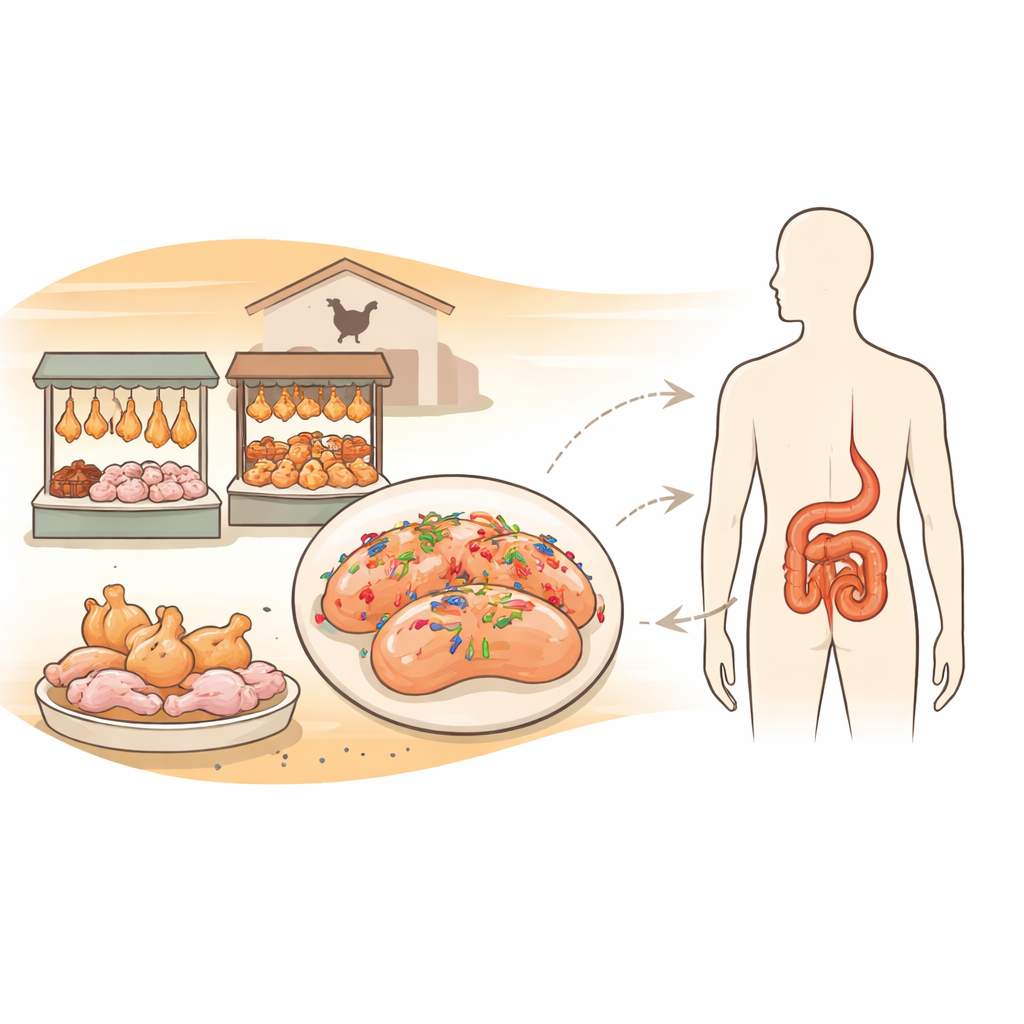
Poultry is a staple source of affordable protein in many households, especially in low‑income and conflict‑affected countries. This study looks at a gut‑dwelling bacterium called Campylobacter jejuni that can hitch a ride on chicken meat and cause diarrhea in people. The researchers focused on poultry sold in Sana’a, the capital of Yemen, asking two simple but vital questions: how common is this germ in store‑bought chicken, and how well do our usual antibiotics still work against it?
Checking what is really on the meat
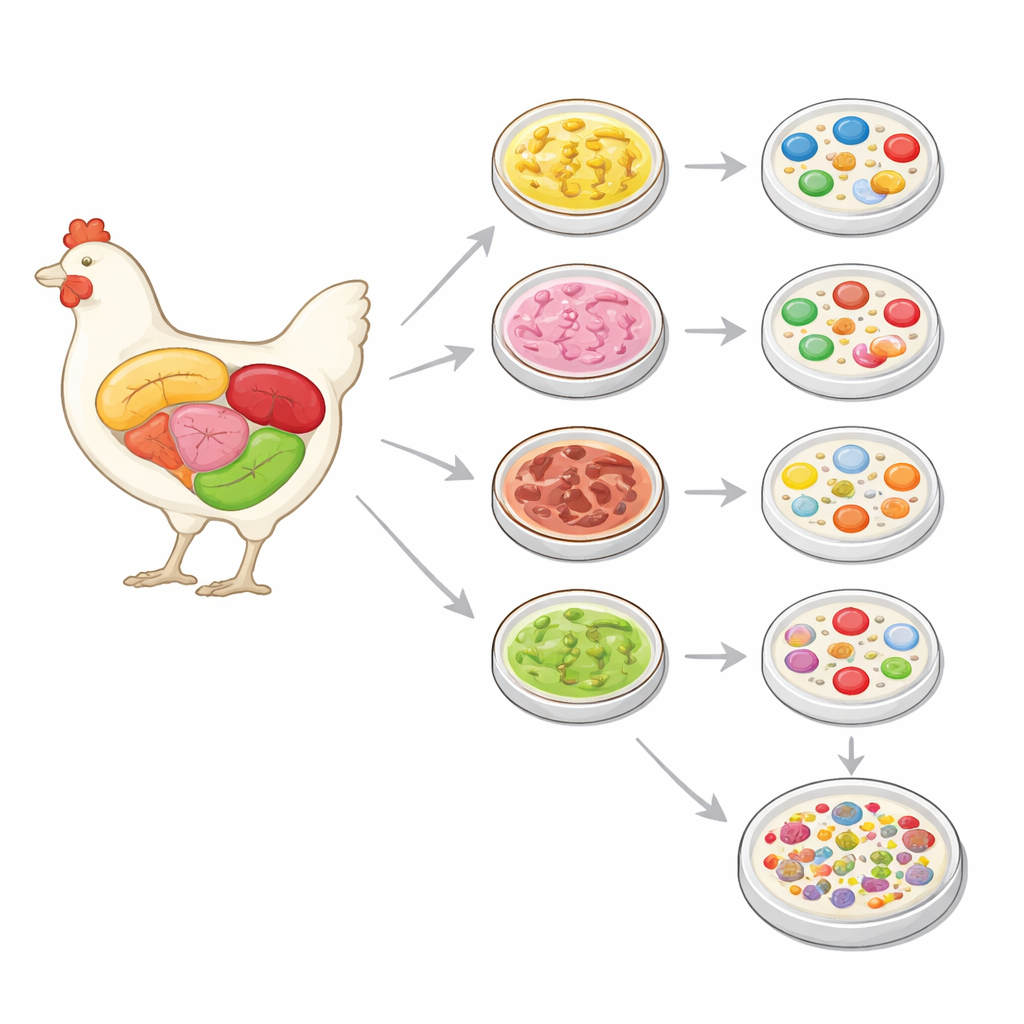
The team collected 330 poultry meat samples over a year from local slaughterhouses and shops, as well as imported frozen chicken sold in supermarkets. From each bird, they sampled different parts: skin, muscle, heart, liver, and intestines for local birds, and skin and muscle for imported ones. In the lab, they first encouraged any bacteria present to grow in special broth, then spread them onto selective agar plates where Campylobacter can form distinct colonies. Suspect colonies were checked with standard microbiology tests and then confirmed using DNA‑based methods, including amplification and sequencing of a marker gene to be sure they were dealing with C. jejuni.
Local chicken, higher hidden risk
The results showed that about one in eight poultry samples overall carried C. jejuni. The risk was not evenly shared: roughly one in five local meat samples were contaminated, compared with only about one in a hundred imported samples. Within local birds, the intestines were by far the most contaminated part, followed by the skin, then heart and liver, with muscle carrying the lowest levels. This pattern reflects where the bacterium naturally lives in chickens—the gut—and how it can spread to the skin and other parts during slaughter and processing if hygiene is poor. Seasonal analysis suggested that the bacterium was present year‑round, with only modest variation between cooler and warmer months.
How the bacteria stand up to medicines
To see which drugs still work, the researchers pressed small antibiotic disks onto plates seeded with the bacteria and measured how well each drug stopped growth. The findings were worrying. Every single C. jejuni isolate was resistant to macrolide antibiotics, a major first‑line treatment for severe human infections, and also to clindamycin and the commonly used drug streptomycin. Most strains were resistant to another aminoglycoside, gentamicin. On the brighter side, all isolates were still sensitive to ampicillin and chloramphenicol, and most remained sensitive to ciprofloxacin, tetracycline, and nalidixic acid. Still, every isolate qualified as multidrug resistant, and most were resistant to five different antibiotics, meaning that several commonly used medicines would likely fail against them.
What this reveals about the bigger picture
By comparing DNA sequences of a key gene, the scientists showed that most Yemeni poultry strains formed a tight genetic cluster, hinting at a shared local origin and circulation pattern, while an imported strain belonged to a clearly different lineage. This, combined with the much higher contamination of local poultry, points to conditions within domestic farms and slaughterhouses—such as limited oversight, poor training, and heavy antibiotic use in flocks—as major drivers of both the spread of the bacterium and its evolving drug resistance. The study also highlights that Yemen’s longstanding conflict and strained health system make people especially vulnerable to foodborne infections that are harder to treat.
What it means for everyday health
For the layperson, the take‑home message is stark but actionable. Chicken sold in Sana’a, especially locally produced birds, often carries a germ that can cause gut illness and is already resistant to several of the drugs doctors normally rely on. That does not mean chicken is unsafe by default, but it increases the stakes for basic precautions: thorough cooking, avoiding the spread of raw juices to other foods, and improving cleanliness in slaughterhouses and markets. At the policy level, the authors call for stricter control of antibiotic use in poultry, better training for meat handlers, and tighter monitoring of both local and imported meat. Without such steps, multidrug‑resistant Campylobacter from today’s chickens could become tomorrow’s difficult‑to‑treat outbreaks in people.
Citation: Al-Bana, M.N., Alghalibi, S.M., Abdullah, Q.Y. et al. First molecular characterization and antimicrobial resistance profiles of Campylobacter jejuni isolated from poultry meat in Yemen. Sci Rep 16, 11944 (2026). https://doi.org/10.1038/s41598-026-43066-x
Keywords: poultry safety, foodborne infection, antibiotic resistance, Campylobacter, Yemen public health