Clear Sky Science · en
Metagenomic insights reveal β-glucosidase-producing lactic acid bacteria from Miyamikhri with taxiphyllin degradation potential
A Sour Delicacy with a Hidden Safety Story
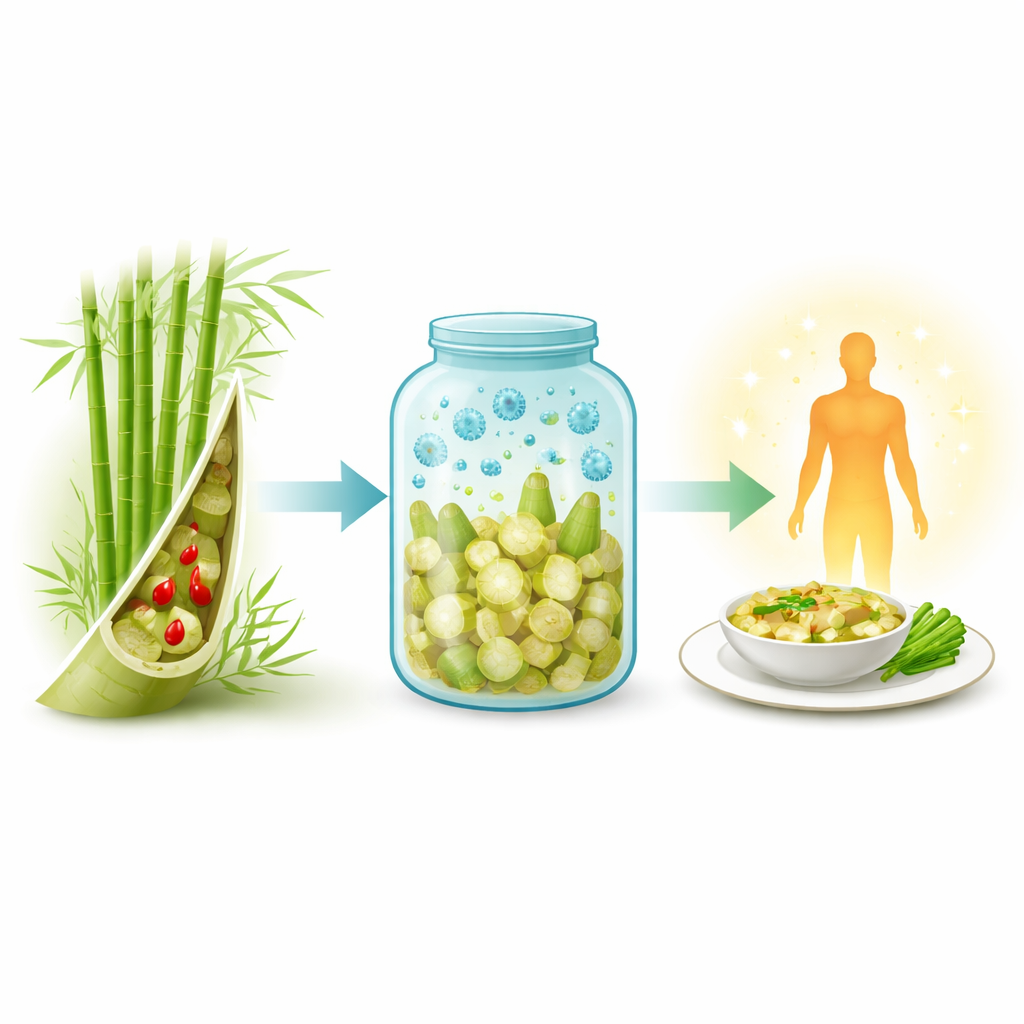
In the hills of Northeast India, the Dimasa people have long relied on a tangy fermented bamboo shoot food called miyamikhri. To villagers, it is everyday comfort food; to scientists, it is a natural experiment in how microbes can make a potentially risky raw plant both safe and nutritious. This study explores the microscopic life inside miyamikhri and shows how certain friendly bacteria may help dismantle a natural toxin found in young bamboo shoots.
The People, the Hills, and Their Bamboo Food
Haflong, a remote hill town in Assam, is surrounded by dense forests where bamboo grows in abundance. For the Dimasa community, bamboo shoots are a seasonal staple: tender shoots are chopped and sealed in simple containers for four to five days, without added starter cultures. Local microbes, carried on the plants and in the surroundings, take over and sour the mixture, creating miyamikhri. This food is eaten regularly in curries and chutneys and is considered energizing and good for digestion. Yet raw bamboo shoots also contain taxiphyllin, a natural compound that can release poisonous cyanide if not handled correctly, making safe preparation essential.
Who Lives Inside Fermented Bamboo?
To find out which microbes shape miyamikhri, the researchers used DNA sequencing to survey all the bacteria present in three traditional batches. They discovered that a large group of bacteria known as lactic acid bacteria dominated, especially members of the Lactobacillus family and their close relatives Weissella, Pediococcus, Lactococcus, and Leuconostoc. These microbes are common in many fermented foods around the world, from sauerkraut to yogurt. Compared with fermented bamboo shoots from China, miyamikhri had a richer and more complex mix of species, with some community patterns unique to the Dimasa way of fermenting. This suggests that local practices and environment shape not only taste and texture but also the invisible bacterial community.
Microbial Workhorses that Tackle Plant Toxins
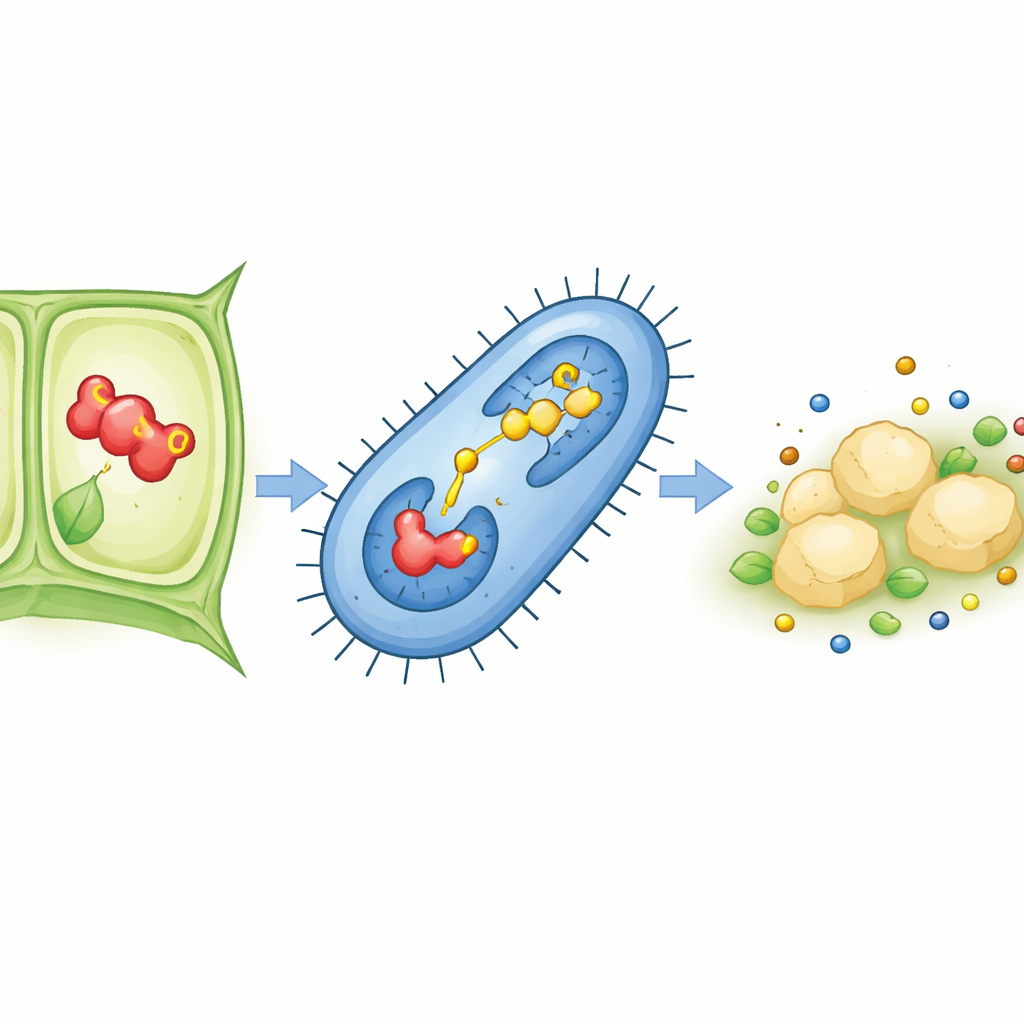
The team then asked what these bacteria are doing. Using computational tools, they examined which genes and metabolic pathways are likely present in the community. They found many genes linked to breaking down carbohydrates and other plant compounds, some associated with communication with the human body, and, crucially, genes for an enzyme called beta-glucosidase. This enzyme can clip sugar units off certain plant molecules, including cyanogenic glycosides like taxiphyllin, which helps release and remove the toxic portion. From 51 bacterial strains isolated from miyamikhri, eight showed particularly strong beta-glucosidase activity under conditions similar to the actual fermentation—slightly acidic, cool temperatures, and moderate salt—indicating that these microbes are active under real-world kitchen conditions.
A Closer Look at a Detox Specialist
Among the eight standout strains, one called Levilactobacillus brevis M12 drew special attention. The researchers sequenced the gene for its beta-glucosidase, built a 3D model of the enzyme, and used computer docking to see how taxiphyllin might fit into its active pocket. Their simulations suggested that taxiphyllin binds tightly and stably to this enzyme, forming multiple strong interactions that would favor its breakdown. They compared this to a well-studied strain of Lactiplantibacillus plantarum and found that the M12 enzyme held the toxin more firmly and consistently over time. Further molecular dynamics calculations supported the idea that the M12–taxiphyllin complex is especially stable, implying that this strain could be a particularly effective detoxifier during fermentation.
From Village Jar to Future Health Applications
Together, these findings paint miyamikhri as more than just a sour side dish. The food hosts a diverse community of lactic acid bacteria that appear able to reduce naturally occurring toxins in bamboo shoots, with Levilactobacillus brevis M12 emerging as a promising candidate for safely dismantling taxiphyllin. For everyday eaters, this means that long-practiced fermentation methods likely help turn a hazardous raw ingredient into a safe, flavorful staple. The authors caution, however, that most of their evidence comes from lab tests and computer models; they still need to show in animals or people that these bacteria survive digestion and actually lower toxin levels in the body. Even so, the work highlights how traditional foods can double as sophisticated, community-crafted bioreactors—and how understanding them may one day inform safer, smarter fermented foods and probiotic products.
Citation: Das, R., Tamang, B. Metagenomic insights reveal β-glucosidase-producing lactic acid bacteria from Miyamikhri with taxiphyllin degradation potential. Sci Rep 16, 13697 (2026). https://doi.org/10.1038/s41598-026-43021-w
Keywords: fermented bamboo shoots, lactic acid bacteria, food detoxification, beta-glucosidase, traditional fermentation