Clear Sky Science · en
Alizarin induces a multidirectional mechanism of anti-cancer action in cervical cancer and prostate cancer cells
Why a dye from plants matters for cancer
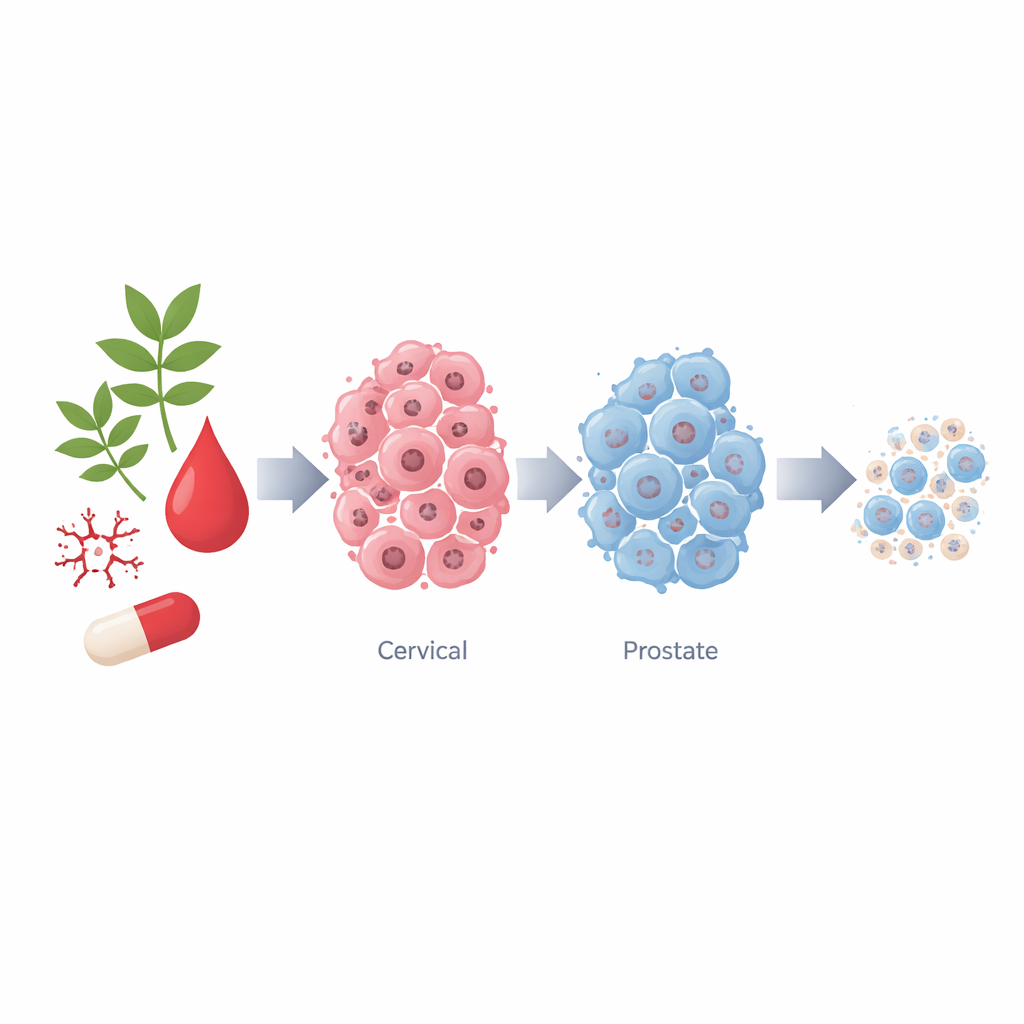
Many modern cancer drugs are inspired by molecules that plants have made for millions of years. This study looks at alizarin, a bright red dye found in traditional medicinal plants, and asks a simple question with big implications: can this old natural compound, alone or in combination with another drug, help stop two of the world’s most common cancers—cervical and prostate cancer?
A plant compound meets stubborn tumors
The researchers tested alizarin on two well-known human cancer cell lines: HeLa cells from cervical cancer and DU145 cells from prostate cancer. They grew these cells in the usual flat “2D” dishes and also as compact 3D spheres that better resemble real tumors. Across a range of doses, alizarin sharply reduced how many cells stayed alive and able to divide. At higher doses, very few cancer cells could form new colonies, showing that their long-term growth potential was severely damaged. Importantly, the team also checked normal fibroblast cells and found that these healthy cells were much less sensitive to alizarin, hinting at at least some degree of selectivity for cancer cells.
Turning on the cell’s self-destruct switch
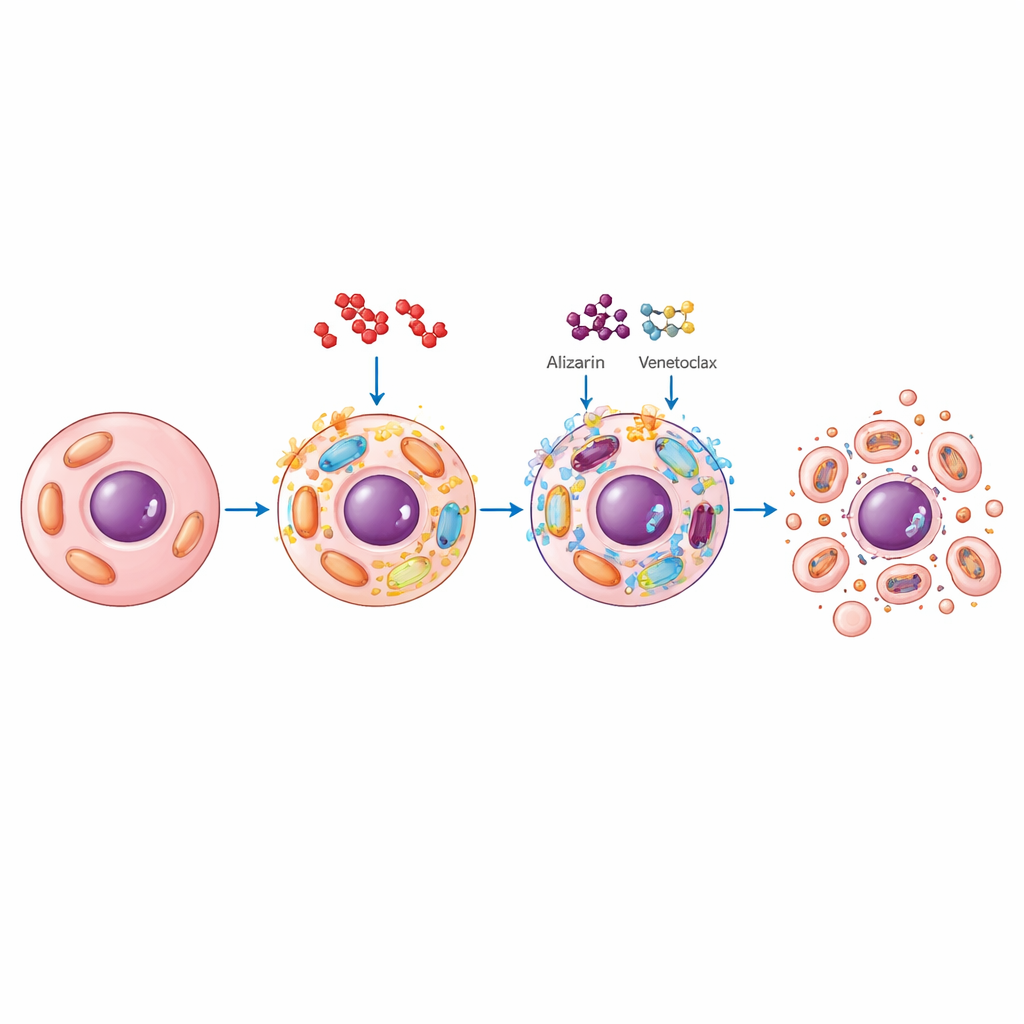
Alizarin did not merely slow the cells; it pushed them toward programmed cell death. The scientists observed classic hallmarks of apoptosis, the body’s built-in “self-destruct” program for damaged cells. Cancer cells treated with alizarin showed activation of key death enzymes called caspases, fragmentation of DNA, and characteristic changes in cell shape and nuclear structure. Markers associated with DNA damage response, such as ATM and H2A.X activation, rose in parallel with the level of apoptosis. At the same time, alizarin altered a protein called Bcl-2, normally known for helping cells resist death, in a way that made the cancer cells more vulnerable to dying.
Attacking energy factories and stress pathways
Under the electron microscope, alizarin-treated cells looked deeply stressed. Their mitochondria—the tiny power plants inside cells—became swollen, lost their normal internal structure, and developed vacuole-like spaces. Measurements showed that the electrical potential across the mitochondrial membrane collapsed and that levels of reactive oxygen species, a form of chemically aggressive “cellular rust,” rose sharply. The cells also ramped up autophagy, a process in which they digest their own components in an attempt to cope with stress, and then shifted increasingly from this survival mode toward full-blown apoptosis as the dose increased. In parallel, alizarin interfered with two major growth and survival routes inside cancer cells, known as the PI3K/Akt and MAPK/ERK signaling pathways, which are often overactive in tumors and linked to drug resistance.
Stopping division, movement, and triggering mitotic chaos
Beyond killing cancer cells, alizarin also undermined several features that make tumors dangerous. It stalled cells in the G2/M phase of the cell cycle, just before and during division, and drastically lowered the fraction of cells that were actively dividing. In wound-like “scratch” tests, cancer cells exposed to alizarin migrated much more slowly, suggesting a reduced ability to invade new areas. Under the microscope, many cells showed features of “mitotic catastrophe,” a dramatic failure of cell division that produces giant, misshapen cells with multiple or fragmented nuclei. Together, these changes indicate that alizarin disrupts both the growth and spread-like behavior of cancer cells.
Stronger together: pairing alizarin with a targeted drug
The study also explored how alizarin works when paired with Venetoclax, a targeted drug that blocks Bcl-2 and is already used in some blood cancers. When the two compounds were combined, cervical and especially prostate cancer cells died in greater numbers than with either agent alone, and more cells showed active caspases and clear signs of apoptosis. The combination further weakened the PI3K/Akt and MAPK/ERK survival pathways and produced strong effects not only in flat cultures but also in 3D tumor-like spheroids, whose structure broke apart as large swaths of cells died.
What this could mean for future treatments
In everyday terms, the study suggests that alizarin hits cancer cells from many directions at once: it stresses their energy factories, damages their DNA, blocks key growth signals, interferes with cell division, and ultimately pushes them to self-destruct. When teamed up with Venetoclax, which targets one of cancer’s favorite survival proteins, the effect becomes even stronger. While these findings are still confined to cell models in the lab and do not yet prove benefit in patients, they point to alizarin as a promising partner in future combination therapies for cervical and prostate cancers that are difficult to treat.
Citation: Trybus, W., Trybus, E. & Król, T. Alizarin induces a multidirectional mechanism of anti-cancer action in cervical cancer and prostate cancer cells. Sci Rep 16, 12843 (2026). https://doi.org/10.1038/s41598-026-43011-y
Keywords: alizarin, cervical cancer, prostate cancer, apoptosis, combination therapy