Clear Sky Science · en
Exploring the psychological and physiological effects of a virtual reality-based bicycle exercise in hemodialysis patients: a randomized controlled trial
Bringing a New World into the Dialysis Chair
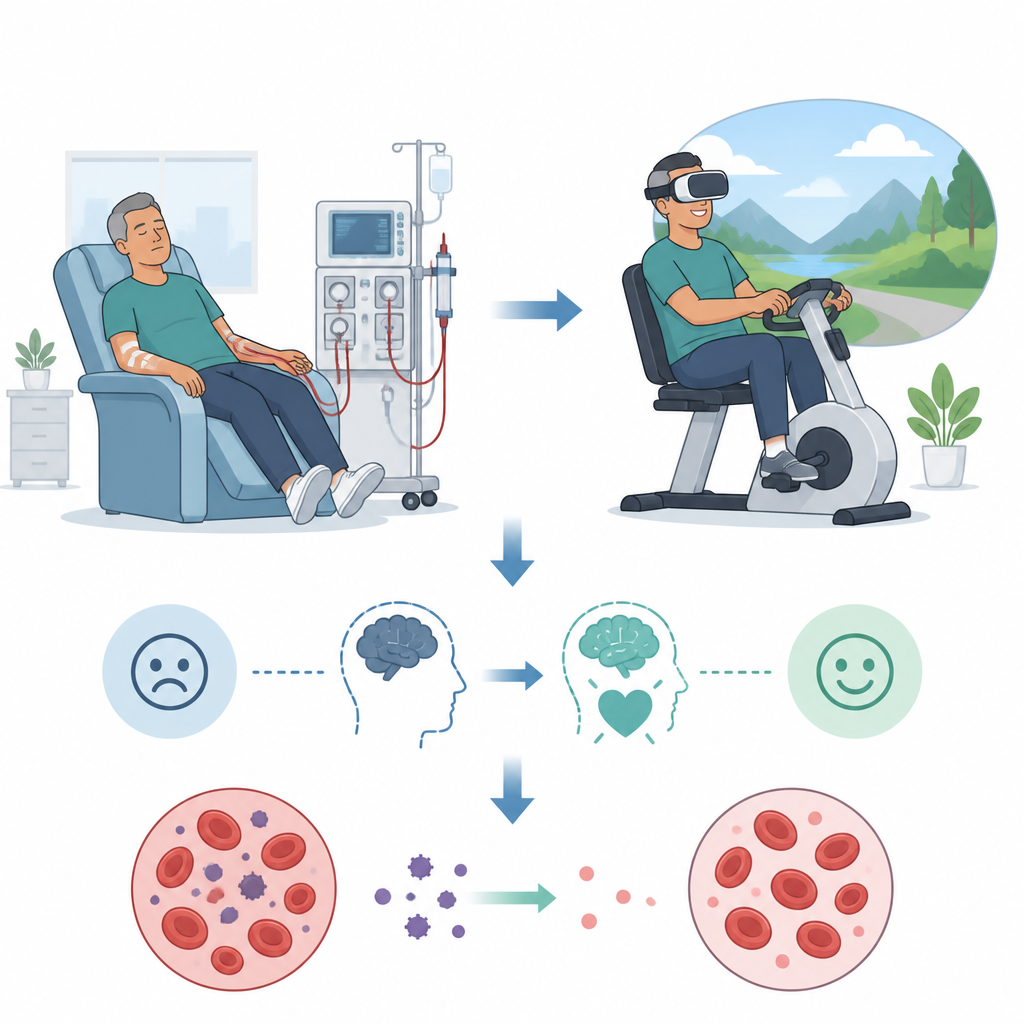
For people whose kidneys have failed, hemodialysis is a life-sustaining but exhausting routine, often lasting hours at a time, several days a week. It can be physically draining and emotionally overwhelming. This study explores a simple idea with powerful appeal: can turning part of dialysis time into a virtual bike ride in an imagined world help patients feel less depressed and anxious, while also improving certain blood measures linked to their illness?
Why Dialysis Takes a Toll on Mind and Body
Patients on long-term dialysis live with strict schedules, repeated needle sticks, and constant reminders of serious illness. Many experience ongoing sadness and worry, which can worsen how sick they feel and how well they function day to day. At the same time, their blood often contains high levels of waste products such as urea and creatinine, signs that the body is struggling to clear toxins. Traditional treatments focus on drugs, counseling, and standard exercise programs, but medicines can bring side effects and many patients find it hard to stick with conventional workouts in a busy clinic setting.
Turning Treatment Time into Active Time
The researchers tested whether adding a virtual reality bicycle exercise during dialysis could offer a more engaging option. Seventy adults receiving maintenance hemodialysis were randomly assigned to two groups. Both groups received the usual high-quality dialysis care, including education, diet and fluid guidance, and routine monitoring. In addition, one group put on a virtual reality headset and pedaled a stationary bike during the first two hours of their dialysis session, three times a week, for 12 weeks. Each session followed a gentle warm-up, a moderate cycling phase, and a cool-down, with nurses and a rehabilitation therapist closely supervising safety and comfort.
Shifts in Mood and Blood Markers
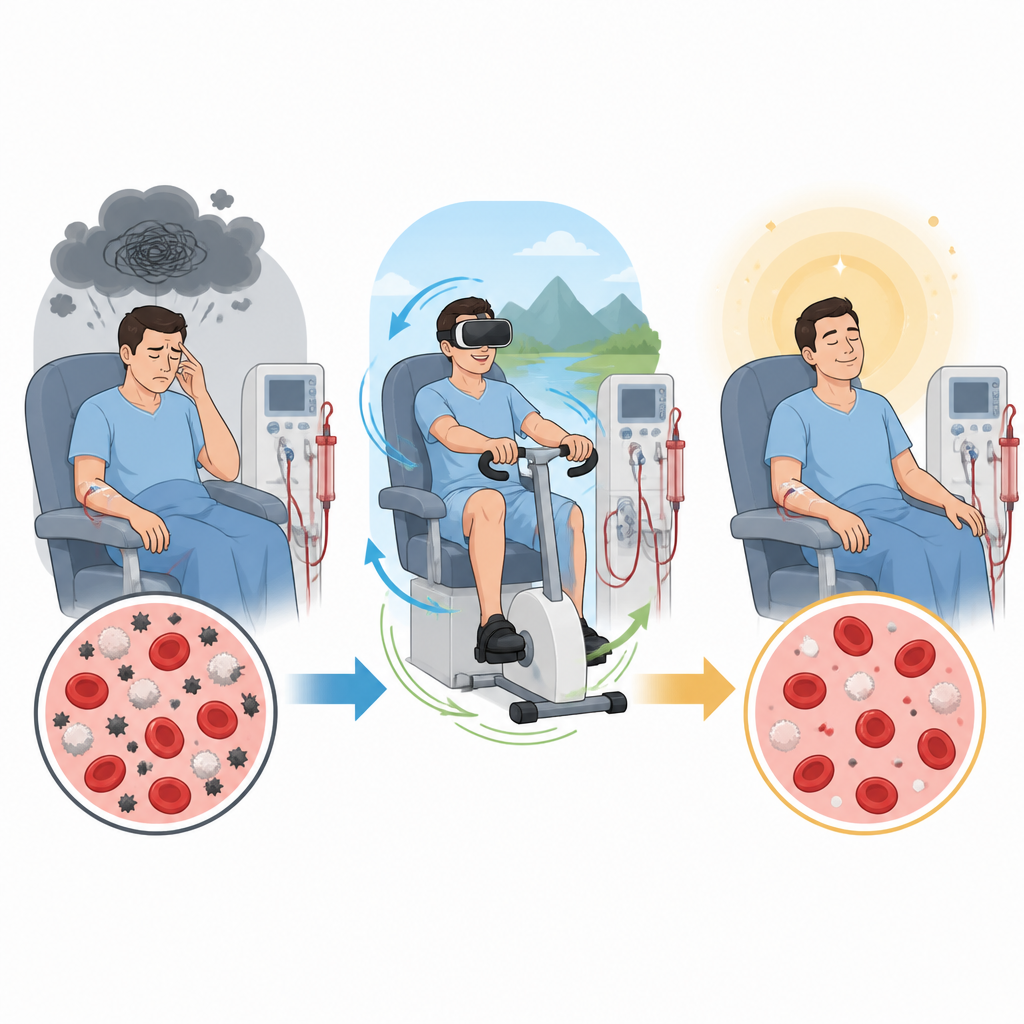
Before and after the 12-week period, all patients filled out standard questionnaires that score symptoms of depression and anxiety. The team also measured blood urea nitrogen and serum creatinine, two common markers that rise when the kidneys cannot clear waste effectively. Both groups showed some improvement over time, likely from receiving structured attention and care. However, those who took part in the virtual bike rides showed much larger drops in depression and anxiety scores. Their blood tests also improved more than those of patients who did not exercise with virtual reality, with notably bigger reductions in the levels of urea and creatinine before dialysis.
How Mood and Body Seem to Interact
When the researchers looked more closely at the numbers, they found that higher anxiety and depression scores tended to go along with higher urea and creatinine levels. Statistical models suggested that anxiety, in particular, was a meaningful predictor of these blood waste markers. The authors propose that virtual cycling works in two ways at once: the physical activity itself may help the body handle inflammation and circulation, while the immersive virtual scenes distract from the stress of dialysis, lifting mood and making it easier to keep exercising regularly. Over time, this combination of movement and mental relief may help ease the body’s overall burden.
What This Could Mean for Dialysis Care
This study suggests that weaving virtual reality cycling into routine dialysis sessions can make patients feel less anxious and depressed and is linked with better pre-dialysis blood results. It does not prove that kidney function has improved, and the research was done in a relatively small, younger group of patients, so more work is needed in broader populations. Still, the findings point to a hopeful direction: by transforming some of the most difficult hours of treatment into active, engaging time, clinics may be able to support both the emotional and physical well-being of people living with kidney failure.
Citation: Hu, J., Gong, Z., Huang, J. et al. Exploring the psychological and physiological effects of a virtual reality-based bicycle exercise in hemodialysis patients: a randomized controlled trial. Sci Rep 16, 14805 (2026). https://doi.org/10.1038/s41598-026-42972-4
Keywords: virtual reality exercise, hemodialysis, depression and anxiety, kidney disease, non drug therapy