Clear Sky Science · en
Involvement of the spleen in the anti-prion activity of hydroxypropyl methylcellulose in mice
Why this study matters
Prion diseases, such as mad cow disease and related human disorders, are rare but terrifying: once symptoms appear, they are almost always fatal, and there is still no proven treatment. This study explores how a common, seemingly simple material—hydroxypropyl methylcellulose (HPMC), a cellulose-based compound already used in foods and medicines—can give long‑lasting protection against prion disease in mice, and reveals that an often-overlooked organ, the spleen, plays a surprising central role.
A strange infection and an unusual helper
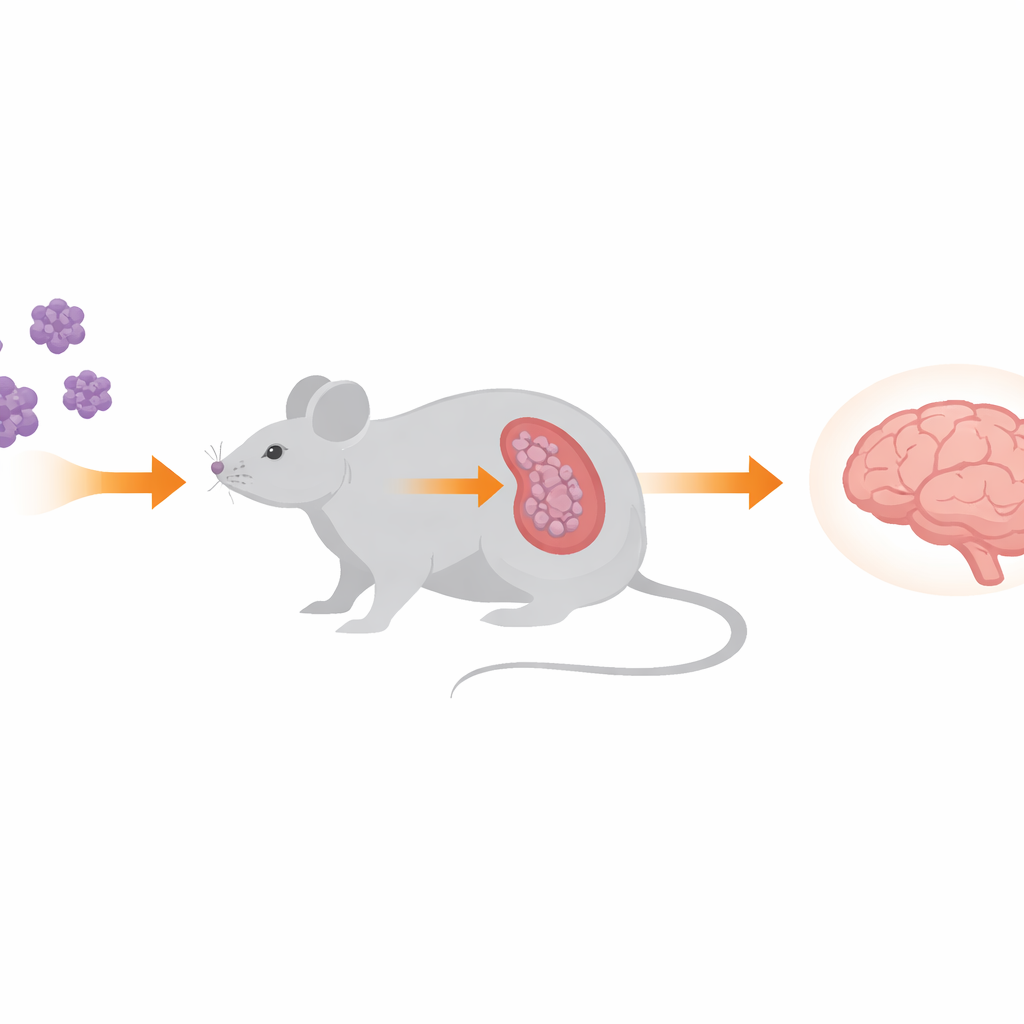
Prion diseases are caused not by viruses or bacteria, but by misfolded versions of a normal brain protein. These misfolded proteins act like bad templates, forcing healthy proteins to twist into the same harmful shape. After infection outside the brain—for example, through contaminated food—prions first build up in lymphoid organs such as the lymph nodes and spleen, and from there spread to the brain. Earlier work by the same group showed that a single dose of HPMC, given under the skin or into the body cavity, could dramatically delay disease in prion‑infected rodents, even if given a year before infection. Because HPMC is a large, stable molecule that lingers for months in several organs, including the spleen, the authors suspected that its unusual persistence might explain its protective power.
Testing the spleen’s role
To find out how important the spleen is, the researchers used genetically engineered mice that are highly sensitive to a particular hamster prion strain, making it easier to measure changes in survival time. All mice were infected directly in the brain so that any differences would reflect how the body responds, not how prions enter. In one set of experiments, mice received HPMC and then either had their spleens removed or underwent a sham surgery. When the spleen was taken out after HPMC treatment, the compound still protected the mice; their disease was delayed about as much as in mice with intact spleens. But when the spleen was removed before HPMC was given, the benefit was clearly weakened: the animals still lived longer than untreated controls, but not as long as mice that kept their spleens. Removing other organs that also store HPMC, such as the adrenal glands and testicles, did not change the treatment’s effect, pointing specifically to the spleen rather than simple drug storage.
Stirring up immune cells to boost protection
The team next asked whether activating spleen‑related immune cells could strengthen HPMC’s action. They used thioglycolate, a compound that provokes inflammation and draws in and activates scavenger cells such as macrophages in the abdomen and spleen. When mice received thioglycolate and HPMC around the time of prion infection, HPMC’s protective effect became much stronger: the animals’ survival times increased far more than with HPMC alone. However, if thioglycolate and HPMC were given much later, when the infection was already well established, there was no added benefit. In a separate mouse strain, the researchers measured how much HPMC actually accumulated in organs after thioglycolate treatment. They found that the spleen of inflamed mice contained about five times more HPMC than that of untreated mice, whereas levels in the brain’s choroid plexus—a structure where HPMC also tends to linger—did not change.
What the findings suggest about how it works
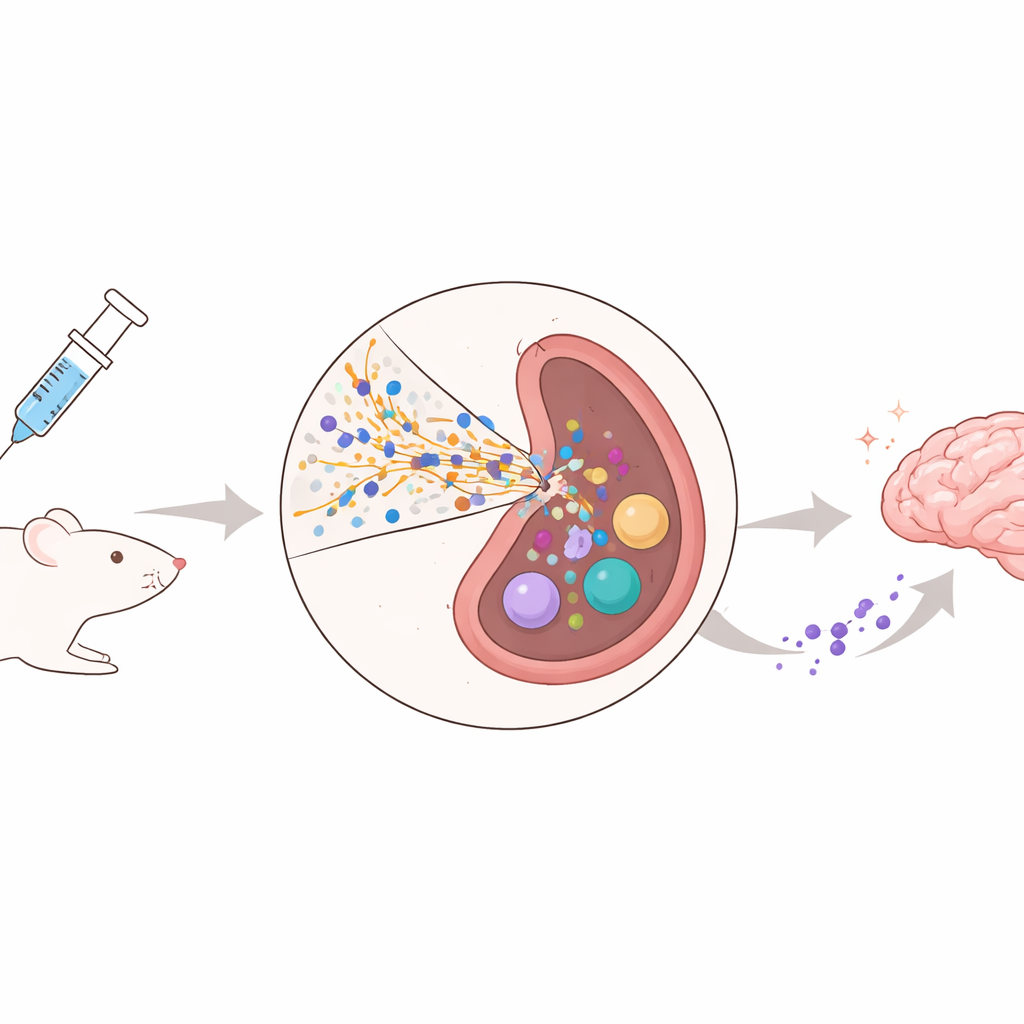
Taken together, the results indicate that HPMC’s anti‑prion activity depends in part on the spleen and on phagocytic, or “eating,” immune cells that remove harmful material. The timing experiments show that having high levels of HPMC and active immune cells early in infection—when prions are first spreading and the body is still mounting a response—is crucial. The fact that the spleen, but not other HPMC‑rich organs, affected treatment outcome argues that it is not just a convenient storage depot; rather, interactions between HPMC and specific spleen cell populations are likely key. Previous work from the same group has linked HPMC’s benefits to specialized T cells and killer cell machinery, and the new data strengthen the idea that multiple immune components in and around the spleen cooperate to slow or block prion buildup.
Big picture for future therapies
For non‑specialists, the message is that a long‑used, relatively safe polymer can meaningfully alter the course of a lethal brain disease in animals, and that the spleen—a blood‑filtering organ many people know only from sports injuries—may be a critical ally. While this work is still in mice and does not yet translate into a ready‑to‑use human treatment, it highlights a new strategy: targeting how prions interact with the immune system and lymphoid organs, rather than focusing only on the brain itself. Understanding exactly which spleen cells HPMC engages, and how it changes their behavior, could open paths to safer, longer‑lasting therapies for prion disorders in both humans and livestock, and perhaps even inform approaches to other protein‑misfolding diseases.
Citation: Teruya, K., Oguma, A., Nishizawa, K. et al. Involvement of the spleen in the anti-prion activity of hydroxypropyl methylcellulose in mice. Sci Rep 16, 13745 (2026). https://doi.org/10.1038/s41598-026-42969-z
Keywords: prion disease, spleen, hydroxypropyl methylcellulose, immune response, mouse model