Clear Sky Science · en
Intradiscal platelet-rich plasma for discogenic low back pain: a prospective cohort study of early clinical outcomes and quantitative MRI findings
Why back pain and blood platelets matter
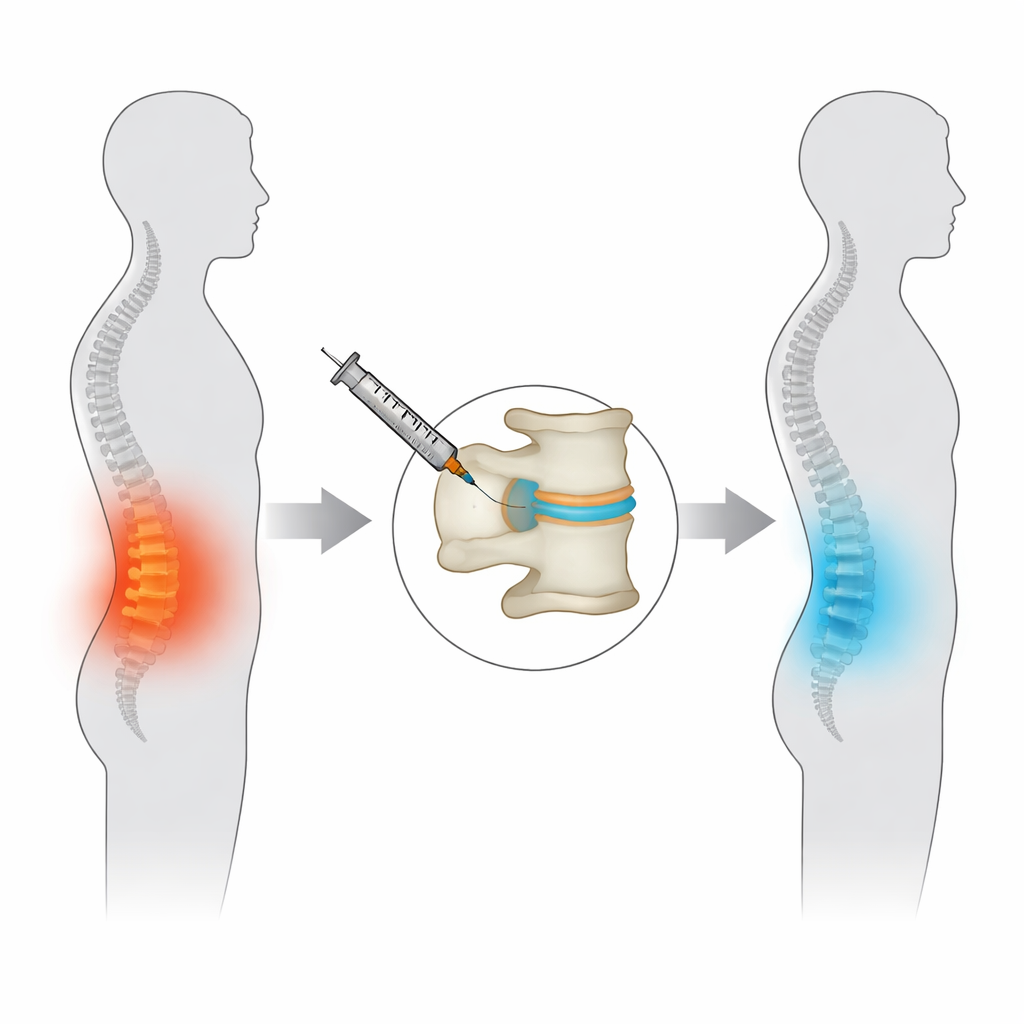
Low back pain keeps millions of people from working, exercising, or even sleeping comfortably. Many common treatments can ease symptoms, but they do not repair the worn spinal discs that often drive this pain. This study asked whether injecting a special concentrate made from a patient’s own blood platelets into a damaged disc could safely reduce pain within six months, and used advanced MRI scans to peek at early changes inside and around the spine.
A closer look at disc related back pain
The authors focused on discogenic low back pain, where the source of pain is the intervertebral disc itself rather than pinched nerves. These discs act as cushions between the bones of the spine, and when they dry out and break down, the spine becomes less stable and chemical signals linked to pain and inflammation can build up. Standard treatments such as physical therapy, pain pills, and steroid injections may calm symptoms, and surgery can remove severely damaged discs, but none of these options reliably slow or reverse early disc wear.
Using platelets as a repair helper
Platelet rich plasma, or PRP, is created by spinning a patient’s blood in a centrifuge to concentrate platelets, which are tiny cell fragments packed with growth factors. In this study, 29 adults with long lasting disc related low back pain received a single injection of PRP directly into one worn but not yet collapsed lumbar disc. All patients had at least three months of pain, MRI evidence of moderate disc wear, and careful testing to confirm which disc hurt. After the injection, they were followed for six months with repeated pain and function questionnaires and repeated MRI scans on the same scanner with standardized settings.
How the spine was tracked over time
Beyond standard images, the team used quantitative MRI, which turns pictures into numbers that can be compared over time. One measure, called T2 mapping, reflects water and soft tissue content inside the whole disc. Another, called fat fraction, estimates how much fat is present in the bone marrow of the vertebrae just above and below the treated disc. Rising marrow fat has been linked to disc wear and a less healthy local environment. By measuring these values at the start and then at one, three, and six months, the researchers could see whether any early biological shifts accompanied symptom changes.
What happened after the injection
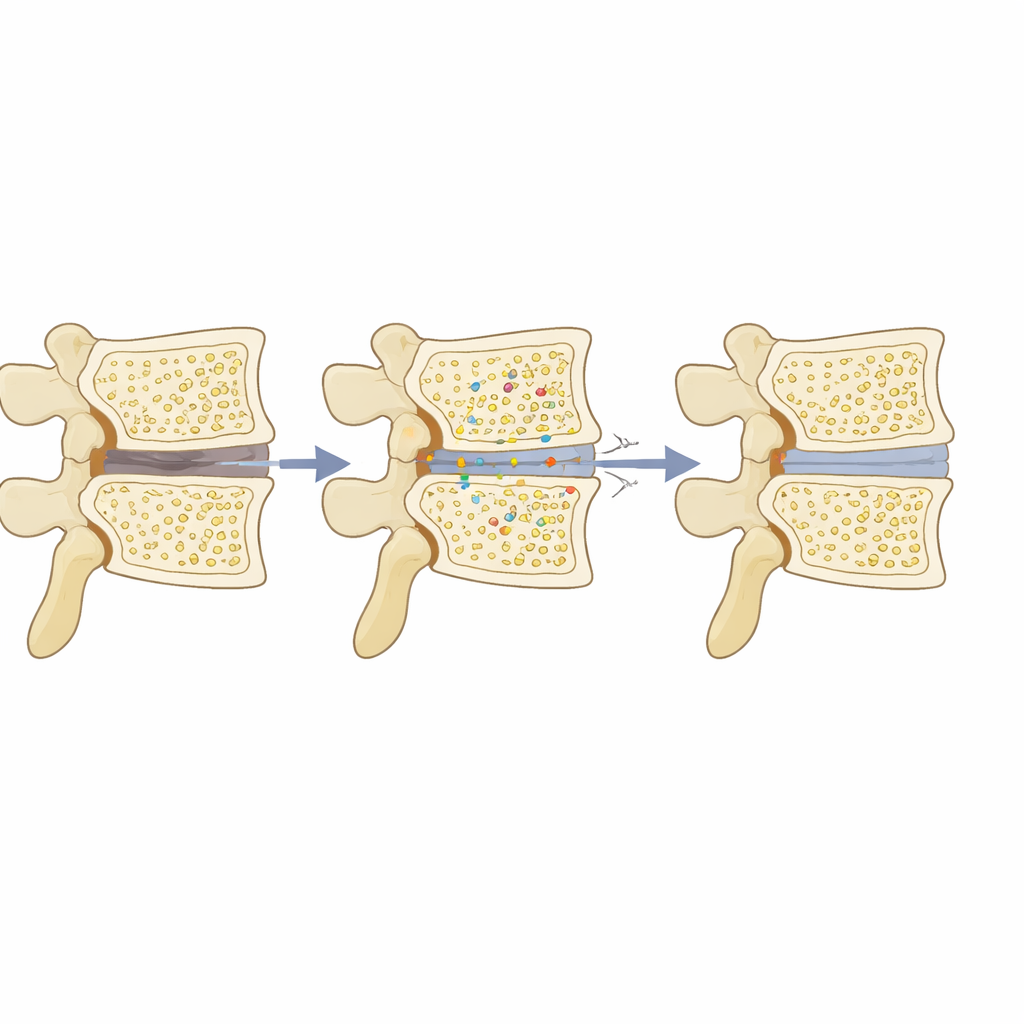
Pain and disability scores improved steadily across the six months. On average, patients reported lower pain levels and better daily function at each follow up visit, and nearly four out of five reached a commonly used threshold for meaningful improvement in both pain and disability by six months. The MR images told a more nuanced story. The numerical measure of the disc itself changed only slightly, suggesting little short term rebuilding of disc structure. In contrast, the fat fraction in the nearby vertebral marrow dropped noticeably over time. Patients whose marrow fat levels fell the most also tended to show the biggest improvements in pain and function.
What this may mean for people with back pain
For the carefully selected patients in this small, non randomized study, injecting platelet rich plasma into a worn lumbar disc appeared safe over six months and was linked to meaningful pain relief for most participants. The advanced MRI results hint that early benefits may come less from rapid rebuilding of the disc and more from a shift in the surrounding metabolic setting, including reduced fatty change in nearby bone marrow. Because there was no comparison group, the authors caution that placebo effects cannot be ruled out, and longer, controlled trials are needed. Still, the work offers an early, science based glimpse of how a patient’s own platelets might help calm certain forms of chronic low back pain.
Citation: Pan, X., Peng, G., Yao, Q. et al. Intradiscal platelet-rich plasma for discogenic low back pain: a prospective cohort study of early clinical outcomes and quantitative MRI findings. Sci Rep 16, 14161 (2026). https://doi.org/10.1038/s41598-026-42909-x
Keywords: discogenic low back pain, platelet rich plasma, spinal disc injection, quantitative MRI, vertebral marrow fat