Clear Sky Science · en
RGD-modified alginate enhances viability, metabolic reprogramming, and cytokine secretion profiles in encapsulated mesenchymal stromal cells
Why tiny cell capsules matter
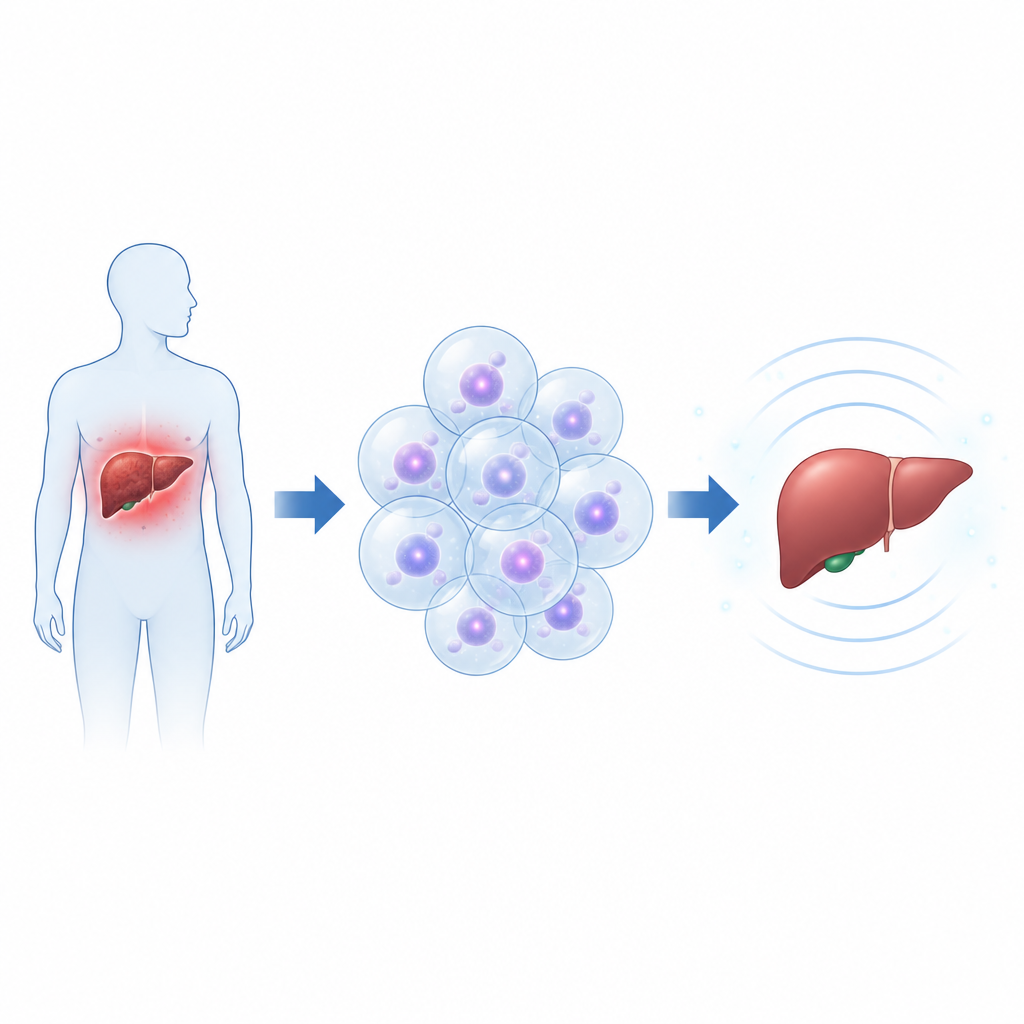
Doctors are keen to use living cells as medicines to calm inflammation and repair damaged organs, but once these cells are injected into the body they are often quickly cleared away. This study explores a simple way to tuck helpful stem-like cells inside tiny gel beads so they survive longer, stay active, and release helpful signals, making future cell therapies more reliable and easier to deliver.
Putting helper cells inside soft shells
The researchers worked with mesenchymal stromal cells, a versatile type of cell taken here from donated umbilical cords. These cells can soothe immune reactions and support tissue repair, which makes them attractive for treating serious conditions such as acute liver failure. Instead of growing the cells on flat plastic dishes, the team encapsulated them in microscopic spheres made from alginate, a seaweed-derived gel already used in medicine. They compared two versions of this material: a plain, highly pure alginate and a modified version carrying short RGD peptides, which act like tiny hooks to help cells attach to their surroundings.
Life inside a crowded microbead
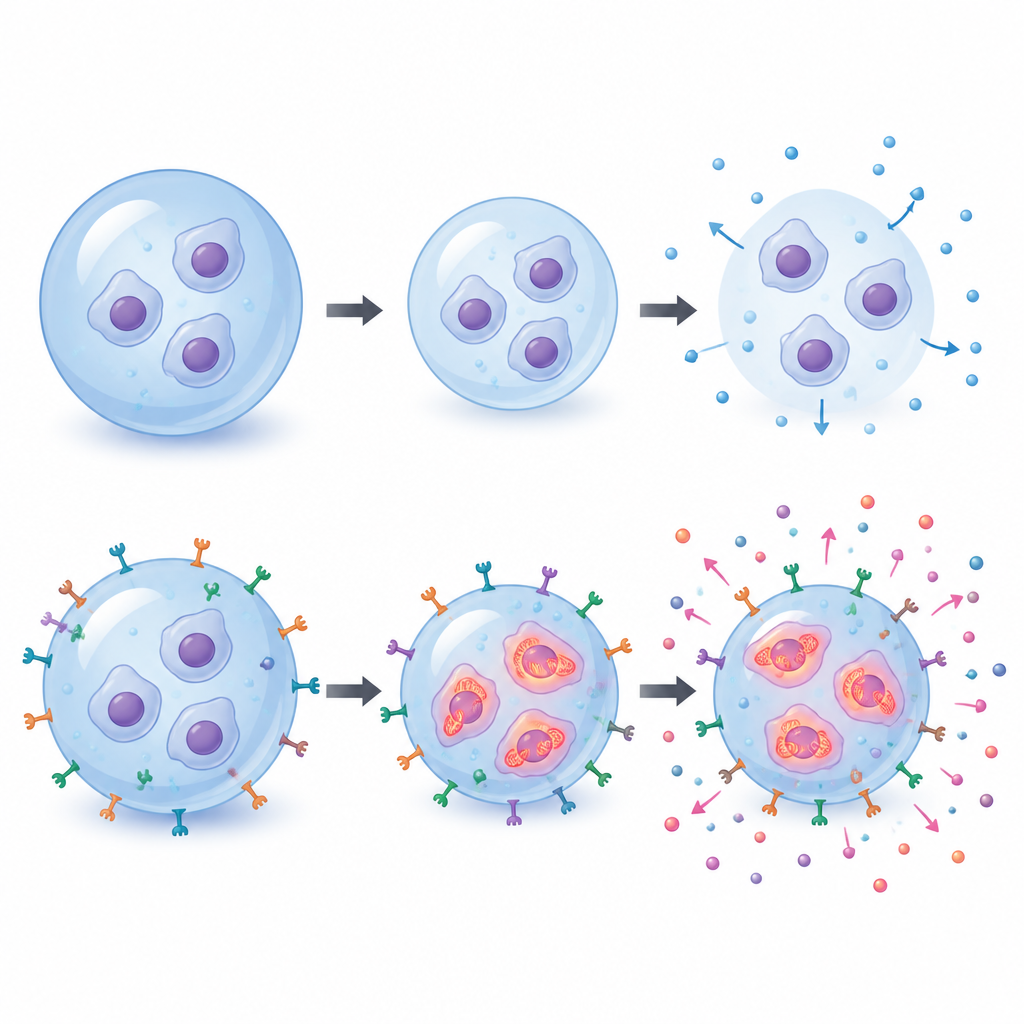
Once thawed from frozen stocks, the umbilical cord cells were mixed into the alginate solutions and formed into uniform beads about half a millimetre wide, a size chosen to balance strength with the ability of oxygen and nutrients to diffuse in. Under the microscope, cells in the RGD-coated beads showed higher survival and a more developed internal scaffolding than those in plain beads, hinting that they were sensing and gripping the modified gel. Despite this, the cells did not form direct contacts with one another, and their shapes looked very different from the spread-out appearance seen in traditional flat culture, reflecting the more confined three-dimensional environment.
Metabolism shift in a low-oxygen pocket
Living cells constantly manage how they make energy, switching between fuel pathways depending on their surroundings. Detailed measurements of oxygen use revealed that encapsulation immediately lowered the cells' breathing rate compared with standard dish culture, even when a chemical was added to push their power stations to the maximum. Over several days, cells in RGD beads consistently maintained higher baseline and maximum respiration than those in plain beads, suggesting a modest energetic advantage. At the same time, genes linked to mitochondrial growth, especially one called PGC1A, were strongly turned up in encapsulated cells, while overall production of lactate and related byproducts fell, pointing to a general slowdown and rebalancing of metabolism. Although dye-based tests suggested there was no extreme lack of oxygen inside the beads, the cells switched on a hypoxia response program that is normally associated with their natural low-oxygen niches in the body.
Shaping the cells' secret messages
Mesenchymal stromal cells influence healing mainly by releasing cocktails of signalling proteins rather than by replacing damaged tissue directly. The team measured several of these factors in the culture liquid surrounding the beads. Soon after encapsulation, the cells secreted much higher amounts of vascular endothelial growth factor, which supports blood vessel growth, and the immune-related messenger IL-6, compared with cells kept on plastic. These bursts faded over a few days, but early IL-6 levels were somewhat higher in RGD beads than in plain ones. A typically inflammatory molecule, TNF-alpha, stayed low overall yet was slightly higher in RGD beads at later time points, while the anti-inflammatory factor IL-10 changed little. A surface marker linked to stemness, CD90, dropped in encapsulated cells, suggesting that living in a free-floating gel alters aspects of their identity, even as core supportive functions remain.
What this means for future treatments
Together, the findings show that simply placing umbilical cord stromal cells inside carefully sized alginate beads dramatically changes how they live, breathe, and communicate. The modified RGD gel offers small but steady benefits for cell survival, energy handling, and early signal release compared with the plain material, all while using highly pure, clinically approved components and frozen cell stocks similar to those that would be used in the clinic. For patients, this kind of microencapsulation could one day translate into more durable cell therapies that are delivered as ready-to-use tiny capsules, able to sit in the body as protected mini-factories that quietly release healing cues where they are needed.
Citation: Güven, K., Dhawan, A. & Filippi, C. RGD-modified alginate enhances viability, metabolic reprogramming, and cytokine secretion profiles in encapsulated mesenchymal stromal cells. Sci Rep 16, 14927 (2026). https://doi.org/10.1038/s41598-026-42864-7
Keywords: mesenchymal stromal cells, alginate microbeads, cell encapsulation, cell therapy, RGD biomaterials