Clear Sky Science · en
Integrated multi-omics analysis reveals comprehensive metabolism-driven tumor heterogeneity and immune microenvironment in hepatocellular carcinomas
Why liver cancer’s “fuel choices” matter
Most people think of cancer as a disease of genes, but every cancer cell also has to decide how to fuel itself. This study looks at liver cancer—specifically hepatocellular carcinoma—and asks a deceptively simple question: do all liver tumors eat the same way? By examining thousands of molecular measurements from nearly a thousand patients, the authors show that liver cancers fall into three major “metabolism styles,” each tied to different outcomes and responses to treatment. Understanding these hidden fuel preferences could help doctors diagnose the disease earlier, predict who is at highest risk, and tailor therapies more precisely.
Three kinds of liver tumors
Using computer methods that let patterns emerge from data without pre-set labels, the researchers grouped liver tumors according to the activity of genes involved in metabolism—the chemical pathways that process sugars, fats, amino acids, and other nutrients. They found three stable subtypes, which they call iHCC1, iHCC2, and iHCC3. Patients in these groups had clearly different survival times, with iHCC3 doing the worst. The team confirmed the same three-way split across several independent patient collections and even in liver cancer cell lines grown in laboratories, suggesting these subtypes reflect real biological differences rather than quirks of a single dataset. 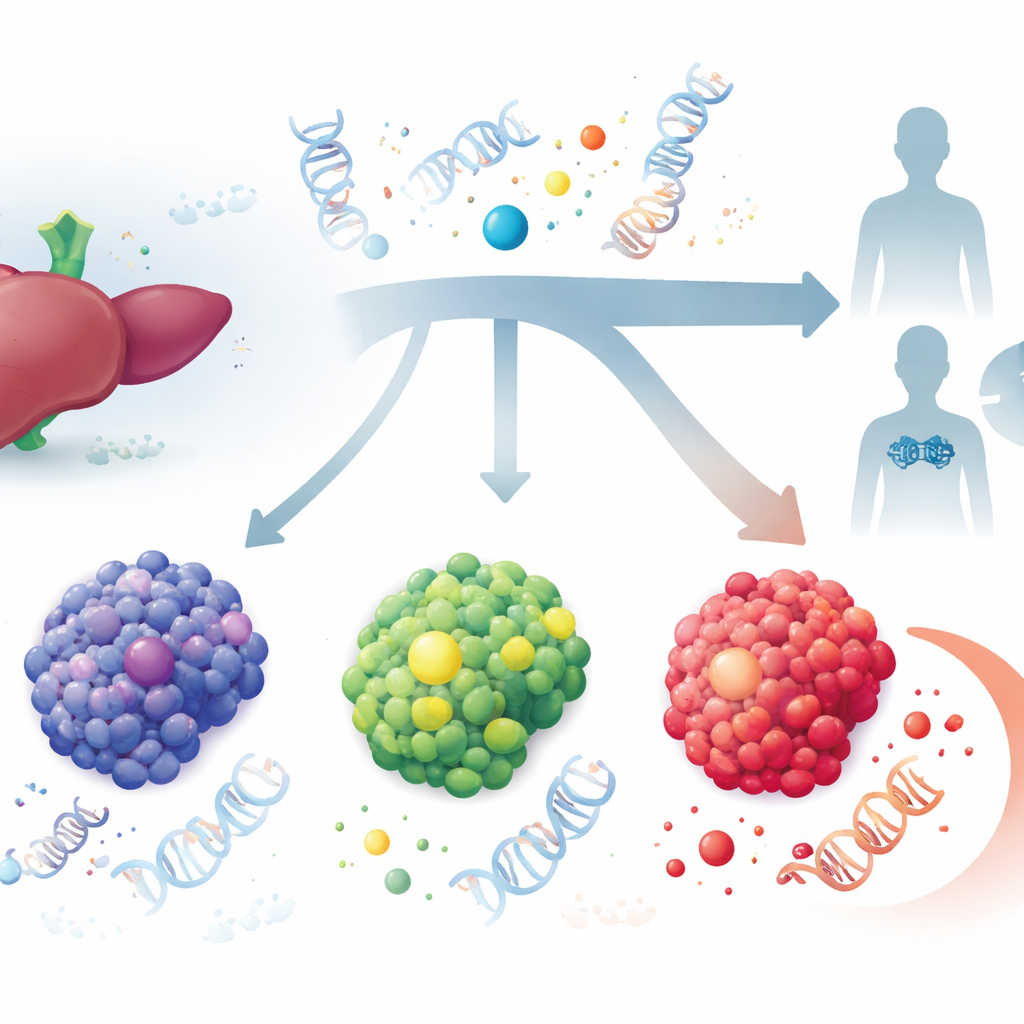
Different fuel, different fate
Each subtype showed its own metabolic “fingerprint.” The poorest-outcome group, iHCC3, leaned heavily on pathways that build and use nucleotides—the building blocks of DNA and RNA—fitting a fast-growing, highly dividing tumor. In contrast, iHCC2 was more active in breaking down and remodeling amino acids, sugars, and fats, while iHCC1 showed yet another balance of pathways. These patterns appeared not just in gene activity, but also in chemical tags on DNA, levels of proteins, and protein phosphorylation, which acts like on/off switches. In iHCC3, many enzymes outside nucleotide metabolism were dampened, often paired with changes in DNA methylation, hinting that epigenetic control helps lock in this aggressive fuel strategy.
Cancer cells and their neighbors
Cancer does not act alone; it reshapes nearby blood vessels and immune cells into a supportive neighborhood. By breaking down tumors into single cells, the authors mapped how metabolic activity varied among cancer cells, immune cells, and other supporting cells. Malignant liver cells from different patients formed distinct clusters with very different metabolic activity, even when they came from the same tumor site, showing how variable the disease can be. Some immune cells, particularly certain T cells and macrophages, also adopted distinct metabolic programs. In tumors of the worst subtype, there were fewer killer T cells and more immune-suppressive cells, along with higher activity of several checkpoint molecules that help cancers evade attack. 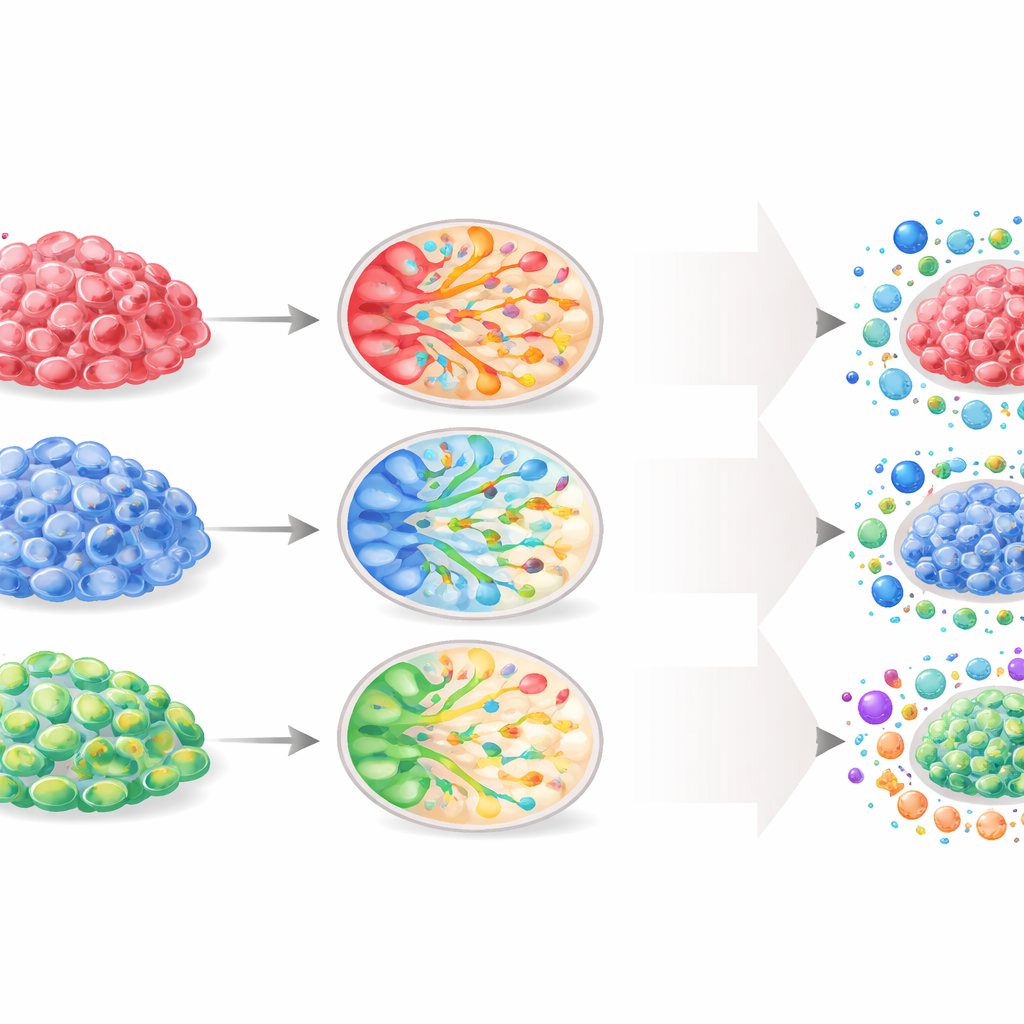
Toward more tailored treatment
The team then used machine learning algorithms to compress hundreds of signals down to a practical toolkit. Thirty-nine genes were enough to reliably assign tumors to one of the three metabolic subtypes, and a smaller six-gene “tumor metabolic index” score could stratify patients into high- and low-risk groups for survival. This score remained useful even after accounting for standard clinical measures such as stage and blood markers, and it formed the backbone of a nomogram—a graphical risk calculator—that could, in principle, help doctors estimate an individual patient’s outlook. Drug sensitivity analyses suggested that certain subtypes might respond better to specific chemotherapies or targeted agents, and that the most aggressive subtype may be more likely to benefit from some immune checkpoint drugs.
A new target at the crossroads of metabolism and control
One enzyme, aldolase B (ALDOB), emerged as a particularly interesting player. In healthy liver tissue, ALDOB helps break down sugars, but in liver cancer it was often strongly reduced, especially in the worst subtype, and this loss tracked with poorer survival. The gene’s activity was tied to chemical tags added to DNA by enzymes called DNA methyltransferases, suggesting that an epigenetic switch helps silence ALDOB. When ALDOB was low and methyltransferases were high, major growth and survival pathways inside cancer cells—such as PI3K–AKT, mTOR, Wnt, and Notch signaling—tended to be more active and lipid metabolism was disturbed. The authors propose that this ALDOB-centered control hub could become a future therapeutic target.
What this means for patients
For a lay reader, the key message is that not all liver cancers are the same disease under the skin. Some tumors rewire their chemistry to favor rapid DNA production, others tilt toward fats or amino acids, and these choices shape how fast they grow, how they interact with the immune system, and how they respond to drugs. By layering information from genes, proteins, chemical tags, and single cells, this study charts a detailed map of metabolism-driven subtypes. If validated in larger, prospective studies, the resulting classifiers and risk scores could help doctors move from one-size-fits-all treatment toward care that matches each patient’s tumor “fuel logic,” improving diagnosis, risk stratification, and ultimately, therapy.
Citation: Li, Y., Luo, Z., Zhang, B. et al. Integrated multi-omics analysis reveals comprehensive metabolism-driven tumor heterogeneity and immune microenvironment in hepatocellular carcinomas. Sci Rep 16, 12103 (2026). https://doi.org/10.1038/s41598-026-42856-7
Keywords: hepatocellular carcinoma, tumor metabolism, multi-omics, tumor heterogeneity, cancer immunology