Clear Sky Science · en
X-ray crystal structure and in silico investigation of Tetrabromo thia-bridged diquinoline including anticancer mechanisms via target prediction and molecular docking
Why a new cancer-fighting molecule matters
Cancer drugs often stop working because tumor cells find ways around them, especially when key growth switches on the cell surface stay active. This article describes how chemists and biologists teamed up to study a specially designed molecule that might help shut down two of these switches, known for driving aggressive breast and other cancers. Using computer-based tests and detailed crystal imaging, they explored both how promising this molecule could be as a drug and how its atoms lock together in the solid state.
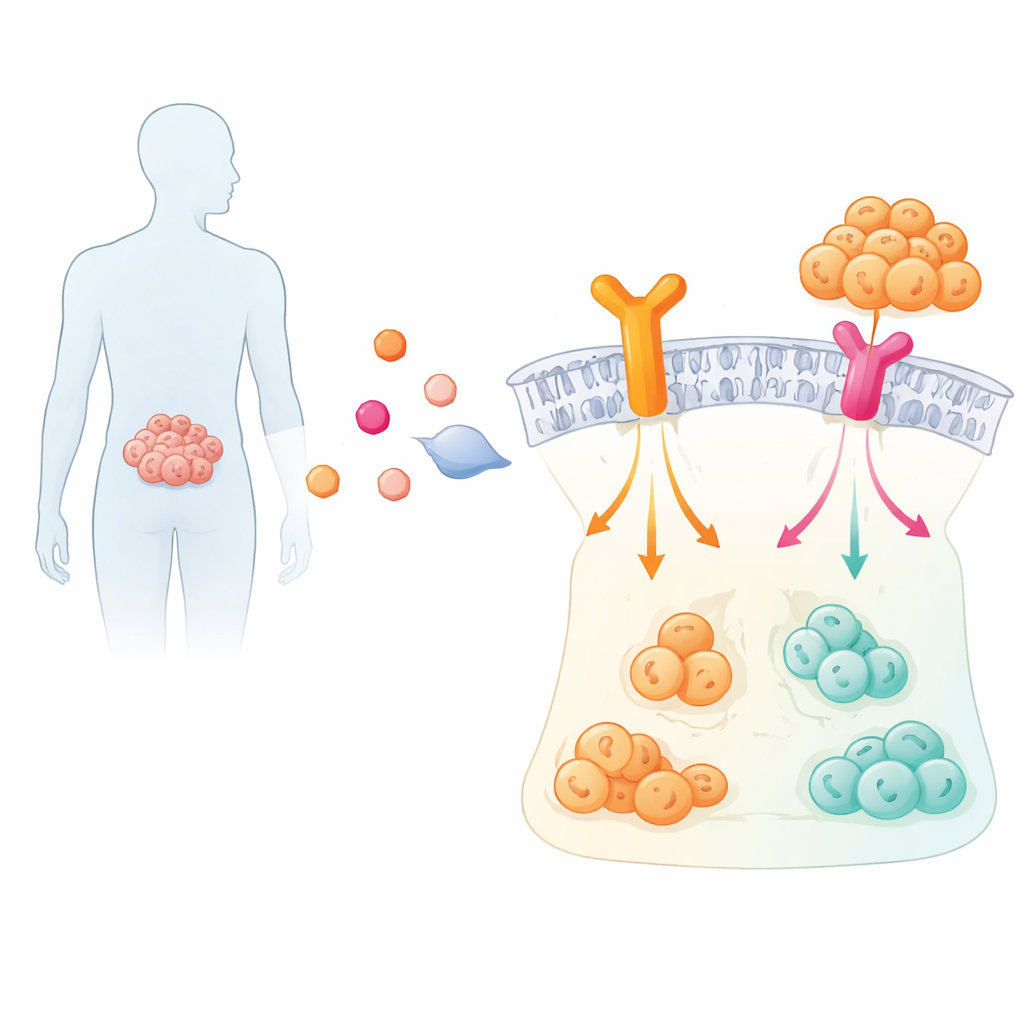
A custom-built ring-shaped molecule
The research centers on a compound called tetrabromo thia-bridged diquinoline, referred to simply as compound 3. It is built from two fused ring systems linked by a sulfur atom and decorated with bromine atoms, giving it a rigid, cage-like shape. The team first re-synthesized this compound using a classic organic reaction that stitches smaller building blocks into a larger ring. They confirmed its composition and structure with routine analytical tools such as nuclear magnetic resonance and high-resolution mass spectrometry, then used X-ray crystallography to see how the atoms are arranged in three dimensions.
From crystal packing to host–guest behavior
When crystallized from the solvent p-xylene, compound 3 formed a host–guest complex in which two host molecules surround a single guest molecule of solvent. X-ray analysis showed that the hosts assemble into dimers through a web of weak attractions: bromine atoms interacting with nitrogen, hydrogen, and sulfur atoms, as well as subtle hydrogen bonds. These non‑covalent forces create a repeating framework that traps the p-xylene inside. This supramolecular “embrace” illustrates how the compound’s shape and mix of heteroatoms encourage it to recognize and hold other molecules, a behavior that can matter for how drugs are stored, delivered, or organized in the body.
Probing drug-like behavior in the computer
To judge whether compound 3 might work as a medicine, the authors turned to a suite of in silico, or computer-based, tools. They predicted which human proteins the compound is most likely to bind and how it might be absorbed, distributed, broken down, and cleared. The target prediction flagged 36 possible proteins, with two cell-surface growth receptors—EGFR and HER2 (also called ERBB2)—emerging as central hubs in a dense interaction network. These receptors are well known for their roles in breast, lung, and other cancers, and for contributing to resistance when current drugs that block EGFR stop working.
Linking the compound to cancer signaling
Pathway analysis placed the predicted protein targets of compound 3 in several cancer-related circuits, including general cancer pathways, PI3K–Akt signaling, VEGF-driven blood vessel growth, and, notably, EGFR inhibitor resistance and ERBB signaling. Molecular docking simulations then modeled how snugly compound 3 might fit into the active sites of EGFR and HER2. The results suggested stable binding to both receptors, with a stronger predicted affinity for HER2. In these models, the compound forms multiple hydrogen bonds and hydrophobic contacts with key amino acid residues, hinting that it could physically interfere with the receptors’ ability to pass growth signals into the cell.
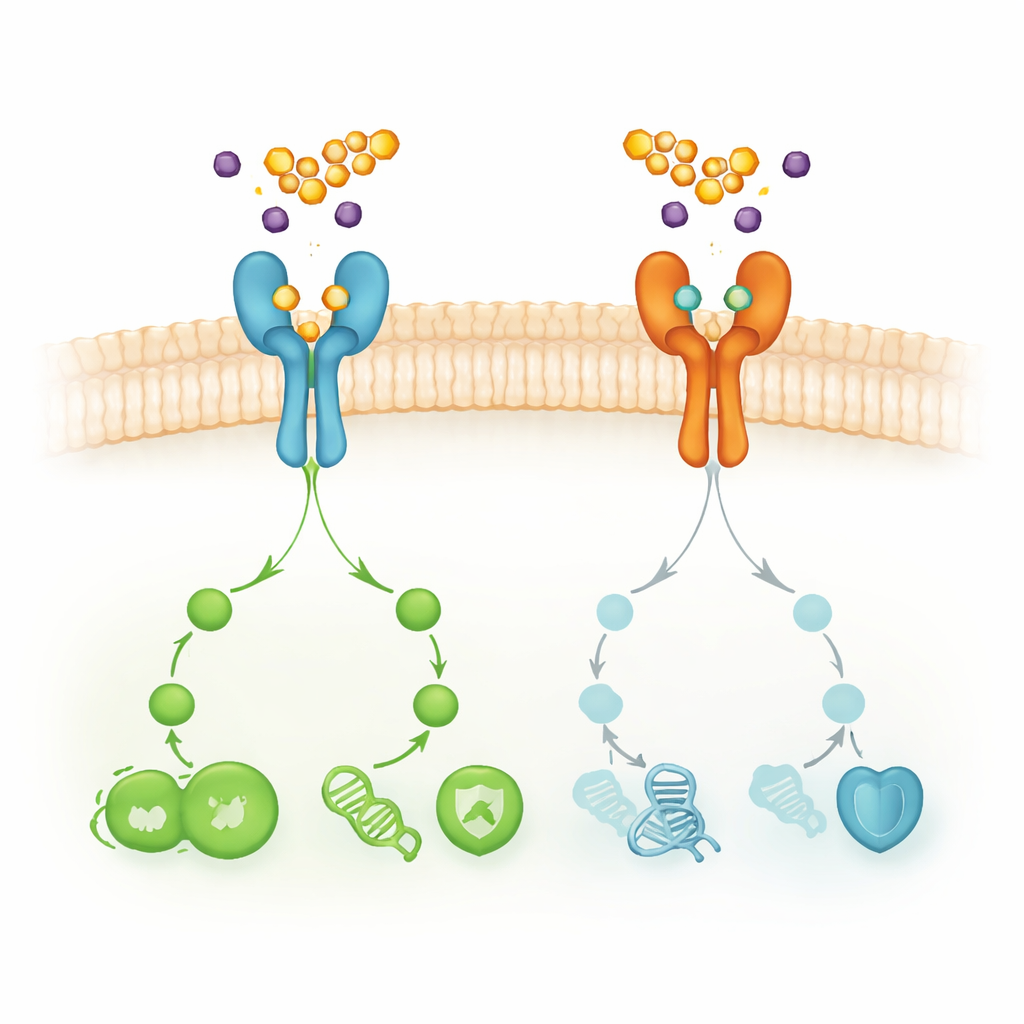
Promise tempered by safety concerns
The same computer tools also raised caution flags. While compound 3 satisfies common “drug-likeness” rules and appears unlikely to affect the brain or heart rhythm channels, it is predicted to be poorly absorbed from the gut and to bind strongly to blood proteins, limiting how much free drug would circulate. More seriously, several models point to a risk of liver injury and DNA damage, and to strong interference with enzymes that metabolize many other drugs. These findings suggest that, without further chemical tuning, the compound could cause toxicity or problematic drug–drug interactions.
Where this work leaves us
Overall, the study portrays compound 3 as an intriguing starting point rather than a ready-made medicine. Its shape and electronic features allow it to form ordered host–guest crystals and to latch onto cancer-driving receptors like EGFR and HER2 in silico, supporting the idea that it might help tackle drug-resistant tumors. At the same time, predicted absorption and safety issues mean that chemists will need to redesign and refine the structure, followed by careful laboratory and animal tests. For now, the work offers a detailed map of how one carefully crafted molecule could one day join the fight against hard-to-treat cancers—and a reminder that even promising candidates must pass many hurdles before becoming real-world therapies.
Citation: Alshahateet, S.F., Al-Mazaideh, G.M., Al-Trawneh, S.A. et al. X-ray crystal structure and in silico investigation of Tetrabromo thia-bridged diquinoline including anticancer mechanisms via target prediction and molecular docking. Sci Rep 16, 13094 (2026). https://doi.org/10.1038/s41598-026-42845-w
Keywords: EGFR HER2 inhibitors, molecular docking, drug resistance in cancer, supramolecular host guest, ADMET profiling