Clear Sky Science · en
Hypnotic and sleep-promoting effects of Limosilactobacillus reuteri LM1063 on pentobarbital-induced sleep and electroencephalogram analysis in mice
Why Your Gut Might Matter for a Good Night’s Sleep
Many people struggle with falling asleep or staying asleep, and the usual fixes—sleeping pills or melatonin—can come with side effects or lose their punch over time. This study explores a very different angle: whether a specific "friendly" bacterium living in the gut can nudge the brain toward better sleep. By examining how a probiotic strain affects brain signals, blood chemicals, and sleep patterns in mice, the researchers ask a simple but intriguing question: can tuning the microbiome help us rest more deeply and naturally?
A Tiny Helper with a Big Job
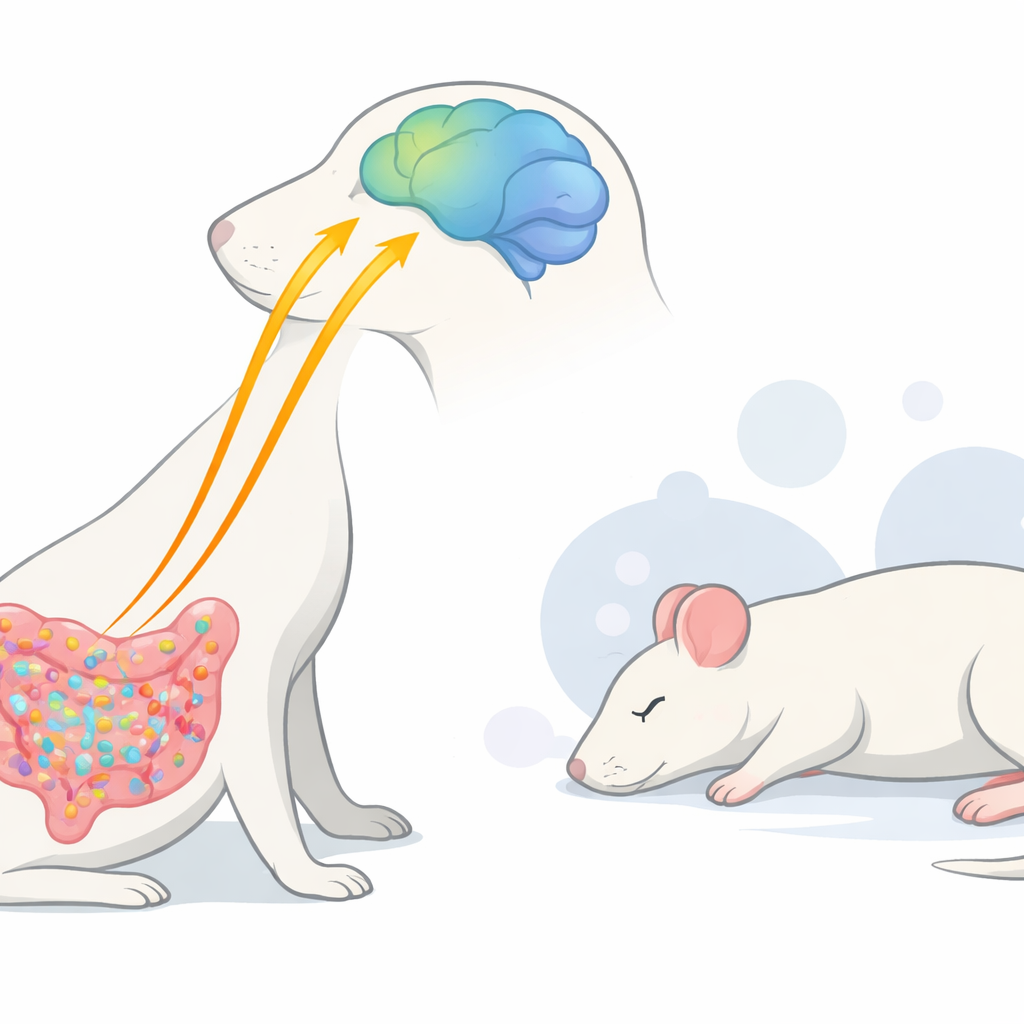
The scientists focused on one carefully selected bacterial strain, Limosilactobacillus reuteri LM1063, given to mice as a daily supplement for two weeks. Instead of relying only on animals’ behavior, they used a standard laboratory sleep test involving pentobarbital—a drug that reliably induces sleep—to measure how quickly mice drifted off and how long they stayed asleep. They also implanted tiny electrodes to record brain waves and muscle activity, allowing them to see how the probiotic changed the structure of sleep itself, including light sleep, deep sleep, and dream-like rapid eye movement (REM) sleep.
Shorter Wait for Sleep and Longer Rest
After two weeks of receiving the probiotic, mice given the higher dose of LM1063 fell asleep faster and slept longer in the pentobarbital test, approaching the performance of a sedative drug (diazepam) used as a positive control. Importantly, these benefits appeared without changes in body weight or food intake, suggesting that the probiotic did not simply make the animals lethargic or unhealthy. Brain recordings told a similar story: compared with untreated mice, those receiving the higher probiotic dose spent a greater share of the recording time asleep and less time awake. REM sleep increased modestly, while non-REM sleep remained stable, hinting that the probiotic promoted a more sleep-friendly balance rather than disrupting normal sleep organization.
Signals in the Brain That Quiet the Mind
To understand how a gut microbe could shape sleep, the team examined key brain chemicals. They found that genes related to gamma-aminobutyric acid (GABA)—the brain’s main calming messenger—were more active in probiotic-treated mice, especially the form of the GABA receptor associated with relaxation and reduced anxiety rather than heavy sedation. Levels of brain-derived neurotrophic factor, a molecule that supports healthy connections between nerve cells, also rose. At the same time, several brain receptors tied to wakefulness and sensory arousal in the serotonin system were dialed down, while a receptor linked to emotional steadiness trended upward. Together, these shifts suggest the brain was being gently pushed toward a calmer, more sleep-permissive state.
Gut Residents and Sleep-Friendly Chemistry
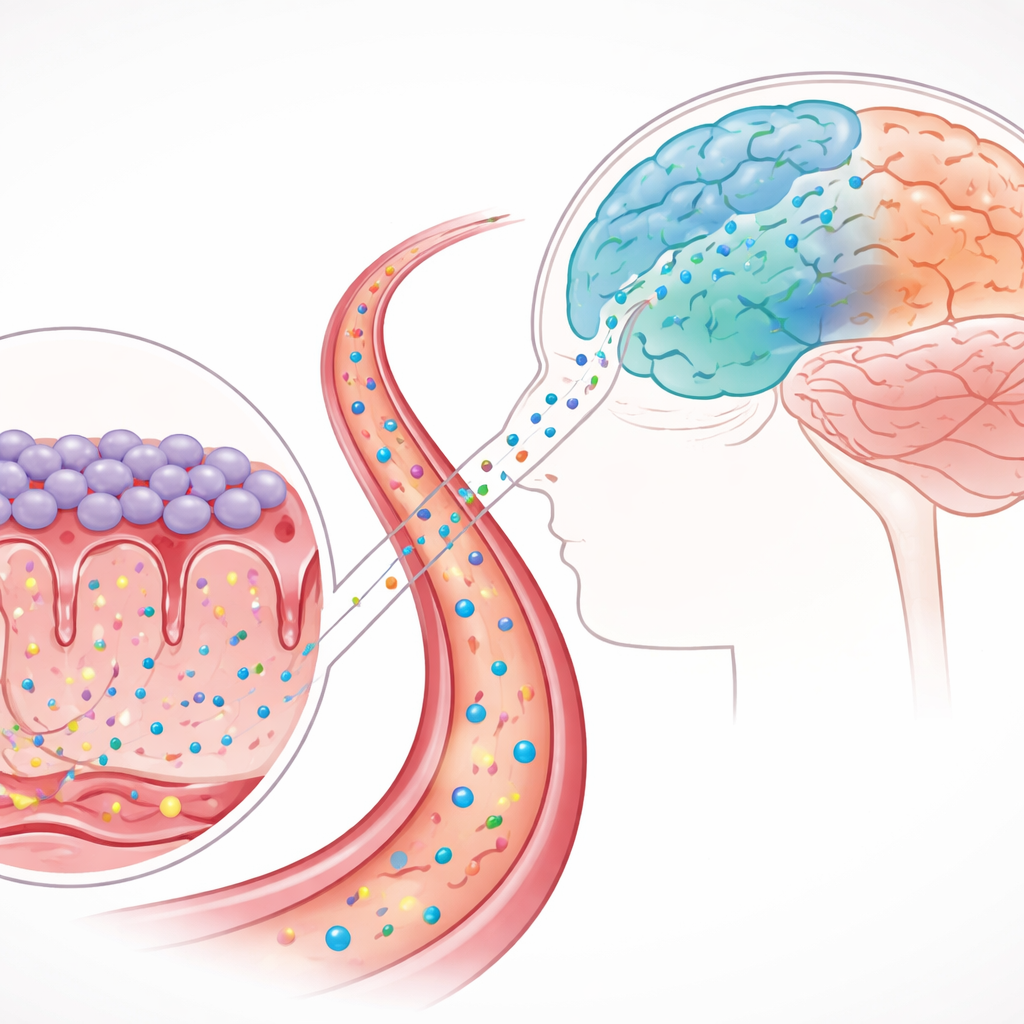
Changes were not limited to the brain. In the bloodstream, mice receiving the higher dose of LM1063 showed increased levels of glutamate (a building block for GABA), GABA itself, and serotonin, a mood- and sleep-related chemical mostly made in the intestine. The probiotic also reshaped the gut community. Beneficial bacteria such as Lactobacillus and Akkermansia became more abundant, and other species known to produce neuroactive substances trended upward, all without disrupting the overall diversity of microbes. This pattern points to a coordinated shift in the gut ecosystem that favors the production of molecules capable of signaling toward the brain along the gut–brain axis.
What This Could Mean for Future Sleep Aids
Taken together, the findings suggest that LM1063 improves sleep in mice through a dual route: by directly tuning brain-related genes that control calming and arousal chemicals, and by indirectly boosting sleep-friendly signals produced in the gut. While the work was done in male mice and over relatively short time windows, it offers a mechanistic foundation for viewing certain probiotics as potential partners in sleep health, rather than simple digestive aids. For people wary of long-term sleeping pills, these results raise the possibility that, someday, carefully chosen microbes could become part of a gentler, microbiome-based toolkit for better, more restorative nights.
Citation: Kim, M.G., Seo, E., Eor, J.Y. et al. Hypnotic and sleep-promoting effects of Limosilactobacillus reuteri LM1063 on pentobarbital-induced sleep and electroencephalogram analysis in mice. Sci Rep 16, 12820 (2026). https://doi.org/10.1038/s41598-026-42833-0
Keywords: probiotics and sleep, gut brain axis, sleep architecture, GABA and serotonin, microbiome health