Clear Sky Science · en
The impact of junk food on male fertility in mice: therapeutic interventions targeting advanced glycation end-products and oxidative stress
Why this study matters for everyday life
Most people know that junk food can expand the waistline and raise blood sugar, but few realize it may also quietly chip away at fertility. This mouse study explores how a modern, high-fat, highly processed diet harms male reproductive health and tests whether two different treatments can undo the damage. The work matters not only for couples trying to conceive, but also for anyone concerned about how today’s food environment might affect the health of future generations.
From fast food to fragile sperm
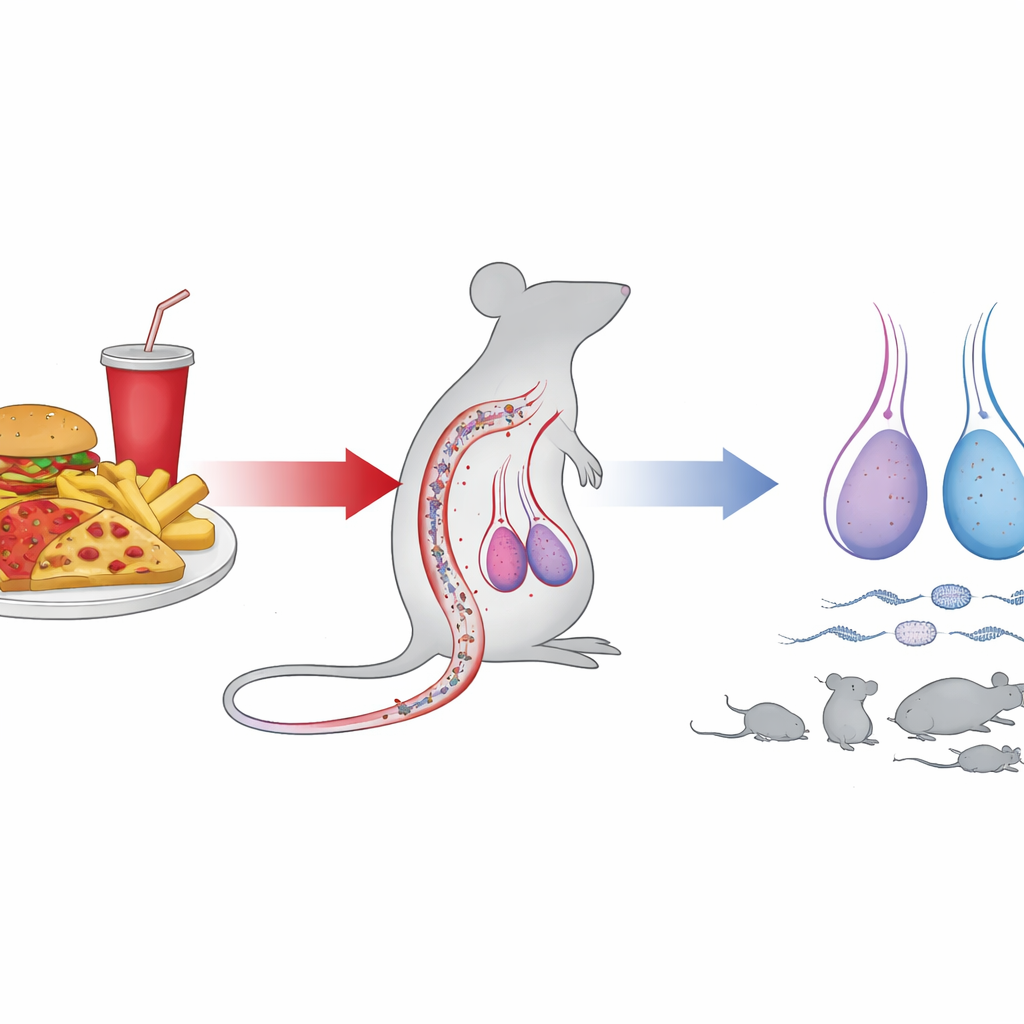
The researchers focused on a group of troublesome molecules called advanced glycation end-products, or AGEs. These form when sugars react with proteins and fats, especially during high-temperature cooking such as frying and grilling. Junk foods and ultra-processed meals are rich in these compounds, which build up in the body and promote low-grade inflammation and chemical wear-and-tear. In tissues that are especially sensitive to chemical balance—like the testes—this can be particularly harmful. To model a typical “junk food” lifestyle, male mice were fed a high-fat, AGE-rich diet for several weeks and then assessed for metabolic health, sperm quality, and actual reproductive success.
What junk food did to male mice
Mice on the junk-food-style diet developed a clear biochemical fingerprint of excess AGEs: key markers in the blood and testes climbed, cholesterol and fasting blood sugar rose, and their bodies accumulated more fat. Inside the testes, chemical indicators of oxidative stress—an imbalance between harmful reactive molecules and the body’s defenses—worsened. This hostile environment disrupted the normal production of sperm. Counts of sperm dropped, their swimming ability declined, and more cells showed misshapen heads and tails. Even the packaging of DNA inside sperm nuclei was disturbed, leaving genetic material less tightly wound and more prone to breakage. As expected, sperm from these animals carried more DNA damage and signs of membrane injury.
From damaged sperm to troubled pregnancies
These microscopic changes had real-world consequences. When the male mice were mated with healthy females, pairs involving junk-food-fed males were less likely to result in pregnancy. When pregnancies did occur, they were more fragile: miscarriages were more frequent, litters were smaller, and fetuses and pups tended to be lighter. In other words, the diet did not just reduce sperm counts on a lab readout; it altered the entire reproductive trajectory, from conception rates to early development. This supports the emerging idea that a father’s diet before conception can influence the health of his children, not only through genes but also through chemical marks and damage carried by sperm.
Testing two ways to fight the damage
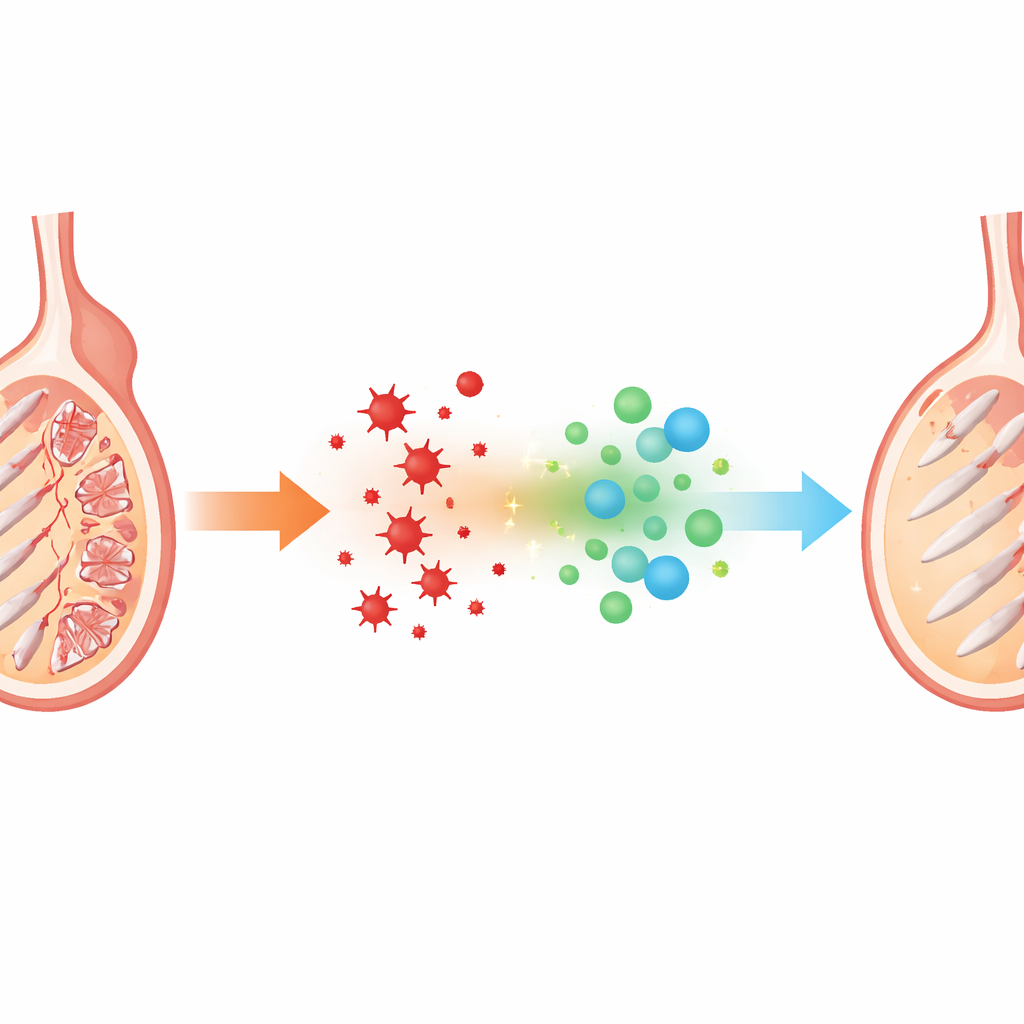
The team then asked whether the harm could be reversed. They compared two interventions. One was Alagebrium (ALT-711), a drug designed to break apart AGE-related cross-links in tissues. The other was Fertilix®, a blend of antioxidant and micronutrient ingredients such as vitamins, selenium, zinc, and CoQ10, aimed at restoring the body’s ability to neutralize harmful reactive molecules. Both approaches improved many of the chemical and cellular signs of stress in junk-food-fed mice. Levels of oxidative damage in the testes dropped, antioxidant capacity rebounded, and several measures of sperm quality—including motility, structural integrity, and DNA stability—moved back toward normal.
Why nutrients outperformed the AGE-breaking drug
Despite similar improvements in many lab measurements, the two treatments diverged where it counted most: actual fertility. The antioxidant and micronutrient blend almost completely restored pregnancy rates, reduced miscarriages, and brought litter sizes and pup growth back in line with healthy controls. In contrast, the AGE-breaking drug improved some sperm-related markers but failed to rescue reproductive outcomes in junk-food-fed mice and even worsened pregnancy measures in otherwise healthy animals. The authors suggest this is because junk-food diets do more than generate AGEs—they also leave the body short of essential protective nutrients. Replenishing these building blocks may be crucial for re-establishing a healthy chemical balance in the testes and supporting normal sperm development, whereas focusing only on breaking AGE cross-links does not fully address the underlying nutrient deficit.
What this means for people
In simple terms, the study shows that a steady diet of energy-dense, heavily processed foods can undermine male fertility in mice by loading the body with harmful sugar-derived compounds and draining its natural defenses. Repairing this damage appears possible, but not all strategies are equal: restoring missing micronutrients and antioxidant capacity was far more effective than a drug that only attacked one type of molecular scar. While mice are not humans and clinical trials will be challenging, the findings strengthen the case that cutting back on junk food and maintaining a nutrient-rich diet may help protect male fertility and the health prospects of the next generation.
Citation: Darmishonnejad, Z., Hassan Zadeh, V., Tavalaee, M. et al. The impact of junk food on male fertility in mice: therapeutic interventions targeting advanced glycation end-products and oxidative stress. Sci Rep 16, 13874 (2026). https://doi.org/10.1038/s41598-026-42820-5
Keywords: junk food, male fertility, advanced glycation end-products, oxidative stress, antioxidant supplements