Clear Sky Science · en
Historical and future extremes of cauvery basin analysed using cmip6 models and ETCCDI indices
Why this river matters to everyday life
The Cauvery River is a lifeline for tens of millions of people in southern India, supplying water for crops, cities, and ecosystems. This study asks a very practical question: how will heatwaves, downpours, and dry spells along the Cauvery change over the coming decades as the planet warms? By combining long records of past weather with the latest global climate models, the authors show that the basin is heading toward a future of hotter days, warmer nights, and a risky mix of floods and droughts that will shape food, water, and health for generations.
Taking the pulse of a working river
The Cauvery Basin stretches from the wet hills of the Western Ghats to the drier plains of Tamil Nadu and Puducherry, and is studded with dams, canals, and farms growing rice, sugarcane, pulses, and other staples. The river depends heavily on two monsoon seasons, which are already becoming more erratic. To understand how extremes are changing, the authors used detailed daily records of rainfall and temperature from India’s meteorological service, covering 1951–2023. They then paired these observations with 13 of the latest global climate models (from the CMIP6 project), which simulate how the atmosphere and oceans respond to rising greenhouse gases.
Picking the best crystal balls
Not all climate models capture regional weather equally well. The team rigorously scored each model using eleven different skill tests, such as how closely simulated rainfall matches measurements and how well temperature swings are reproduced. They also applied seven decision-making methods—tools normally used in fields like engineering and finance—to combine these scores into overall rankings. 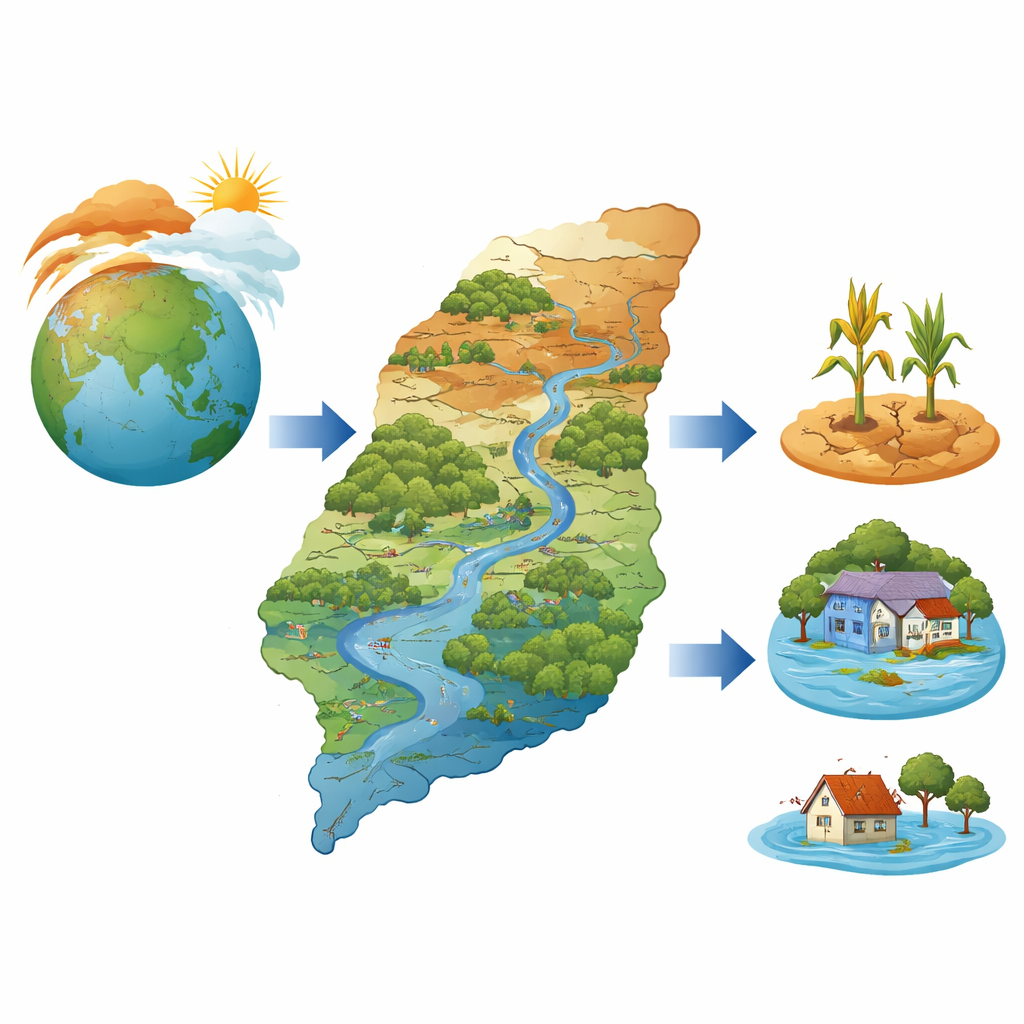
Hotter days, warmer nights, and longer heatwaves
The historical record already shows a clear warming signal. The basin’s hottest daytime temperatures and warmest nights have both crept upward since the 1950s, and the number of days above 35 °C has increased. Looking ahead, the study finds that peak daytime heat is likely to rise by about 1.5–2 °C under the moderate-emissions future and by more than 3.5 °C under the high-emissions future by late century. The number of very hot days could triple, exceeding 90 days per year in some areas if emissions remain high. Nighttime heat also intensifies, meaning less relief after sunset and greater stress on people, livestock, and crops. At the same time, the usual difference between daytime and nighttime temperatures shrinks, a hallmark of intensified heat stress.
Downpours, dry spells, and the risk of both floods and droughts
Rainfall in the Cauvery Basin has always swung from year to year, but the study shows that extremes are sharpening. Historically, the basin received about 770–1,230 mm of rain per year, with the heaviest five-day bursts around 200 mm. By the end of the century, the strongest five-day totals could exceed 300 mm, and the amount of rain falling on unusually wet days could climb toward 450 mm. 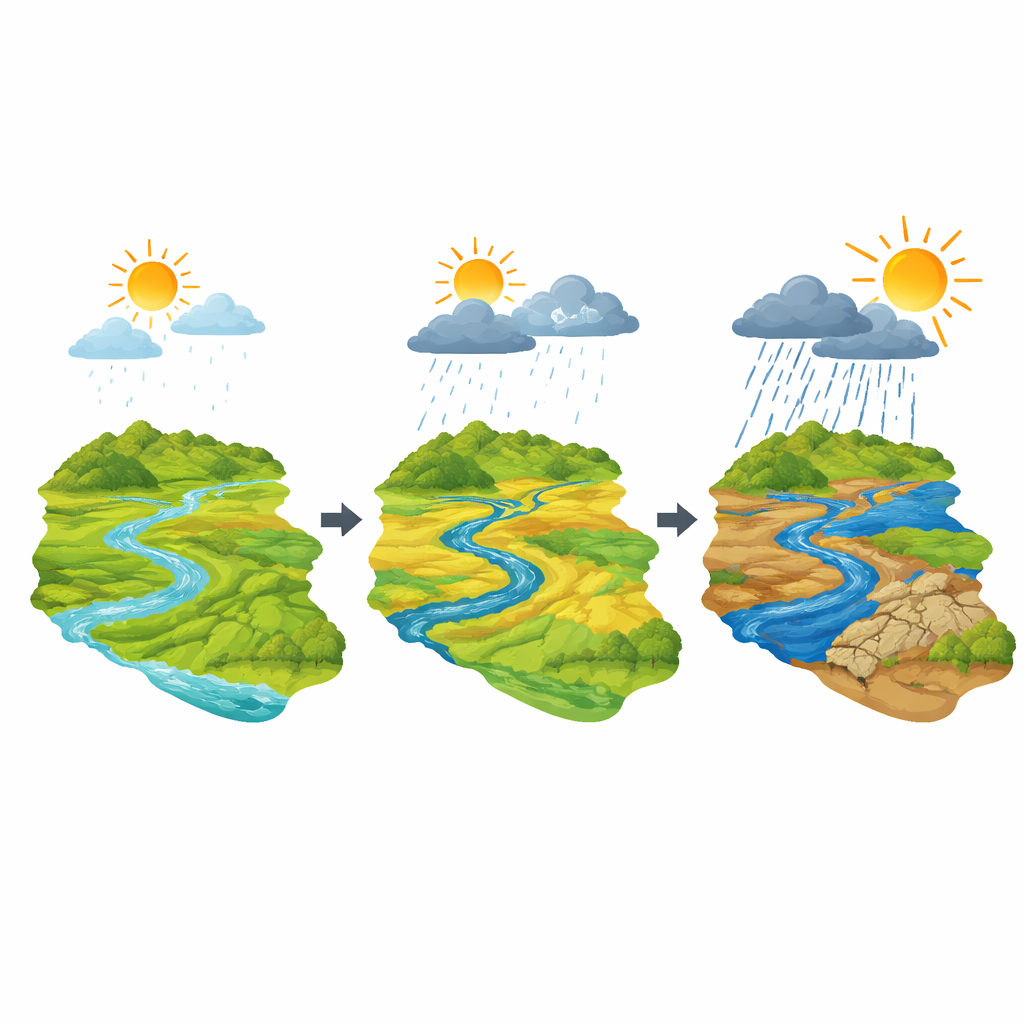
Adapting farms, water systems, and communities
Because the same river supports cities, farms, and ecosystems, these shifting extremes have wide-ranging consequences. The authors argue that climate-smart agriculture—such as heat- and drought-tolerant crop varieties, smarter planting calendars, and soil-conserving practices—will be essential to maintain yields. On the water side, they highlight the need for more flexible storage, from small farm ponds to better reservoir operations, along with efficient irrigation. Strengthened health systems, early warning for heatwaves and floods, and improved insurance and social safety nets can help protect vulnerable communities.
What this means for the future
In plain terms, the study concludes that the Cauvery Basin is on track for a hotter, more volatile climate where extreme heat, intense rainfall, and long dry spells become more common. The difference between a moderately warming world and a high-emissions future is stark: under the latter, heatwaves last far longer and heavy rains intensify more sharply. By carefully selecting and testing climate models, the authors provide a clearer picture of what lies ahead, underscoring that choices made now about emissions, water management, and farming practices will strongly influence how livable and resilient the Cauvery region remains.
Citation: Sridhara, S., Thimmareddy, H., Haroli, M. et al. Historical and future extremes of cauvery basin analysed using cmip6 models and ETCCDI indices. Sci Rep 16, 13257 (2026). https://doi.org/10.1038/s41598-026-42818-z
Keywords: Cauvery River Basin, climate extremes, heatwaves, monsoon rainfall, water and agriculture