Clear Sky Science · en
High-yield induced ovulation in the adult marsupial fat-tailed dunnart (Sminthopsis crassicaudata)
Saving Small Marsupials with Big Reproductive Help
The fat-tailed dunnart is a tiny, mouse-sized marsupial, but it carries outsized importance for understanding and protecting Australia’s unique wildlife. Many marsupials are in trouble, yet modern breeding tools often depend on collecting large numbers of healthy egg cells, something that has been very hard to do in these animals. This study shows how scientists developed a step-by-step hormone treatment for adult female dunnarts that reliably produces many mature eggs, opening the door to advanced fertility techniques that could aid conservation.
Why Tiny Marsupials Matter
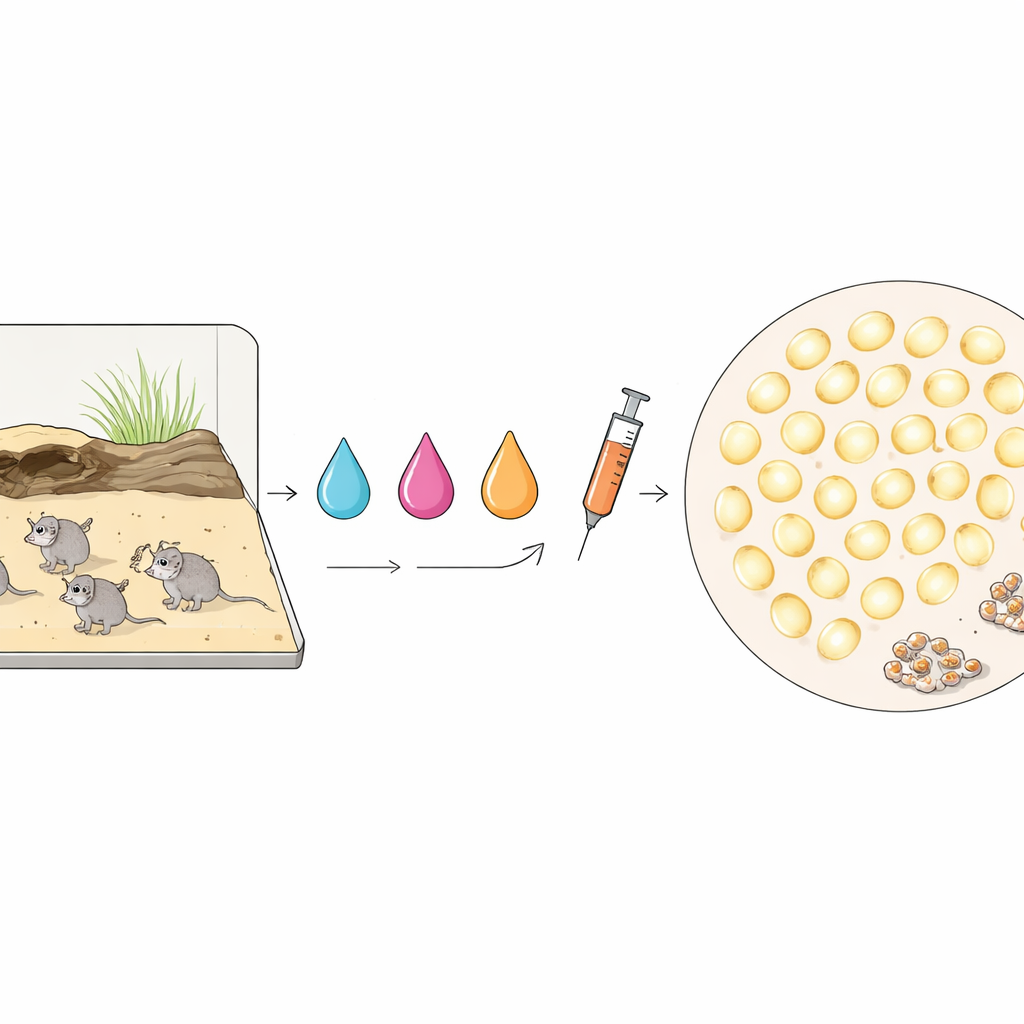
The fat-tailed dunnart is increasingly used as a “model” marsupial because it is small, breeds year-round in captivity, and is easier to keep than many endangered relatives such as koalas or Tasmanian devils. To preserve threatened species, scientists rely on assisted reproductive technologies like in vitro fertilization and embryo culture. All of these methods need a steady supply of mature egg cells. In dunnarts, however, females naturally release only about ten eggs per cycle, and earlier attempts to boost egg numbers in adults with hormone injections gave results that were patchy and unpredictable. The challenge was to find a way to work with adult females, which are more practical for wildlife programs, while overcoming the confusion caused by their natural hormone cycles.
Bringing the Cycle into Sync
The research team’s first step was to “reset” the reproductive clock in adult female dunnarts so that all were at the same point in their monthly cycle. They did this by giving a series of injections of a hormone called LHRH and then tracking each animal’s cycle using a simple vaginal cell test. By examining what kinds of cells appeared in daily washings, they could tell whether a female was in an active phase or in a quiet resting phase called diestrus. After four injections given over ten days, nearly nine out of ten females had been brought into this same resting stage, creating a uniform starting line for the next round of treatment.
From Hormone Plan to Egg Harvest
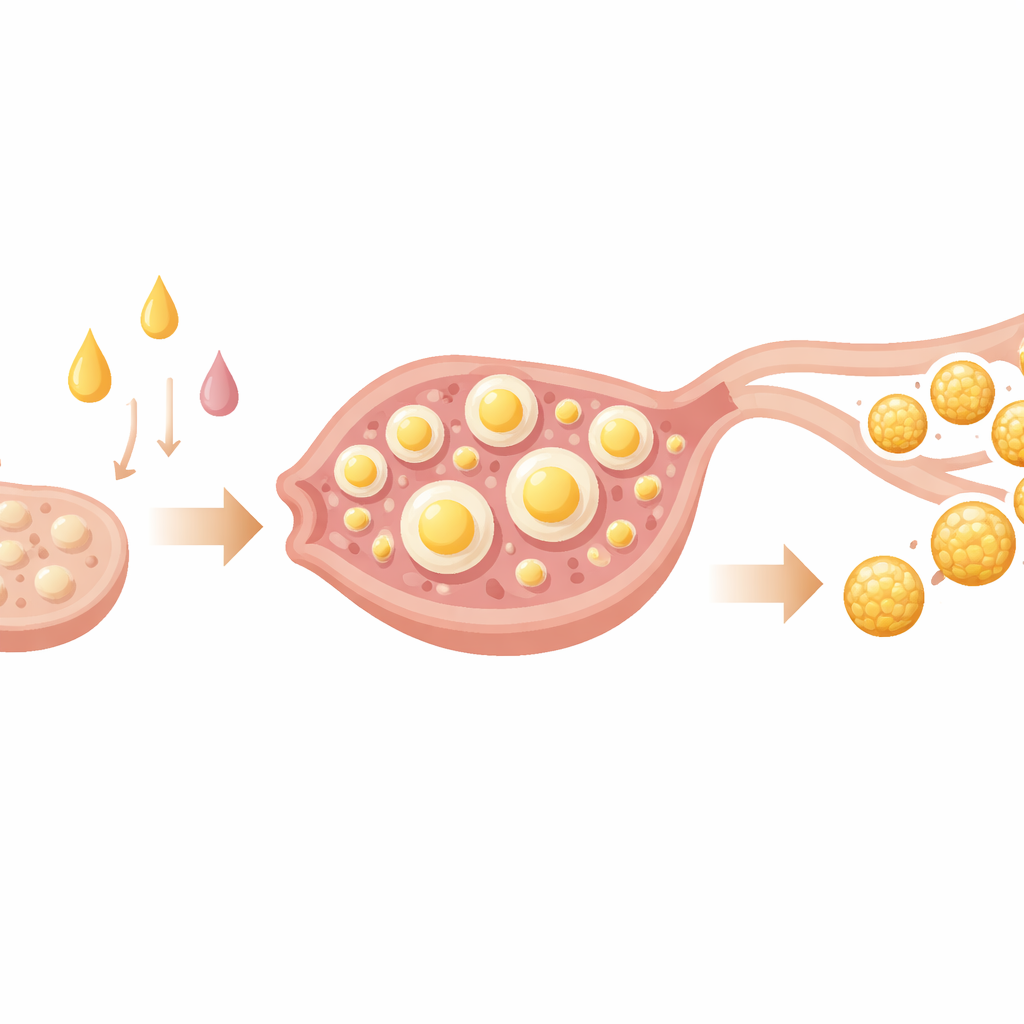
Once the females were synchronized, the scientists added a second hormone, PMSG, known to encourage egg follicles in the ovary to grow, followed by hCG to trigger ovulation. This carefully timed sequence led to a striking improvement. About 78% of treated females released eggs, compared with only 38% of those that received the stimulation hormones without the initial cycle synchronization. Even more important, the synchronized group produced on average around 20 mature eggs per animal, roughly three to four times more than the control group. Under the microscope, these eggs showed the structures typical of fully mature, healthy cells ready for fertilization.
Testing Whether the Eggs Really Work
Producing many eggs is valuable only if they can support normal development. To test this, the researchers allowed some treated females to mate and then collected the resulting zygotes—freshly fertilized eggs. These were grown in a two-step culture system that mimics the changing environment of the reproductive tract. Most zygotes successfully divided into four-cell embryos, then paused briefly, and later progressed to eight- and sixteen-cell stages. About half of them formed blastocysts, the hollow balls of cells that are the gateway to implantation and pregnancy. This showed that eggs generated by the new protocol are not only numerous but also functionally competent.
New Hope for Marsupial Conservation
By first lining up the reproductive cycles of adult female dunnarts and then gently stimulating their ovaries, the researchers created a reliable way to obtain large numbers of high-quality eggs and early embryos from each animal. For conservationists, this means that advanced techniques such as sperm injection, in vitro fertilization, and embryo banking can now be realistically explored in a practical marsupial model and potentially adapted to more vulnerable species. In simple terms, the study turns a once unpredictable process into a repeatable recipe, giving scientists a powerful new tool to help safeguard the future of marsupials.
Citation: Liu, J., Mtango, N., Scicluna, E.L. et al. High-yield induced ovulation in the adult marsupial fat-tailed dunnart (Sminthopsis crassicaudata). Sci Rep 16, 12450 (2026). https://doi.org/10.1038/s41598-026-42752-0
Keywords: marsupial reproduction, assisted reproduction, fat-tailed dunnart, oocyte superovulation, wildlife conservation