Clear Sky Science · en
Unveiling of phytochemicals, antioxidants, cytotoxic effects and anthelmintic potency of green tea (Camellia sinensis) beverage against albendazole resistant Hamonchus contortus
Why a common drink matters for farm animals
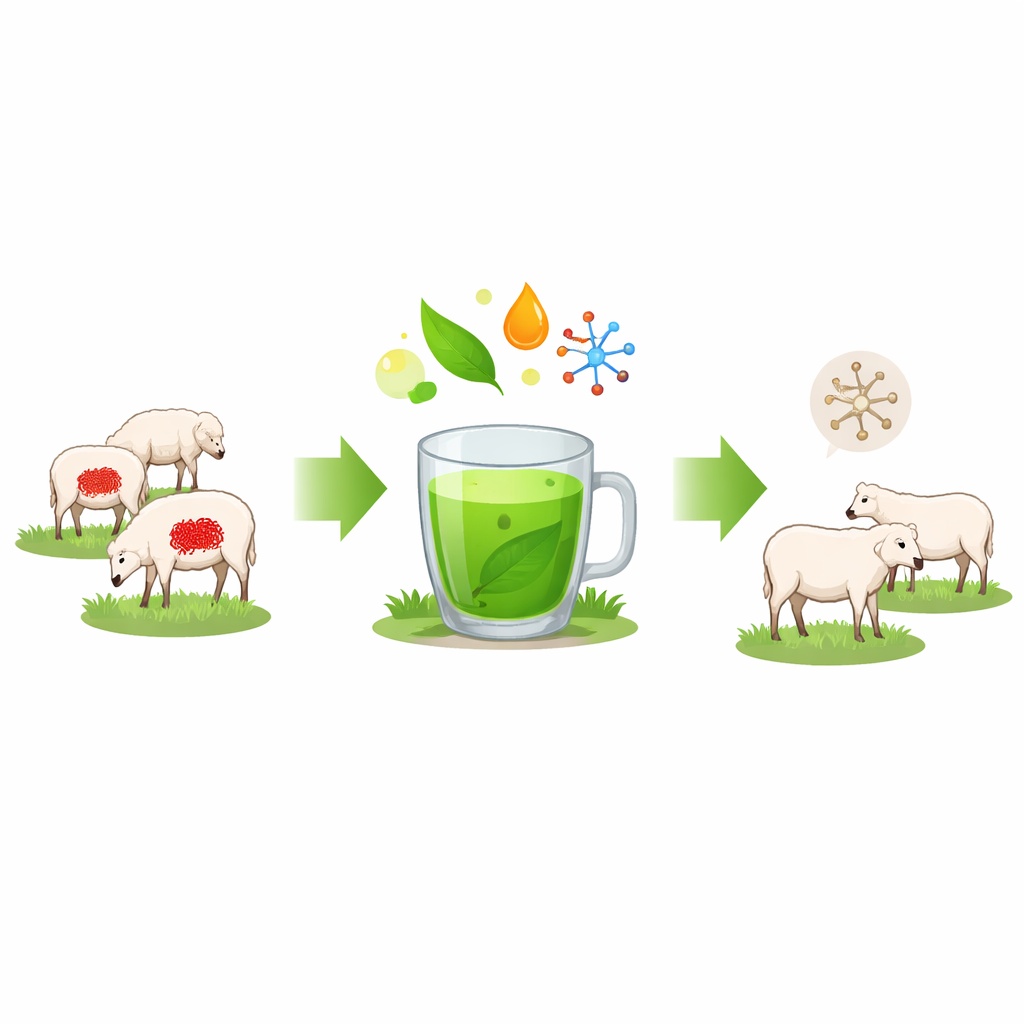
For many people, green tea is simply a soothing drink. For farmers, this everyday beverage might become an unexpected ally in protecting their animals. This study explores whether a simple green tea drink can help control a harmful, drug‑resistant stomach worm in sheep, potentially safeguarding food supplies and reducing reliance on synthetic drugs.
A stubborn worm that harms sheep
Sheep around the world are frequently infected by a blood‑sucking stomach worm called Haemonchus contortus. These worms cause anemia, weight loss, weakness, and sometimes sudden death, leading to serious economic losses. Farmers have long depended on de‑worming drugs, such as albendazole, to keep infections in check. However, overuse and repeated dosing have allowed the worms to evolve resistance, meaning the drugs no longer kill them effectively. The authors first confirmed that a flock of Egyptian sheep carried worms that could survive normal albendazole treatment, highlighting the urgent need for new, practical ways to protect animals.
Turning green tea into a farm‑ready drink
The researchers prepared a beverage from green tea leaves grown in Egypt, similar to a strong brewed drink, and then examined what was inside it. They found that it was rich in natural plant chemicals, especially a group called catechins, along with gallic acid, caffeine, ellagic acid and rutin. These substances are well known from nutrition research for their strong antioxidant activity, meaning they can neutralize damaging reactive molecules. Using several standard tests, the team showed that the tea beverage had very high antioxidant strength, comparable to or better than vitamin C in the lab. This chemical richness suggested that the drink might also have powerful biological effects on parasites.
Putting worms in contact with the tea
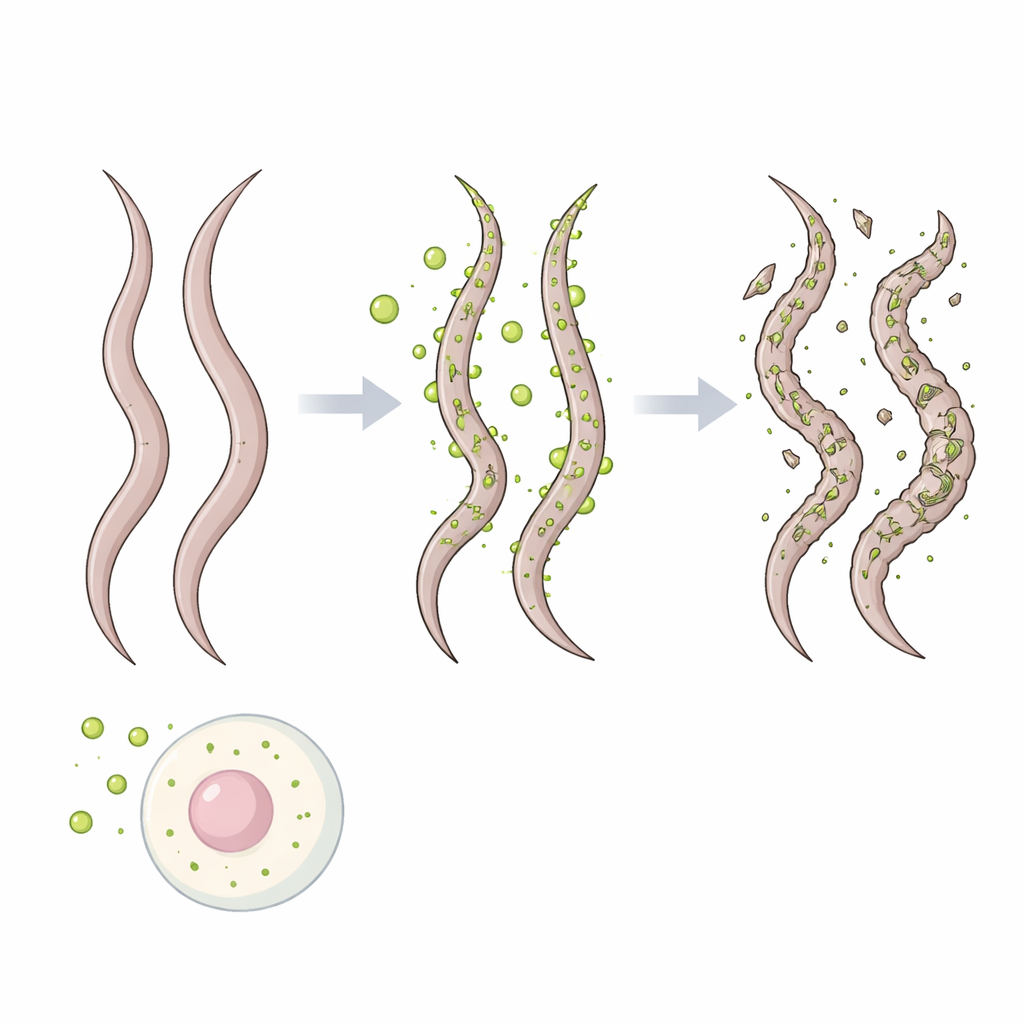
To see whether the green tea drink could actually harm the resistant worms, the scientists exposed different life stages of H. contortus—eggs, larvae, and adult worms—to various tea concentrations in laboratory dishes. At the higher concentrations tested, the tea completely stopped eggs from hatching and almost completely halted movement of the infective larvae. Even at lower doses, the drink sharply reduced egg hatching and larval activity. When adult worms were bathed in the tea, their movement slowed, then stopped; at the strongest dose, all adult worms became immobile within a few hours, an indicator of death. These effects were clearly dose‑ and time‑dependent: more tea and longer exposure produced stronger worm‑killing action.
What happens to the worms’ bodies
Microscope studies offered a closer look at how the tea damages the parasites. Under the light microscope, eggs exposed to the beverage became shrunken and dark, losing the orderly pattern of developing cells seen in healthy eggs. Larvae that normally have smooth, tapered bodies instead showed clear deformities. In adult worms, both light and scanning electron microscopes revealed thinning, wrinkling, and splitting of the outer body wall and underlying muscle layers. The mouthparts and surface ridges were swollen and distorted. These structural injuries are consistent with a loss of movement, an inability to feed, and eventual death of the worms.
Checking safety for host cells
Because a promising parasite treatment must also be safe for the host, the team tested the tea beverage on a line of normal human‑derived skin cells grown in culture. Across a wide range of concentrations, including levels that were lethal to worms, the cells largely maintained their viability. This suggests that, at least in this controlled setting, the green tea drink damages worms far more than it harms mammalian cells, an encouraging sign for potential use in live animals.
What this could mean for farms and beyond
In simple terms, this study shows that a strong green tea drink, rich in natural antioxidant compounds, can kill drug‑resistant sheep worms at all stages of their life cycle while appearing safe to normal cells in the lab. Although more testing in live animals and on farms is needed, these results point to green tea as a promising, plant‑based complement or alternative to conventional de‑worming drugs. If developed into practical treatments, such beverages or extracts could help farmers fight resistant parasites, protect animal health, and reduce the environmental impact of synthetic drugs, all starting from a familiar cup of tea.
Citation: Hassan, N.M.F., Elsawy, B.S.M., Helal, M.A. et al. Unveiling of phytochemicals, antioxidants, cytotoxic effects and anthelmintic potency of green tea (Camellia sinensis) beverage against albendazole resistant Hamonchus contortus. Sci Rep 16, 10486 (2026). https://doi.org/10.1038/s41598-026-42739-x
Keywords: green tea, drug-resistant parasites, sheep health, natural dewormers, antioxidant phytochemicals