Clear Sky Science · en
Harnessing the multifunctional bioagent Streptomyces sp. SP5 for Fusarium wilt suppression, metabolite-mediated antioxidant activity, and plant growth promotion
Friendly Microbes Helping Hungry People
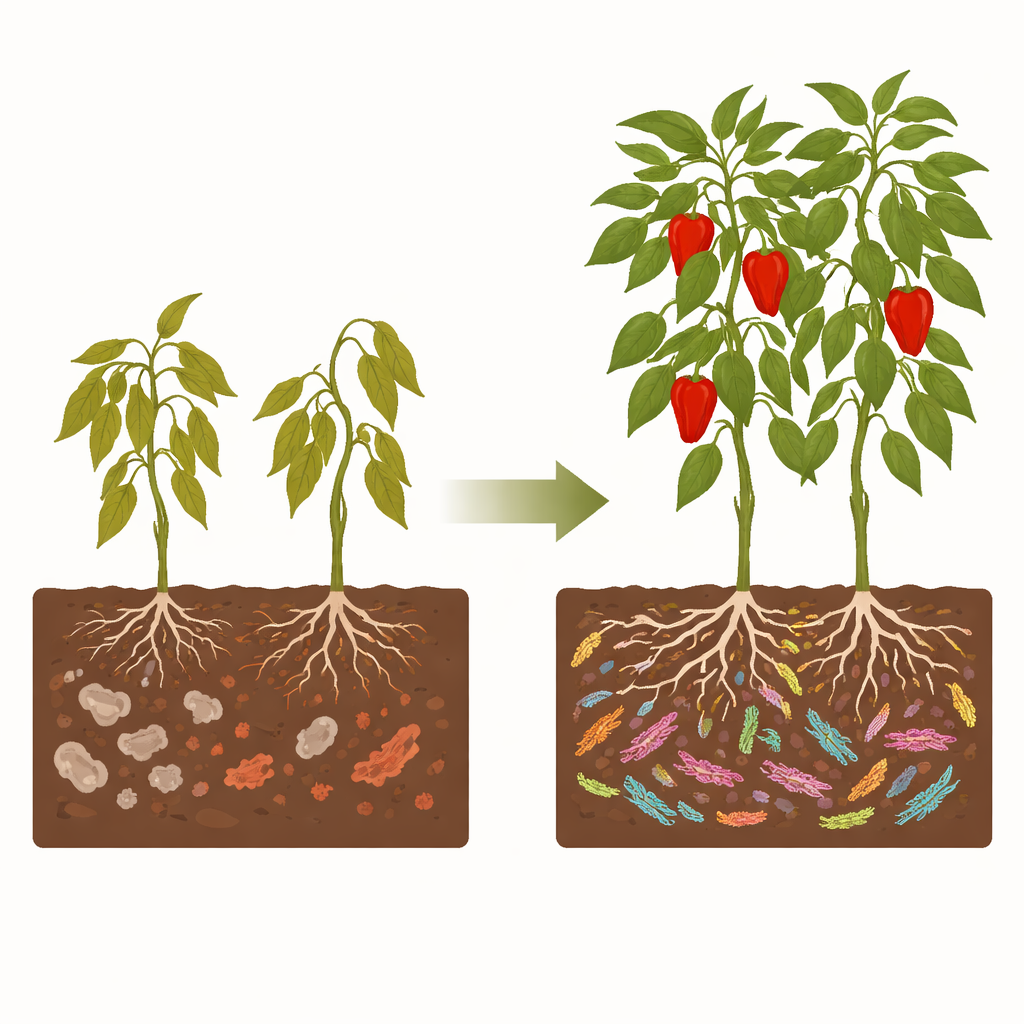
As the world’s population grows and more people struggle with hunger, farmers are under pressure to grow more food while cutting back on chemical pesticides that harm soil life and the environment. This study explores a naturally occurring “friendly” microbe, Streptomyces sp. SP5, that lives inside plants and in the soil. The researchers show that this tiny ally can protect pepper plants from a devastating wilt disease, help crops grow better, and even provide natural antioxidant compounds—all of which could make farming more productive and sustainable.
A Hidden Partner in the Soil
Streptomyces are soil-dwelling bacteria well known for producing many of the world’s antibiotics. Here, scientists focused on one particular strain, called SP5, originally found living inside citrus leaves. Instead of relying on chemical pesticides, they asked whether this microbe could guard pepper plants (Capsicum annuum) against Fusarium wilt, a disease caused by the fungus Fusarium solani that can wipe out most of a crop. At the same time, they wanted to see if SP5 could stimulate plant growth and strengthen plants’ own defenses, offering a multipurpose biological alternative to chemical inputs.
Natural Shields Against Reactive Molecules
The team first tested whether SP5 produces antioxidant substances—molecules that neutralize highly reactive forms of oxygen that damage cells during stress and infection. Using standard laboratory assays, they exposed different types of SP5 extracts to several kinds of reactive molecules and watched how strongly the extracts “quenched” them. Both an acetone-based fraction and an ether-based fraction from SP5 showed strong, dose-dependent antioxidant activity. As the amount of extract increased, it consistently blocked more reactive molecules across all tests. These results suggest that SP5 is a rich source of natural antioxidant compounds that could help plants cope with stress and may also have value beyond agriculture.
Boosting Seeds and Seedlings
Next, the researchers examined whether SP5 could help plants grow. They focused on indole-3-acetic acid, a plant hormone (auxin) that encourages root and shoot development, produced by SP5 and extracted into an organic solvent. When mung bean seeds were treated with this extract, germination jumped to 100 percent compared with two-thirds in untreated seeds. The young plants developed much longer roots and shoots and produced many more side roots. In pot experiments with tomato seedlings, the same type of extract led to taller plants with heavier roots and shoots, both fresh and dry. These results show that SP5 does not just protect plants; it actively promotes stronger, more vigorous growth from the earliest stages.
Fighting Wilt While Making Plants Thrive
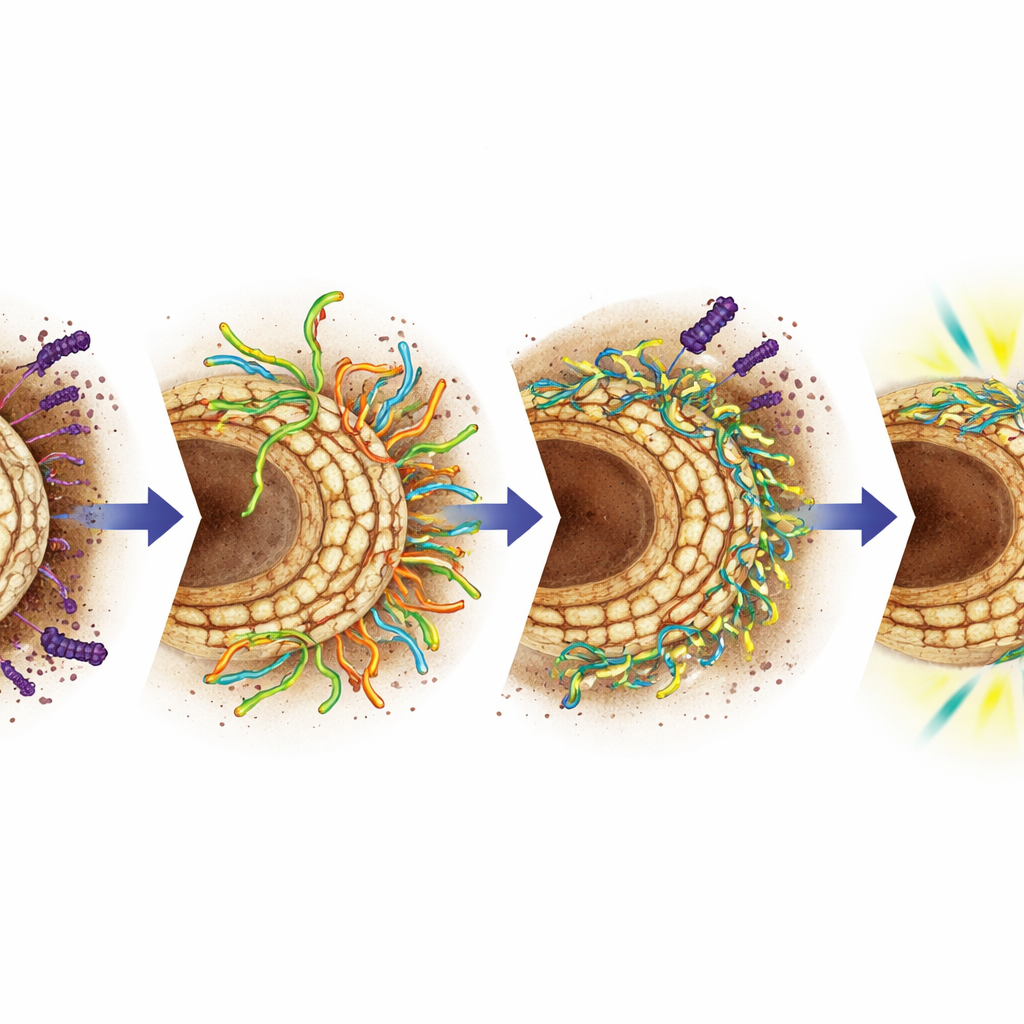
To test SP5 where it really matters—in living pepper plants—the team set up pot trials under natural conditions. They applied SP5 to the soil in several forms: live culture cells, liquid culture, purified metabolites, and a talc-based bioformulation designed to be practical for farmers. When peppers were challenged with the Fusarium wilt fungus, plants treated with SP5, especially the live cells and the bioformulation, showed dramatic reductions in disease—over 80 percent less wilt compared with infected plants that did not receive the microbe. At the same time, treated plants were taller, had longer roots, heavier stems and roots, more buds and flowers, and thicker leaves and stems, even when no pathogen was present. Measurements inside the leaves revealed higher levels of green pigments for photosynthesis, more natural phenolic and flavonoid compounds, and stronger activity of key defense enzymes, indicating that SP5 primes the plant’s own protective systems.
What This Means for Future Farming
In simple terms, Streptomyces sp. SP5 acts like a live, multitool treatment for crops: it helps seeds sprout, boosts plant growth, supplies antioxidant protection, and shields peppers from a serious soil-borne disease by both attacking the fungus and switching on the plant’s internal defenses. Instead of depending solely on synthetic pesticides and fertilizers, farmers could one day apply SP5-based products to make their crops healthier and more resilient while protecting the environment. This study suggests that carefully chosen beneficial microbes such as SP5 could become key partners in feeding a growing world more safely and sustainably.
Citation: Devi, S., Manhas, R.K. Harnessing the multifunctional bioagent Streptomyces sp. SP5 for Fusarium wilt suppression, metabolite-mediated antioxidant activity, and plant growth promotion. Sci Rep 16, 13147 (2026). https://doi.org/10.1038/s41598-026-42641-6
Keywords: biological control, plant growth promotion, Streptomyces, Fusarium wilt, sustainable agriculture