Clear Sky Science · en
Influence of CeO₂ nanoparticle addition on engine performance, combustion, and emissions of ethiopian podocarpus falcatus biodiesel
Turning Local Trees into Cleaner Fuel
Diesel engines power much of the world’s farming, transport, and backup electricity, but they also emit harmful gases and soot. This study explores a way to make diesel engines cleaner and less dependent on imported fuel by using oil from a non-edible Ethiopian tree, Podocarpus falcatus, and boosting its performance with tiny cerium oxide nanoparticles. The goal is to see whether this locally sourced biodiesel, lightly “seasoned” with nanotechnology, can run an engine efficiently while cutting visible smoke and unburned fuel in the exhaust.
A Tree That Does Not Compete with Food
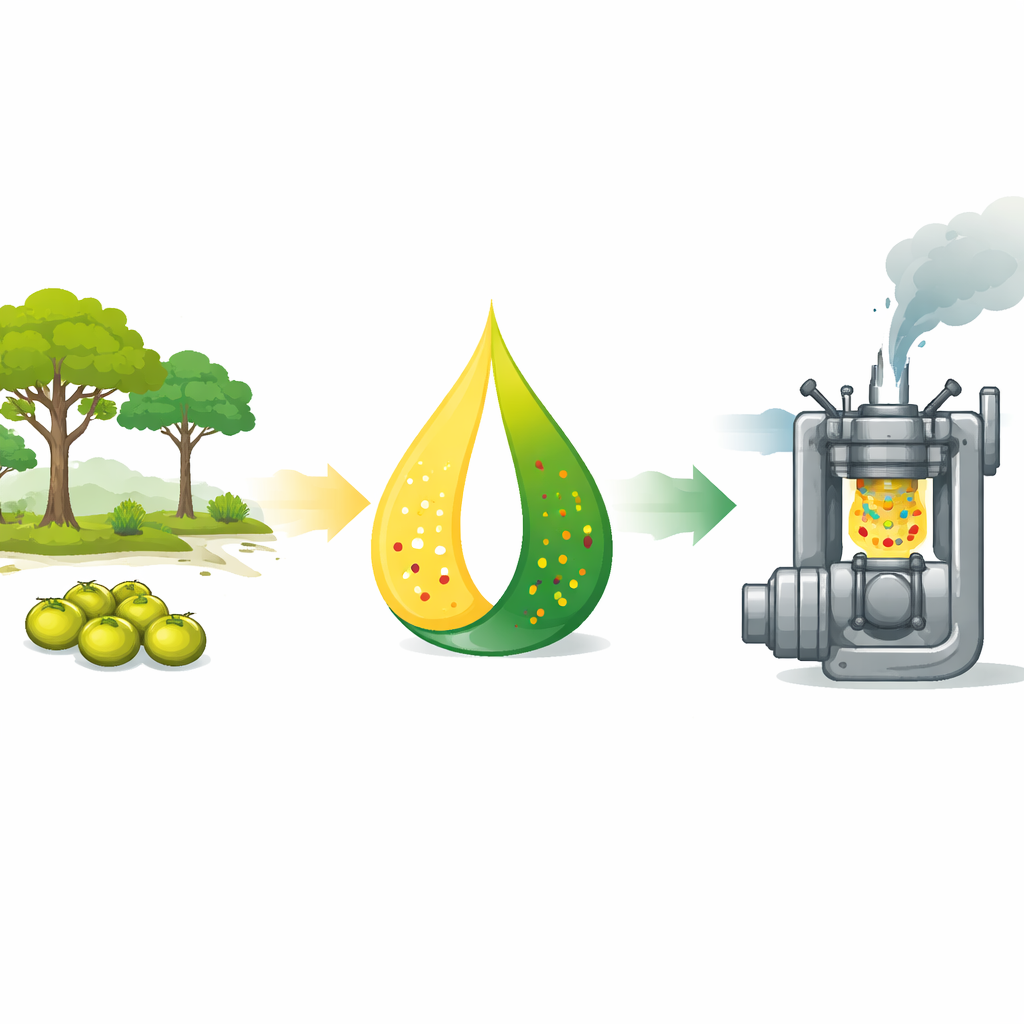
Podocarpus falcatus is a high-oil tree that grows widely in the Ethiopian highlands, often on land that is not suitable for crops. The seeds can yield 40–50% oil, especially when the husk is removed, making it a strong candidate for biodiesel without competing with food production. In this work, the researchers pressed the oil from the seeds, then converted it into biodiesel using a solid catalyst made from calcium oxide and cerium oxide. Tests showed that the resulting fuel blends, containing 10–30% of this biodiesel mixed with regular diesel, had properties—such as energy content, thickness, and ignition quality—close enough to diesel to run in a normal compression-ignition (diesel) engine with no hardware changes.
Adding Nanoparticles to Help the Burn
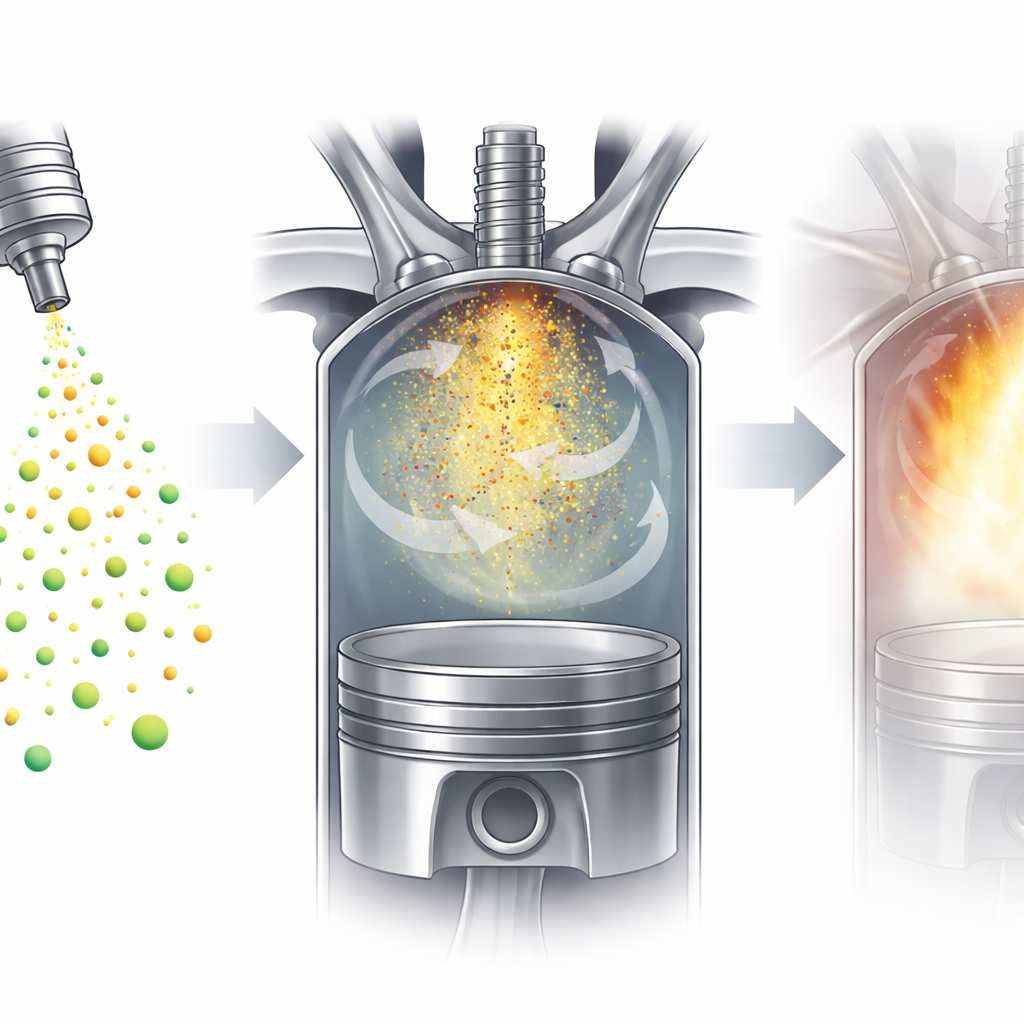
Beyond helping make the biodiesel, cerium oxide also plays a second role inside the engine itself. The team added a very small amount—80 parts per million—of these nanoparticles into each diesel–biodiesel blend. Cerium oxide can store and release oxygen and acts like a tiny reusable helper during combustion. In a single-cylinder test engine, the researchers compared plain diesel and biodiesel blends to the same fuels containing nanoparticles. They measured power output, fuel use, in-cylinder pressure, how quickly the fuel ignites and burns, and the levels of major exhaust pollutants such as carbon monoxide, unburned hydrocarbons, nitrogen oxides, and smoke.
How the Engine Responded
Without nanoparticles, adding more biodiesel slightly reduced engine power and efficiency and required a bit more fuel to do the same work, mainly because biodiesel carries slightly less energy per kilogram and is thicker than diesel. The combustion inside the cylinder became a little softer and later in timing. When the nanoparticle additive was introduced, these penalties were largely reversed. Brake thermal efficiency rose by up to about 12%, and brake power recovered by 3–10% compared with the same blends without nanoparticles, while fuel consumption dropped markedly. Inside the cylinder, the peak pressure and the early burst of heat release both increased and shifted closer to the ideal point in the engine cycle. Ignition delay and total burn duration became shorter, indicating that the fuel–air mixture was burning more rapidly and cleanly.
Cleaner Exhaust with a Trade-Off
The improved burn showed up clearly at the tailpipe. Carbon monoxide and unburned hydrocarbons—signs of wasted fuel—fell substantially with biodiesel, and even more when nanoparticles were added, with unburned hydrocarbons dropping by as much as about 70%. Smoke opacity, which relates to visible soot, also declined for biodiesel and saw an extra 9–10% cut with the nanofuel. The one drawback was nitrogen oxides, which rose moderately, by around 7% at full load with nanoparticles. This fits with the picture of a hotter, more complete burn, since these gases form more readily at higher temperatures. The authors suggest that familiar engine strategies like exhaust gas recirculation or after-treatment systems could be used to tame nitrogen oxides while keeping the efficiency and soot benefits.
What This Means for Future Engines
In everyday terms, the study shows that a fuel made from a local, non-edible Ethiopian tree can run a diesel engine nearly as well as regular diesel, and that a tiny dose of cerium oxide nanoparticles can more than make up the small performance loss while sharply cutting smoke and unburned fuel in the exhaust. Although there is a modest rise in certain pollutants linked to higher flame temperatures, these are within ranges that current emission controls can address. Together, Podocarpus falcatus biodiesel and cerium oxide nanoparticles point toward a practical path for cleaner, more locally sourced diesel fuel, without redesigning existing engines.
Citation: Birhanu, B., Deshmukh, D., Yemane, T.H. et al. Influence of CeO₂ nanoparticle addition on engine performance, combustion, and emissions of ethiopian podocarpus falcatus biodiesel. Sci Rep 16, 12289 (2026). https://doi.org/10.1038/s41598-026-42636-3
Keywords: biodiesel, nanoparticles, diesel engines, emissions, renewable fuels