Clear Sky Science · en
Third generation cephalosporin-resistant (3GCR) Escherichia coli and biocide-tolerant heterotrophic bacteria in irrigation water used in Capsicum annuum cultivation areas in Kosovo
Why This Matters for Your Dinner Plate
Fresh peppers may look spotless at the market, but the water used to grow them can quietly carry germs that no one sees. This study from Kosovo explores whether irrigation water used on pepper fields is contaminated with harmful and antibiotic‑resistant bacteria, and whether that contamination reaches the soil and the peppers themselves. The findings touch on food safety, water management, and the global problem of antibiotic resistance—issues that ultimately affect what ends up on all of our plates.
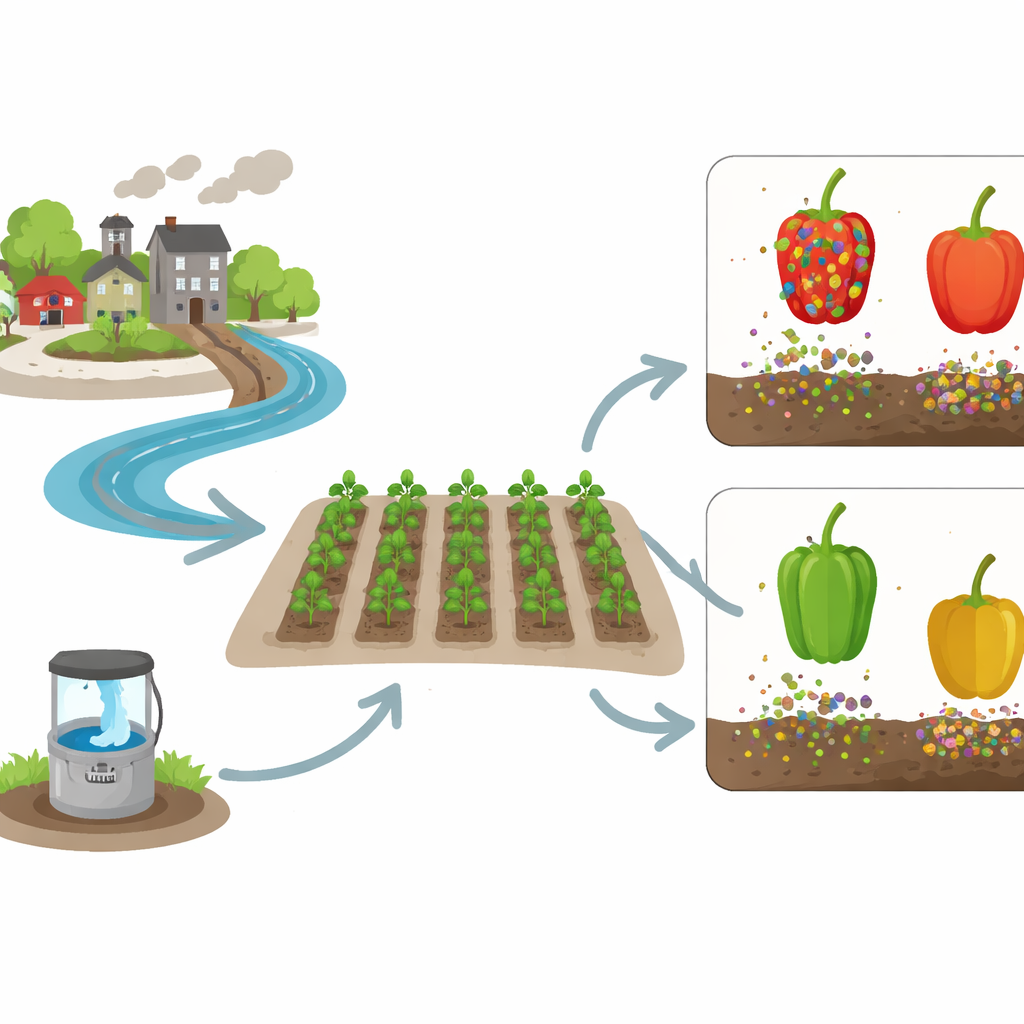
Where Farm Water Comes From
The researchers focused on five pepper‑growing areas near the cities of Prishtina and Podujeva in Kosovo. Farmers there rely on two main water sources: rivers that can receive untreated wastewater from towns, and wells that tap into groundwater. The team collected irrigation water from both rivers and wells, along with nearby topsoil and ripe bell peppers from the fields. By comparing these different samples, they could trace where bacteria were most abundant and how they might move through the farming system.
Hidden Germs in Rivers and Wells
The scientists looked especially for Escherichia coli (E. coli), a common gut bacterium used worldwide as a sign of fecal contamination. They also searched for E. coli that can shrug off powerful "third‑generation" cephalosporin antibiotics—drugs often reserved for serious infections. Using two approaches—direct counting of colonies and a pre‑enrichment step that boosts low numbers—they found E. coli in both rivers and in all wells they tested. The river running close to houses and wastewater sources showed particularly heavy contamination. Some of these E. coli carried genetic features that make them resistant to important antibiotics, and many were resistant to multiple different drug types, suggesting they came from heavily polluted sources.
Disinfectant‑Tolerant Bacteria in Soil and Fruit
The study did not stop at E. coli. The team also grew general “heterotrophic” bacteria—microbes that thrive on rich nutrients—on media laced with a common disinfectant ingredient, a quaternary ammonium compound called BAC‑C12. These chemicals are widely used in cleaning products and were applied heavily during the COVID‑19 pandemic. Bacteria that can tolerate such compounds were found in river water, well water, all soil samples, and most pepper samples. Many of these belonged to groups that can include human pathogens, such as Providencia, Morganella, and Pseudomonas. In particular, highly tolerant Pseudomonas strains were repeatedly found on or in pepper fruits, raising questions about how these hardy microbes interact with both plants and people.
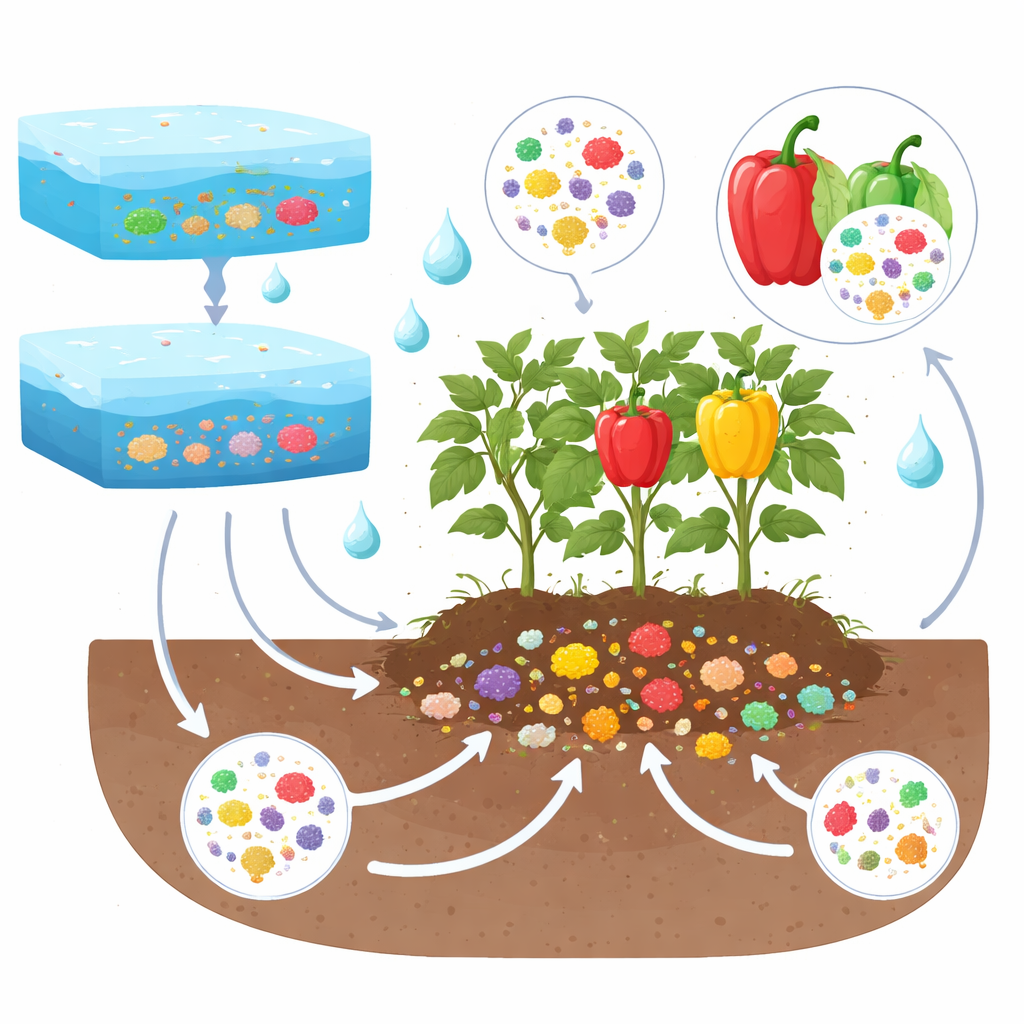
What Reached the Peppers—and What Didn’t
One striking result is that, despite clear contamination of irrigation water and some soils with fecal indicator bacteria and antibiotic‑resistant E. coli, the peppers themselves tested negative for E. coli, even after methods designed to detect very low levels. Farmers in these fields used drip irrigation that delivers water directly to the root zone instead of spraying it over leaves and fruits. This focused, relatively hygienic watering method likely shielded the peppers from direct contact with polluted water. At the same time, the presence of disinfectant‑tolerant bacteria on peppers shows that other types of robust microbes can still reach the crop, probably via soil, splashes, or handling.
What This Means for Food Safety and the Environment
In plain terms, the study shows that irrigation water in parts of Kosovo is heavily polluted with fecal bacteria and contains many strains resistant to important antibiotics and to commonly used disinfectants. Thanks to careful drip irrigation, these particular pepper crops did not carry E. coli, but the surrounding water and soil act as reservoirs where resistance can spread among bacteria. Because resistance traits can be shared between microbes, the mix of antibiotics, disinfectants, and even heavy metals in the environment may encourage the rise of harder‑to‑treat infections. The authors argue that protecting public health will require better wastewater treatment, routine monitoring of farm water and soils, and broader education and policy efforts to curb the overuse of antibiotics and disinfectants—steps that matter far beyond the borders of Kosovo.
Citation: Tahiri Vela, E., Gecaj, R.M., Pulami, D. et al. Third generation cephalosporin-resistant (3GCR) Escherichia coli and biocide-tolerant heterotrophic bacteria in irrigation water used in Capsicum annuum cultivation areas in Kosovo. Sci Rep 16, 11615 (2026). https://doi.org/10.1038/s41598-026-42583-z
Keywords: irrigation water, antibiotic resistance, Escherichia coli, disinfectant-tolerant bacteria, food safety