Clear Sky Science · en
Knowledge, attitude, and practice regarding radiation dermatitis among radiotherapy patients across Shanxi: a cross-sectional study
Why this matters for people getting radiation treatment
Many people with cancer receive radiation therapy, and most will develop some form of skin reaction where the radiation beam enters the body. These reactions, called radiation dermatitis, can cause redness, pain, and even open sores, making an already difficult time even harder. This study from Shanxi Province Cancer Hospital asks a simple but important question: how much do patients actually know about these skin problems, how do they feel about them, and what do they do in everyday life to protect their skin?
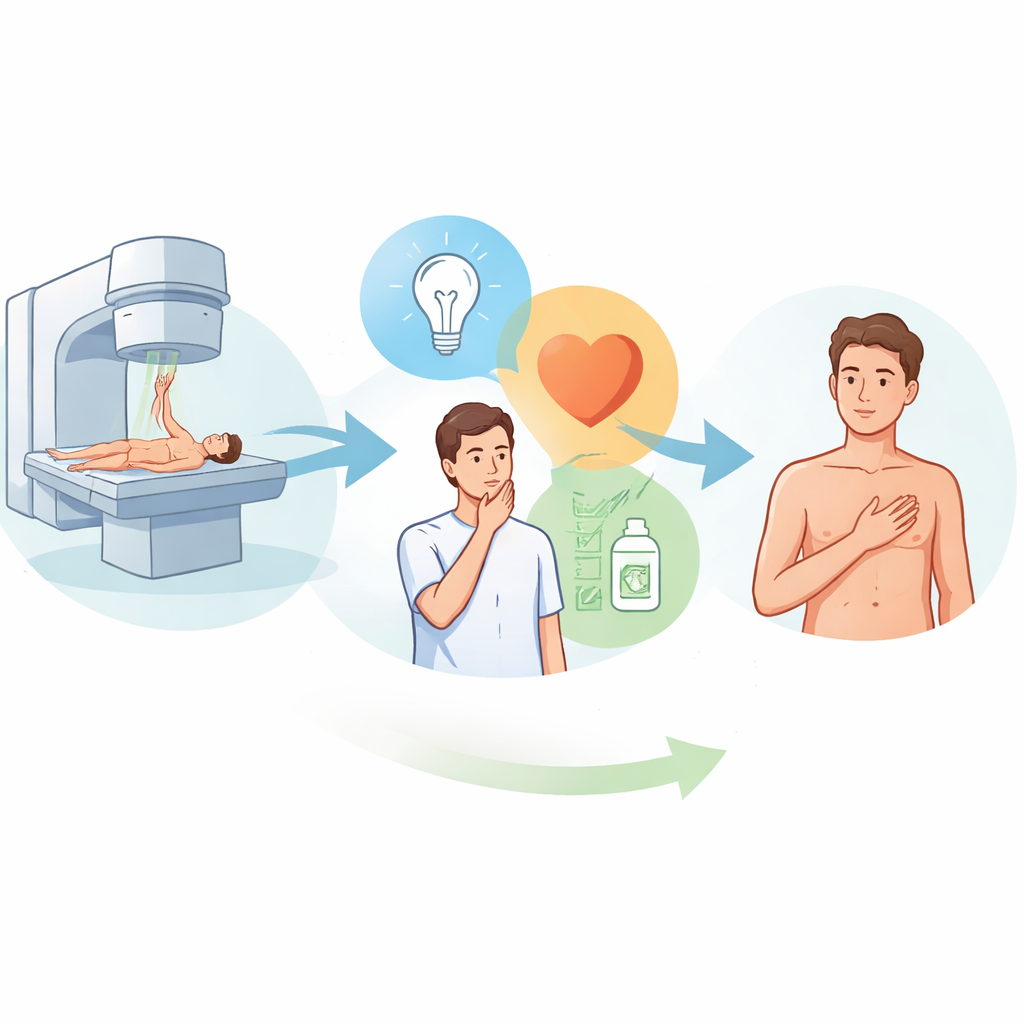
The everyday problem of sore skin
Radiation dermatitis is one of the most common side effects of radiation therapy, with international studies suggesting that three out of four patients—or even more—experience it. Mild cases may look like a sunburn, while severe cases can lead to oozing skin, ulcers, and tissue breakdown. These problems can interrupt treatment, delay cancer care, and seriously affect quality of life. Yet there are no universally accepted, detailed rules for how best to prevent and manage these skin reactions, and success often depends on how well patients understand and follow self-care steps such as gentle washing, moisturizing, and avoiding irritants.
Taking the pulse of patients’ knowledge and habits
The research team surveyed 523 adults receiving radiation therapy at a major cancer hospital in Shanxi, China. Using a structured "knowledge, attitudes, and practices" (KAP) questionnaire, they asked patients how familiar they were with radiation-related skin damage, how they felt about it, and how often they carried out recommended skin-care behaviors. The questionnaire had been carefully tested beforehand to ensure that the questions were clear and reliable. Participants answered using simple rating scales on their phones via an online survey platform, and the team checked responses for consistency and plausibility before analysis.
What patients know, feel, and actually do
Overall, patients showed only moderate knowledge about radiation dermatitis. Many were unclear about how radiation harms skin cells, how inflammation develops, and what specific steps are most important in treating acute skin reactions. Still, their attitudes were generally neutral to mildly positive: most agreed that skin problems could seriously affect their lives, but many also wanted to learn more and were open to preventive care. Everyday behaviors looked better than the knowledge scores might suggest. Most patients reported that they followed medical advice, avoided unapproved skin products on the treated area, and monitored their skin, although they were much less likely to share experiences with fellow patients or to learn from peers.
How mindset links knowledge to action
To understand how these pieces fit together, the researchers used statistical models to examine the links between what patients knew, how they felt, and what they did. They found that greater knowledge was associated with more positive attitudes, and both knowledge and attitude were related to better skin-care practices. Crucially, attitude played a mediating role: knowledge had a modest direct effect on behavior but a stronger indirect effect that worked by shifting how patients felt about radiation dermatitis. In other words, learning the facts mattered most when it changed how patients viewed the importance and manageability of skin care. The study also highlighted influences such as education level, income, physical activity, emotional state, and family support, which shaped knowledge or behavior in different ways.
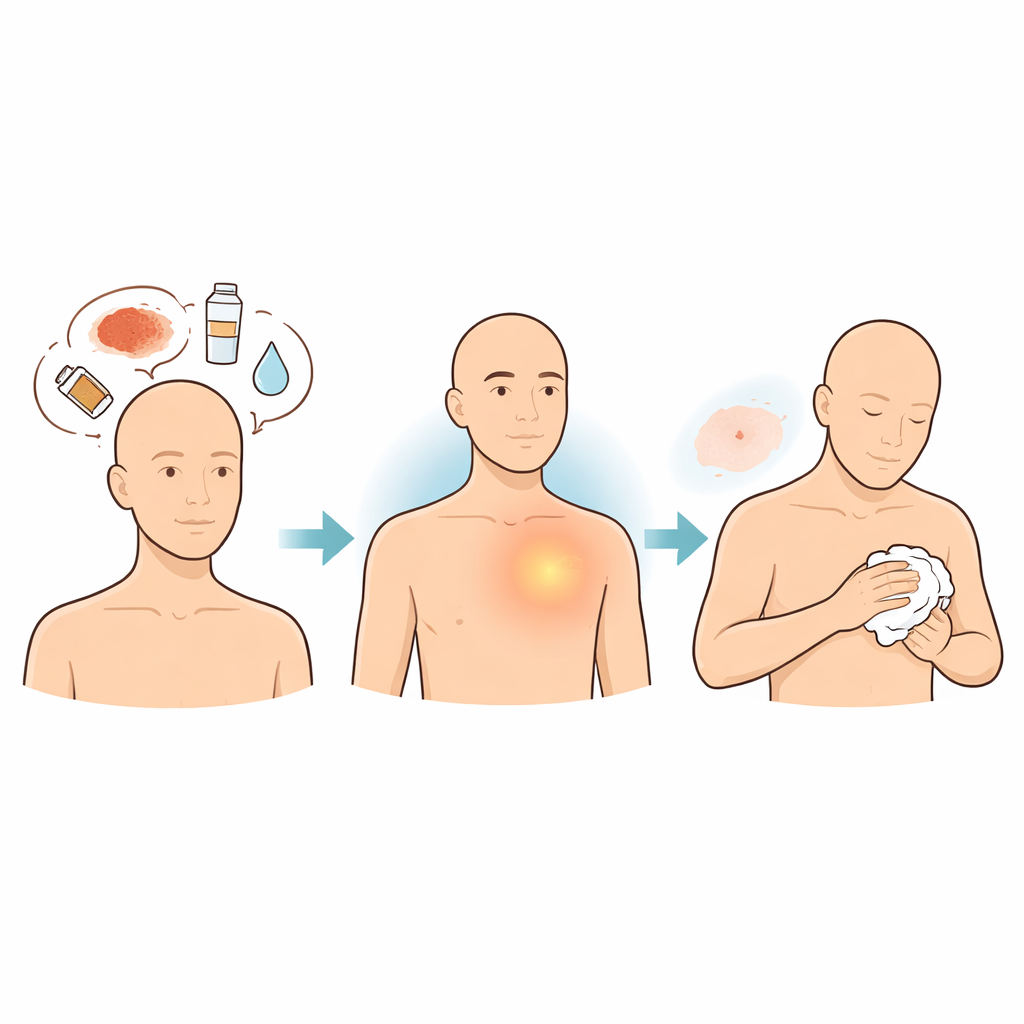
Turning findings into better care
The authors conclude that patients undergoing radiotherapy in Shanxi generally have limited technical understanding of radiation dermatitis, mixed but not overly negative feelings about it, and reasonably active self-care routines. Because attitude acts as a bridge between knowledge and action, simply handing out information is unlikely to be enough. Instead, the study suggests that well-designed education programs should explain skin reactions in clear, visual ways while also addressing fears, expectations, and motivation. Short counseling sessions, easy-to-understand materials, routine skin checks, reminders, and opportunities for guided peer support could help patients feel more confident and engaged. By improving both what patients know and how they feel, hospitals may help people protect their skin more effectively and stay on track with life-saving radiation treatment.
Citation: Lu, J., Han, X., Liu, Y. et al. Knowledge, attitude, and practice regarding radiation dermatitis among radiotherapy patients across Shanxi: a cross-sectional study. Sci Rep 16, 13726 (2026). https://doi.org/10.1038/s41598-026-42582-0
Keywords: radiation dermatitis, radiotherapy side effects, patient education, self-care behaviors, knowledge attitude practice