Clear Sky Science · en
A circulating MicroRNA signature for the diagnosis of pulmonary arterial hypertension and functional characterization of candidate miR-3168
Why tiny blood signals matter for lung health
Pulmonary arterial hypertension (PAH) is a rare but severe disease in which the blood vessels that carry blood from the heart to the lungs gradually narrow and stiffen. This forces the heart to pump harder and can eventually lead to heart failure. Today, doctors often detect PAH only after symptoms like breathlessness and fatigue have become hard to ignore, and they still rely on an invasive test that threads a catheter into the heart to confirm the diagnosis. In this study, researchers explored whether small molecules in the blood, called microRNAs, could be used as a simple blood test to flag PAH earlier and shed light on what is going wrong inside the lung vessels.
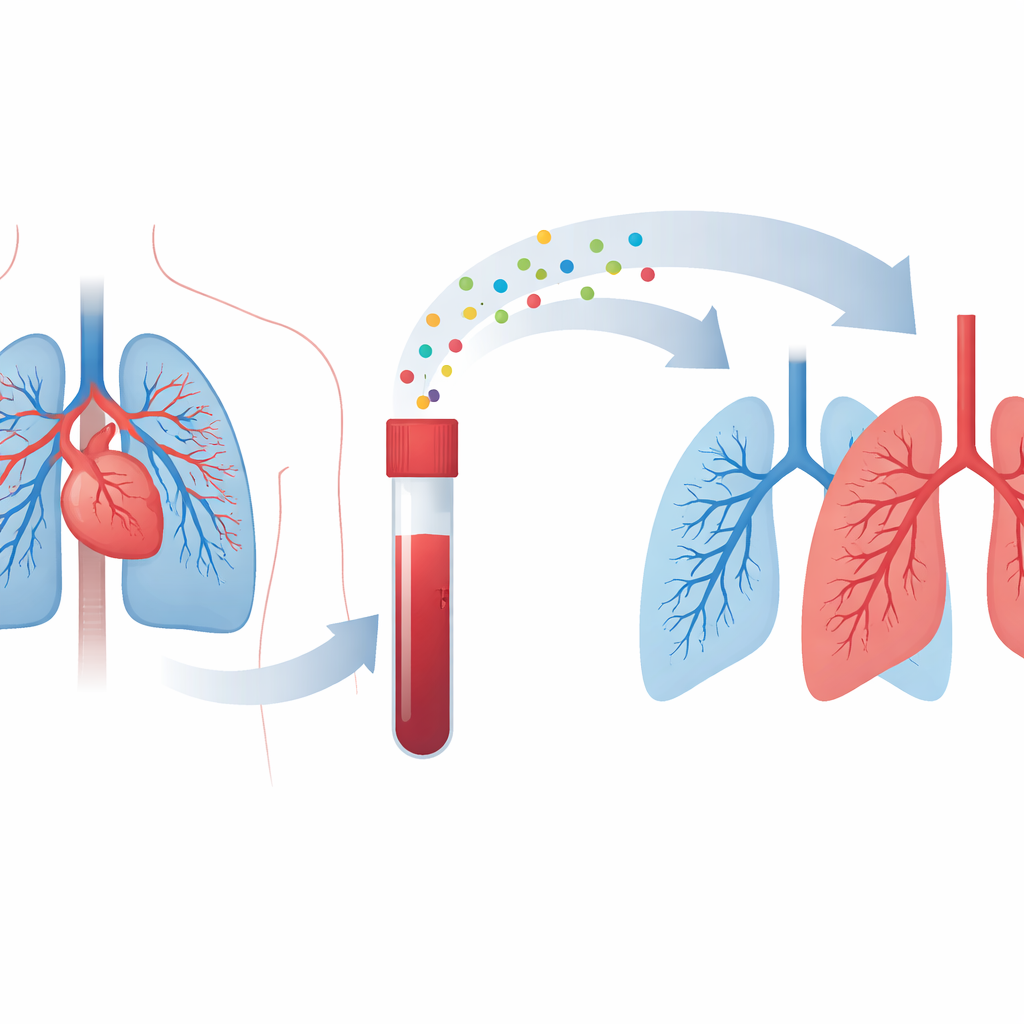
Reading disease clues from a blood sample
MicroRNAs are tiny pieces of genetic material that help fine‑tune how genes are switched on and off. They circulate in the blood in a surprisingly stable form and have been proposed as useful “signatures” of many diseases. The team collected plasma samples from people with idiopathic PAH (a form of the disease with no clear external cause) and from healthy volunteers of similar age and sex. Using a sequencing approach that can measure hundreds of microRNAs at once, they compared the levels of these molecules in 25 patients and 10 healthy donors. This first pass identified 29 microRNAs that differed between the two groups, suggesting that PAH leaves a detectable fingerprint in the blood’s microRNA pattern.
Narrowing down to a practical blood test
From this broader list, the researchers chose 13 of the most promising microRNAs and measured them in a much larger group: 110 people with various forms of PAH and 110 healthy controls. They used a standard technique called qPCR to quantify each candidate and applied statistical models to see which combination best separated patients from healthy individuals. Seven microRNAs could be reliably measured in all samples. Among these, two members of the let‑7 family tended to be lower in patients, while three others—miR‑9‑5p, miR‑31‑5p, and miR‑3168—were higher. By feeding these data into a logistic regression model and then simplifying it, they arrived at a three‑microRNA panel (let‑7a‑5p, miR‑9‑5p, and miR‑31‑5p) that classified PAH versus control samples with good accuracy. In statistical terms, the panel’s performance, summarized by the area under the curve value of about 0.86, indicates strong potential as a non‑invasive diagnostic aid, even though it is not yet perfect.
Zooming in on one mysterious microRNA
Beyond diagnosis, the team wanted to know whether any of the altered microRNAs might be actively driving disease processes in the lung vessels. They focused on miR‑3168, one of the less‑studied molecules that was increased in patients. Computer‑based predictions suggested miR‑3168 could dampen the production of BMPR2, a receptor on the surface of blood‑vessel cells that is central to healthy vessel behavior and already known to be involved in inherited forms of PAH. In laboratory experiments with human pulmonary artery endothelial cells, forcing the cells to make more miR‑3168 indeed lowered BMPR2 levels at both the message and protein stages. When they added an inhibitor that blocks miR‑3168, BMPR2 levels bounced back, supporting a direct link between this microRNA and the receptor.
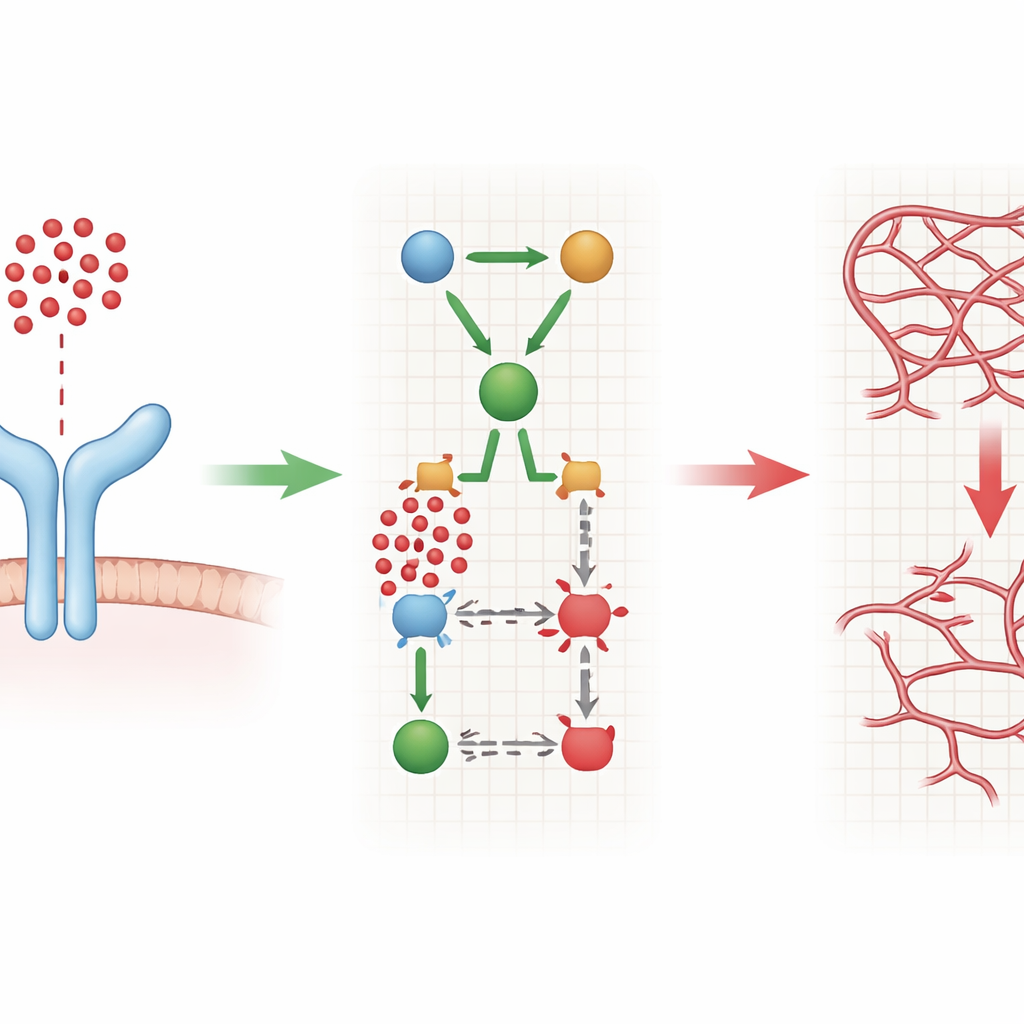
How vessel growth is altered in the lab
To see how these molecular changes play out in cell behavior, the scientists turned to a tube‑formation assay, a common laboratory test in which endothelial cells are placed on a gel and observed as they connect to form a web of vessel‑like structures. In this setup, cells exposed to extra miR‑3168 formed fewer and shorter tubes, with fewer branches, than control cells. This means miR‑3168 can blunt the cells’ ability to build new micro‑vessels, a process known as angiogenesis. Interestingly, while blocking miR‑3168 restored BMPR2 protein levels, it did not fully rescue tube formation, hinting that this microRNA may also act on other targets beyond BMPR2 that influence how vessels grow and remodel.
What this means for patients and future care
Taken together, the findings support two key ideas. First, a specific trio of circulating microRNAs in blood—one reduced and two increased in patients—could form the basis of a simple blood test to help identify people with PAH without immediately resorting to invasive heart catheterization. Second, one of the microRNAs elevated in patients, miR‑3168, appears to weaken a protective receptor in vessel‑lining cells and to hinder the growth of healthy vessel networks in the lab. While more work is needed before these discoveries can be translated into clinical tools or treatments, they point toward a future in which a small tube of blood could both flag PAH earlier and guide therapies designed to correct the underlying molecular missteps in the lung circulation.
Citation: Lago-Docampo, M., Iglesias-López, A., Vilariño, C. et al. A circulating MicroRNA signature for the diagnosis of pulmonary arterial hypertension and functional characterization of candidate miR-3168. Sci Rep 16, 12157 (2026). https://doi.org/10.1038/s41598-026-42550-8
Keywords: pulmonary arterial hypertension, microRNA biomarkers, blood-based diagnosis, endothelial dysfunction, angiogenesis