Clear Sky Science · en
Ontogeny of digestive enzymes for weaning and role of dietary taurine supplementation in growth, survival and physiology of Channa striata juveniles
Why this fish story matters
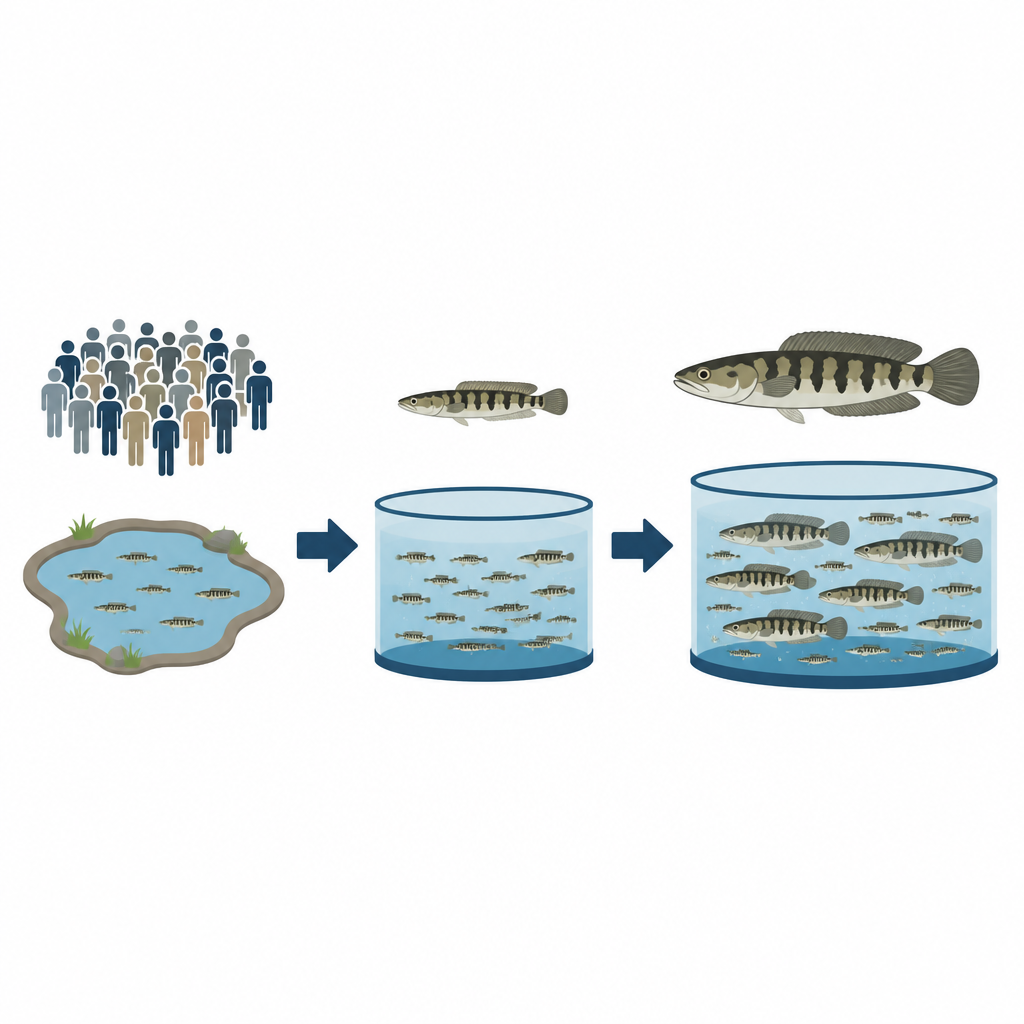
As the world searches for reliable sources of healthy protein, fish farming is becoming more important. The striped murrel, a freshwater fish popular in South and Southeast Asia, grows fast and is highly valued as food and traditional medicine. Yet farmers struggle to raise enough of it because many young fish die in hatcheries. This study asks two practical questions: when are the baby fish ready to switch from live food to pellets, and can adding a simple nutrient called taurine to their feed help them grow and survive better?
Growing up inside the tiny fish gut
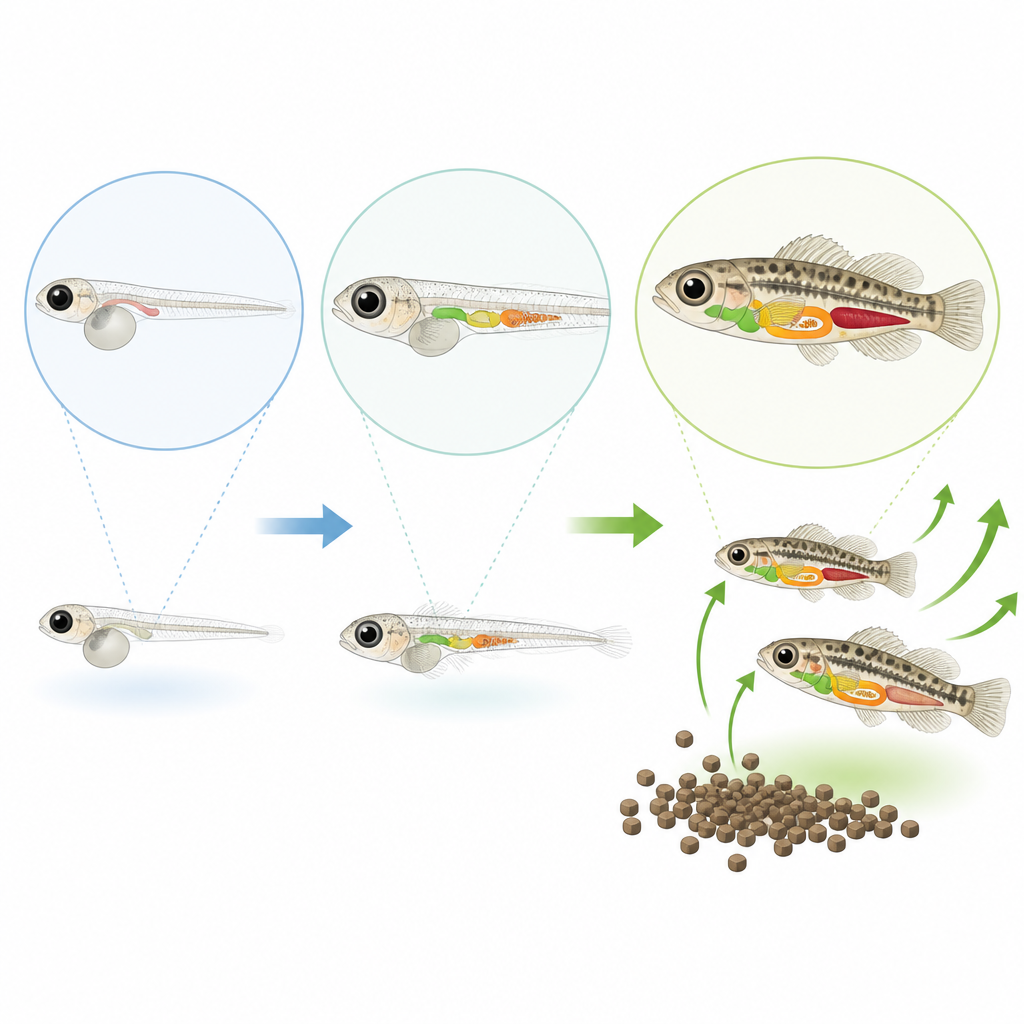
Newly hatched fish larvae start life with a digestive system that is still under construction. To find the right time to change their food, the researchers tracked the activity of key digestive helpers, known as enzymes, in striped murrel larvae from 3 to 30 days after hatching. These enzymes break down proteins and fats so the larvae can use them for growth. Several important protein-cutting enzymes, along with a fat-digesting enzyme, all climbed to their highest levels around day 18. Another enzyme linked to nutrient absorption in the gut peaked a little later, around day 21. Together, these patterns showed that by day 18 the young fish have a working digestive system that can handle more complex, prepared feeds.
Finding the right moment to leave live food
Armed with this timeline, the team designed a gentle weaning plan. Starting on day 18, they slowly replaced live brine shrimp with tiny pellets, adding a bit more pellet and a bit less live food each day until, by day 27, the juveniles were eating only pellets. This careful approach matched the maturing digestion of the fish and helped avoid stress. The work confirms earlier hints from other studies that striped murrel can be shifted to pellets in the third week of life, but pinpoints day 18 as a solid starting point for farmers who want a clear, practical schedule.
Taurine in the menu
The second part of the study focused on what should go into those pellets. Taurine is a small sulfur-containing compound often added to feeds for meat-eating fish, especially when plant ingredients replace fish meal. Many young fish cannot make enough taurine on their own. The researchers fed weaned striped murrel five diets that were identical except for taurine level, ranging from none to a high dose. Over 60 days, fish that received moderate taurine grew faster, converted feed into body mass more efficiently, and survived better than fish on taurine-free pellets. The best overall results came from the diet with 15 grams of taurine per kilogram of feed, with survival close to 90 percent.
Health from the inside out
Taurine did more than just boost growth. At higher inclusion levels, the fish showed stronger natural defense systems against harmful oxygen-related molecules, as seen in increased activity of antioxidant enzymes in their gills. Blood tests revealed healthier levels of red and white blood cells and improved oxygen-carrying capacity in fish on taurine-supplemented diets. The pattern of fats in the blood also shifted: risky circulating fats called triglycerides and very low-density lipoproteins decreased, while cholesterol was packaged into forms that support normal body functions. These changes suggest that taurine helps stabilize metabolism and general health in young striped murrel raised on modern formulated feeds.
What this means for fish and for people
For hatcheries and farmers, the study delivers two clear take-home messages. First, striped murrel larvae are ready to begin weaning onto pellet feed at 18 days after hatching, when their digestive machinery has largely matured. Second, including taurine in the post-weaning diet at around 16 grams per kilogram of feed supports faster growth, higher survival, better stress resistance, and healthier blood chemistry in the juvenile fish. Together, these findings provide a science-based roadmap for producing more robust striped murrel juveniles, helping fish farms supply more nutritious food with fewer losses during the most fragile life stages.
Citation: Gavhane, S.V., Betsy, C.J., Kaviyarasi, I. et al. Ontogeny of digestive enzymes for weaning and role of dietary taurine supplementation in growth, survival and physiology of Channa striata juveniles. Sci Rep 16, 16085 (2026). https://doi.org/10.1038/s41598-026-42535-7
Keywords: aquaculture, striped murrel, fish larvae, taurine, fish nutrition