Clear Sky Science · en
Unveiling the antifungal potential of extracts in leaves and branches from Nicotiana glauca for wood biofungicides
Turning a Problem Plant into a Helpful Tool
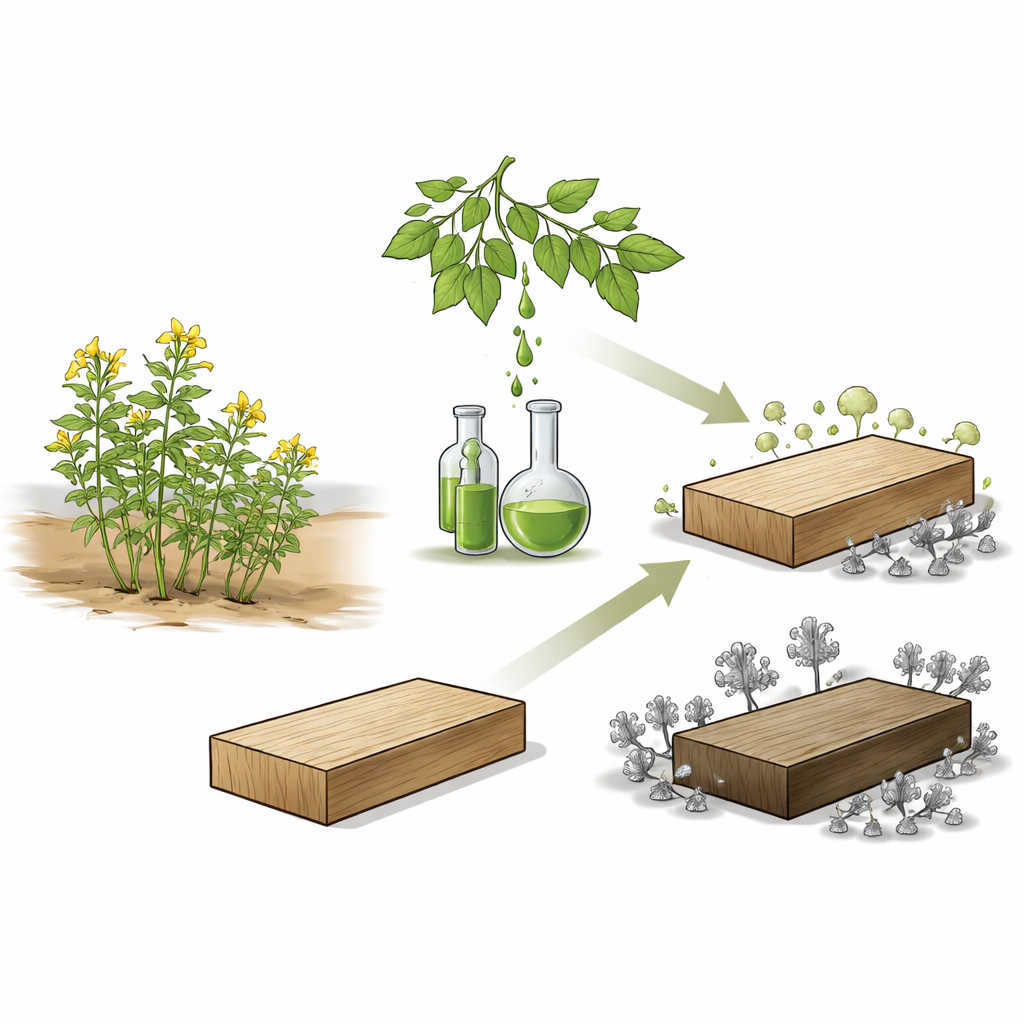
Across roadsides and riverbanks in warm regions, an invasive shrub called tree tobacco quietly spreads, crowding out native plants and posing a poisoning risk to people and animals. Yet this troublesome species, Nicotiana glauca, may hide a surprising benefit. Researchers asked whether its chemical-rich leaves and branches could be turned into a natural treatment that helps protect wood from destructive fungi, offering a greener alternative to conventional chemical preservatives.
Why Wood Needs Gentle Protection
Wood is a renewable, widely used material, from furniture and flooring to outdoor structures. But once a tree is cut, its wood becomes vulnerable to fungi that feed on it, weaken it, and eventually cause decay. Standard wood preservatives often rely on synthetic or heavy-metal-based chemicals that can raise environmental and health concerns. Finding effective, plant-based treatments that slow fungal growth without adding toxic ingredients is therefore a priority for both industry and environmental protection.
Collecting and Preparing the Green Shield
The scientists collected Nicotiana glauca plants growing wild in Alexandria, Egypt, focusing on leaves and branches during the flowering stage. After drying and grinding these parts into a fine powder, they soaked the material in a 70% ethanol solution for a week to pull out the plant’s soluble compounds. The resulting ethanol extracts from leaves and branches were concentrated, weighed, and then diluted to different strengths, creating a set of solutions ready to be tested on small beech wood blocks.
Peeking Inside the Plant’s Chemical Arsenal
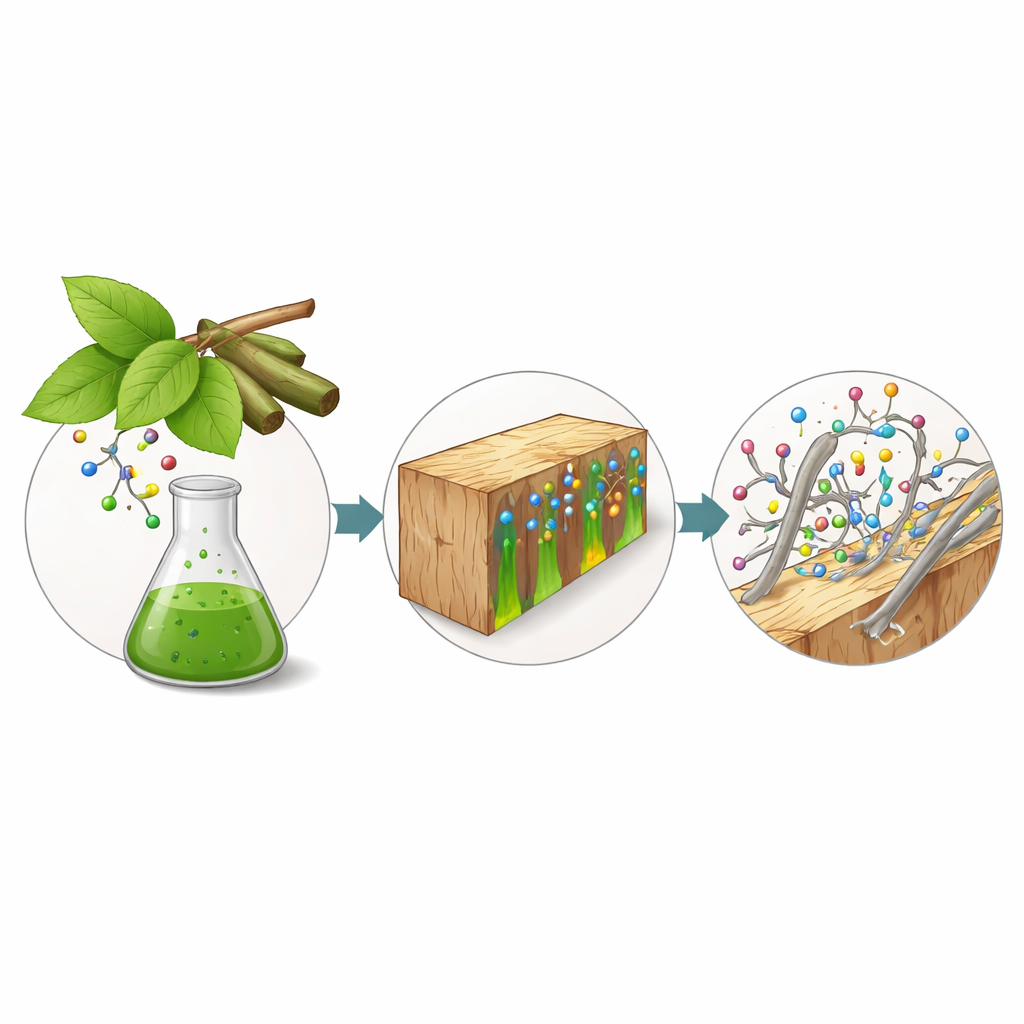
To understand what might be doing the protective work, the team examined the extracts using two standard chemical “fingerprinting” tools: high-performance liquid chromatography (HPLC) and gas chromatography–mass spectrometry (GC–MS). These methods revealed that both leaves and branches are rich in natural molecules known from other studies to have antioxidant and antimicrobial powers. The leaf extract, in particular, contained very high amounts of rutin and chlorogenic acid, along with gallic and coumaric acids and related flavonoids. The branch extract also held abundant rutin, quercetin, gallic acid, and several other phenolic compounds, alongside fatty acids and alkaloids such as anabasine. Together, these compounds form a complex mixture that can interfere with fungal cells by damaging their membranes, disrupting key enzymes, and generating stressful reactive molecules.
Putting the Extracts to the Test on Wood
To see whether these plant chemicals could actually protect wood, the researchers treated beech wood samples with different concentrations of the extracts and then exposed them to three fungi that cause disease in pine trees: Pythium tardicrescens, Fusarium circinatum, and Phoma glomerata. Over a week, they compared fungal growth on treated and untreated wood and also measured the minimum extract concentration needed to stop visible growth in liquid culture. At the highest tested strength, the leaf extract reduced fungal growth on wood by up to about 58% for Pythium and 55% for Fusarium, similar to or better than a commercial fungicide used as a positive control. Branch extracts also performed well, though generally a bit less strongly than leaves. The required stopping doses for different fungi ranged from only a few tens to a few hundred micrograms per milliliter, indicating notable potency for a crude plant extract.
What This Could Mean for Greener Wood Care
The findings suggest that an invasive, toxic plant can be repurposed into a useful source of natural compounds that help shield wood from fungal attack. By harnessing the rich mix of phenolics and flavonoids in Nicotiana glauca, it may be possible to develop bio-based wood treatments that reduce reliance on harsher synthetic chemicals. However, because the plant itself is poisonous and its active molecules can break down or leach out over time, the authors emphasize that more work is needed to refine formulations, test long-term safety, and ensure practical durability. Even so, the study points toward a future in which a problematic weed could become part of a more sustainable toolkit for protecting one of our most important natural materials.
Citation: Salem, M.Z.M., Mohamed, A.A., Elshaer, M.A.A. et al. Unveiling the antifungal potential of extracts in leaves and branches from Nicotiana glauca for wood biofungicides. Sci Rep 16, 10822 (2026). https://doi.org/10.1038/s41598-026-42531-x
Keywords: natural wood preservative, antifungal plant extract, Nicotiana glauca, bio-based fungicide, wood decay fungi