Clear Sky Science · en
Taxonomy, ecology and medical relevance of human-biting Leptoconops (Diptera: Ceratopogonidae) from Andaman and Nicobar archipelago with insights on capture methods
Tiny flies, big itch
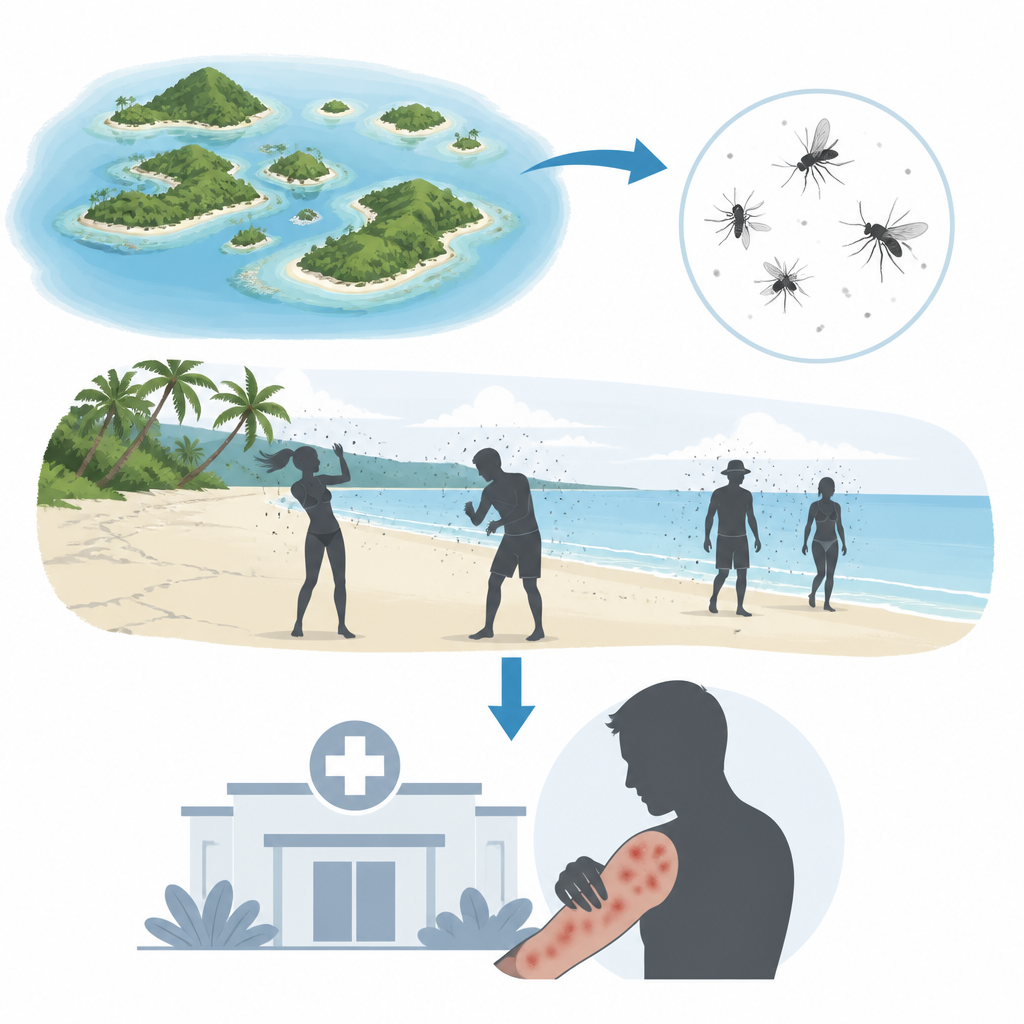
For many people, a dream trip to a tropical beach can be spoiled by clouds of tiny biting flies that seem to come out of the sand. This study explores these little known pests on the beaches of India’s Andaman and Nicobar Islands, explaining what species are present, when they bite, how to catch them, and why their bites matter for both tourists and local residents.
Hidden beach biters
The insects in question are biting midges in the genus Leptoconops, minute flies that feed on blood during the day. Although they are infamous in some parts of the world for tormenting people and animals, they have been largely ignored in India. The Andaman and Nicobar archipelago is a major beach tourism destination with rich wildlife but little information on these midges. The researchers set out to build the first detailed picture of which species live there, how common they are, and how they behave around people.
New species and new records
Across ten beaches on three island groups, the team collected more than nine thousand specimens during two peak tourist seasons. They discovered three distinct species that bite humans. One, Leptoconops paruii, is new to science and was named in honor of an Indian fly specialist. A second, L. leptorhynchus, was previously known only from Malaysia and is recorded from India for the first time. The third, L. spinosifrons, is a widespread tropical species but had not been documented before from these islands. Careful study of body form under the microscope, together with DNA “barcode” sequencing, confirmed that the new species is clearly different from its closest relatives.
Where and when they bite
The midges were far more abundant on some islands and beaches than others. Just over half of all collected flies were L. spinosifrons, found only on the northern Andaman group, while the new species L. paruii was common on both Little Andaman and Great Nicobar and scarcer further north. L. leptorhynchus was very rare. The two main species showed different daily biting patterns on volunteers who allowed flies to land on their arms and legs. L. paruii bit at a steady rate through the day with a strong peak in the late afternoon. L. spinosifrons had two peaks, one in mid morning and another, slightly weaker, in late afternoon, with activity ceasing by early evening. These patterns help explain why some hours on the beach feel much worse than others.
How to catch a cloud of midges
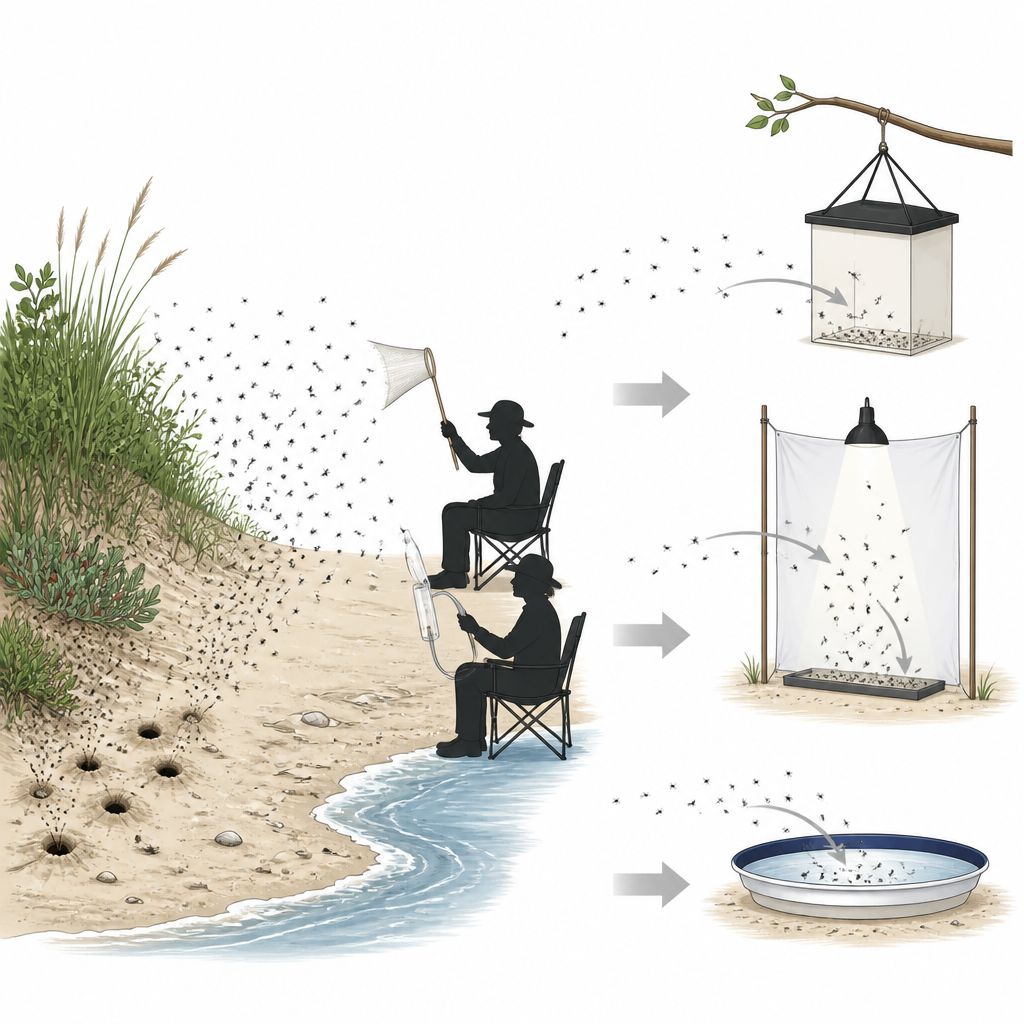
The study also tested several ways to capture the flies. During the day, the most effective method by far was the “human landing catch,” in which protected volunteers quickly trapped flies as they landed to feed. This approach caught more than twice as many females as sweep nets, though nets were better for catching males that are not drawn to people. At night, when some individuals were still active, white light sheets powered by a generator attracted more midges of both sexes than two types of ultraviolet light traps. Sticky panels placed at the entrances of ghost crab burrows on the sand collected only the new species, hinting that these holes may serve as resting or breeding sites.
Why these bites matter
Although these midges are not known to spread many diseases, their bites can trigger serious skin reactions. The authors describe how bites that first feel like sharp pinpricks can develop into itchy bumps or fluid filled blisters within hours. If scratched, these lesions may become infected and leave lasting scars, as happened to one volunteer whose wound took months to heal. In heavily visited beach areas, even a small number of such cases can strain clinics and damage visitors’ experience. By revealing which biting midge species are present, when they are most active, and which traps work best, this study lays the groundwork for better monitoring and control. For beachgoers, it helps explain the mystery of painful “sand fly” attacks and points toward practical steps that health services and tourism managers can take to reduce the itch without harming the islands’ unique ecosystems.
Citation: Mukherjee, K., Pramanik, D., Mukherjee, A. et al. Taxonomy, ecology and medical relevance of human-biting Leptoconops (Diptera: Ceratopogonidae) from Andaman and Nicobar archipelago with insights on capture methods. Sci Rep 16, 15723 (2026). https://doi.org/10.1038/s41598-026-42511-1
Keywords: biting midges, Leptoconops, Andaman beaches, tourist health, insect bites