Clear Sky Science · en
Research on metabolic characteristics of multiple sclerosis
Why the Gut Matters for a Brain Disease
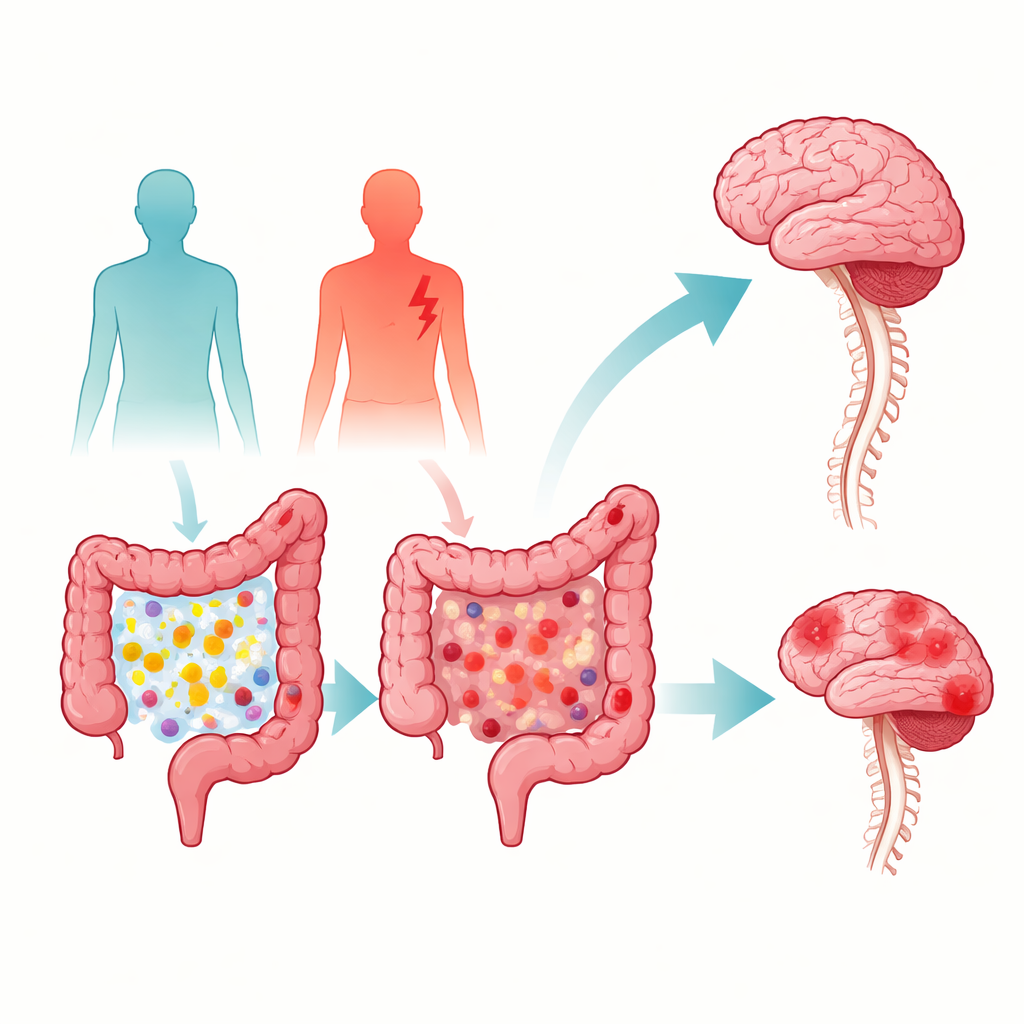
Multiple sclerosis (MS) is often thought of as a disease that attacks the brain and spinal cord, yet this study suggests that important clues may be hiding much farther south—in our gut. By carefully analyzing the chemical leftovers in stool samples, researchers explored how gut-related substances differ between people with MS and healthy volunteers. These tiny molecules, produced by food, our own bodies, and trillions of gut microbes, may help explain why the immune system misfires in MS and could eventually guide gentler, more precise treatments.
Peeking Into Disease Through Stool
The team collected fecal samples from 37 adults with MS, mostly with the relapsing–remitting form, and 30 similar adults without the disease, all from northern China. Stool is an appealing window into health: it is easy to obtain, non-invasive, and directly reflects the activity of gut microbes and the host’s own digestion. Using a highly sensitive technology that separates and weighs thousands of small molecules at once, the researchers built detailed chemical fingerprints for each sample. They then used advanced statistics to check that their measurements were stable and to see whether the overall metabolic patterns could distinguish MS patients from healthy individuals.
Thousands of Molecules, Dozens That Stand Out
Out of 552 identified molecules, 56 clearly differed between the MS group and the healthy group. Only eight of these were higher in MS, while the vast majority—48—were lower. Many of the altered molecules belonged to two major families: amino acids, the building blocks of proteins, and fatty acids, which include important energy sources and signaling fats. Short-chain fatty acids, which are produced when gut bacteria digest fiber, were noticeably reduced. So were branched-chain amino acids and certain unsaturated fats that are often linked to anti‑inflammatory or protective roles. These broad shifts paint a picture of a gut environment in MS that is less chemically rich and potentially less able to support balanced immune responses.
Connecting Metabolites to Body Pathways
The researchers then asked where in the body’s network of chemical reactions these changed molecules fit. They mapped the 56 key metabolites onto known biological pathways and found 20 that appeared disturbed, with seven standing out. These involved how the body digests and absorbs protein, makes new amino acids, charges them for protein production, and processes niacin and related vitamin-like molecules important for cellular energy. They also saw changes in pathways related to membrane transporters that shuttle substances across barriers, a major growth and energy‑sensing system called mTOR, and central carbon metabolism, which sits at the heart of how cells burn fuel and build new components. Together, these shifts suggest that MS may involve a widespread re‑tuning of how cells use energy and assemble proteins, influenced in part by what is happening in the gut.
From Missing Molecules to Misfiring Immunity
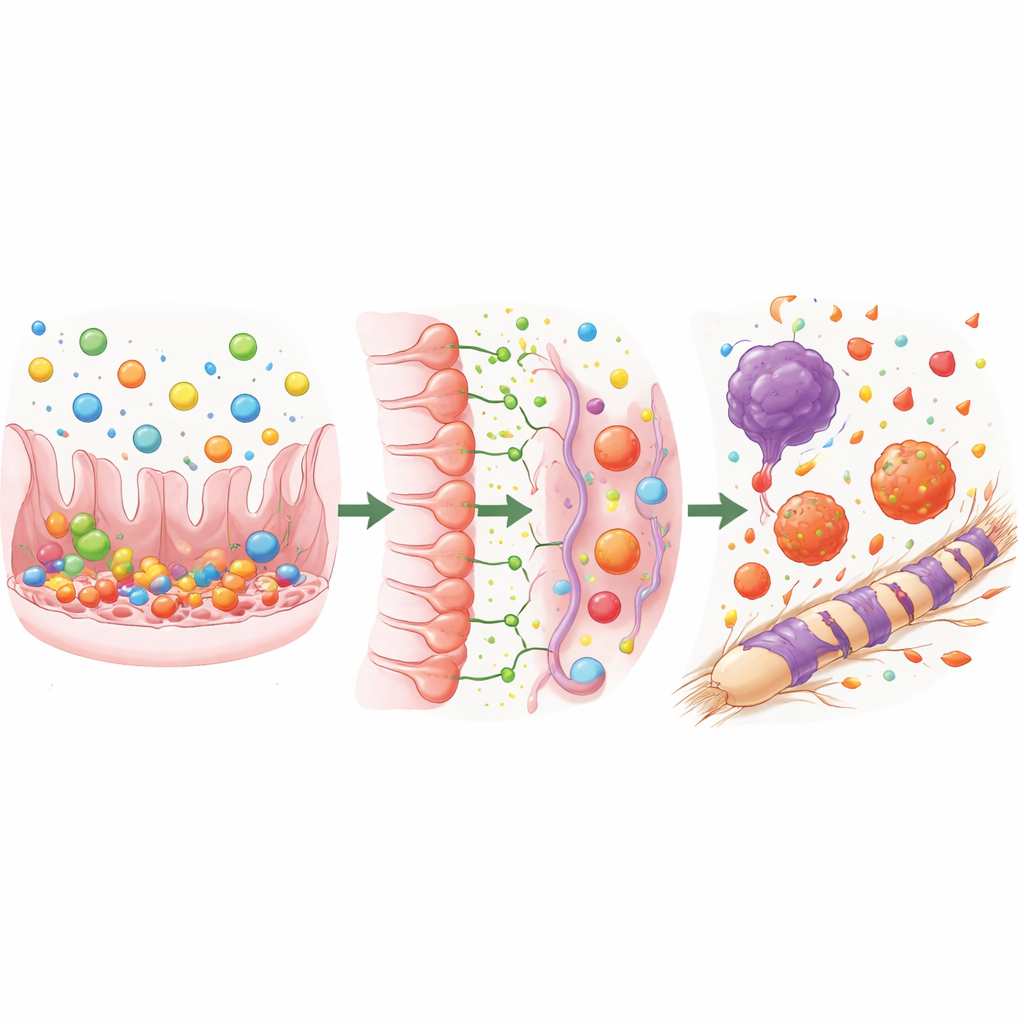
How might these missing or altered molecules affect a person with MS? Short‑chain fatty acids made by gut bacteria normally help calm inflammation and support regulatory immune cells that prevent friendly fire against the body’s own tissues. Their loss, along with reduced amino acids like arginine and branched‑chain amino acids, may starve immune and nerve cells of key fuels and messengers. Disturbed mTOR and transport pathways could in turn skew immune cells toward more aggressive, inflammatory behavior and interfere with the maintenance and repair of the fatty insulation around nerve fibers. The increase in certain stress‑related molecules hints that oxidative damage—essentially biochemical wear and tear—may be heightened in people with MS.
What This Means for Patients
The study does not prove that these gut‑related chemical changes cause MS, but it strongly suggests that the intestinal environment and its metabolic by‑products are closely tied to the disease. The distinct pattern of amino acids, fatty acids, and other small molecules in stool could serve as a non‑invasive fingerprint to help track disease activity or response to treatment. More broadly, it supports the idea that adjusting diet, gut microbes, or specific metabolites might one day complement existing immune‑targeting drugs. In simple terms, what happens in the gut does not stay in the gut: its chemistry may influence how the brain is attacked or protected in multiple sclerosis.
Citation: Wang, D., Feng, W., Wang, H. et al. Research on metabolic characteristics of multiple sclerosis. Sci Rep 16, 12526 (2026). https://doi.org/10.1038/s41598-026-42501-3
Keywords: multiple sclerosis, gut microbiome, metabolomics, short-chain fatty acids, fecal biomarkers