Clear Sky Science · en
Distribution and seasonality of potentially toxic elements (PTEs) in the waters of the Negro river in Manaus, Amazonas, Brazil
Why this dark river matters
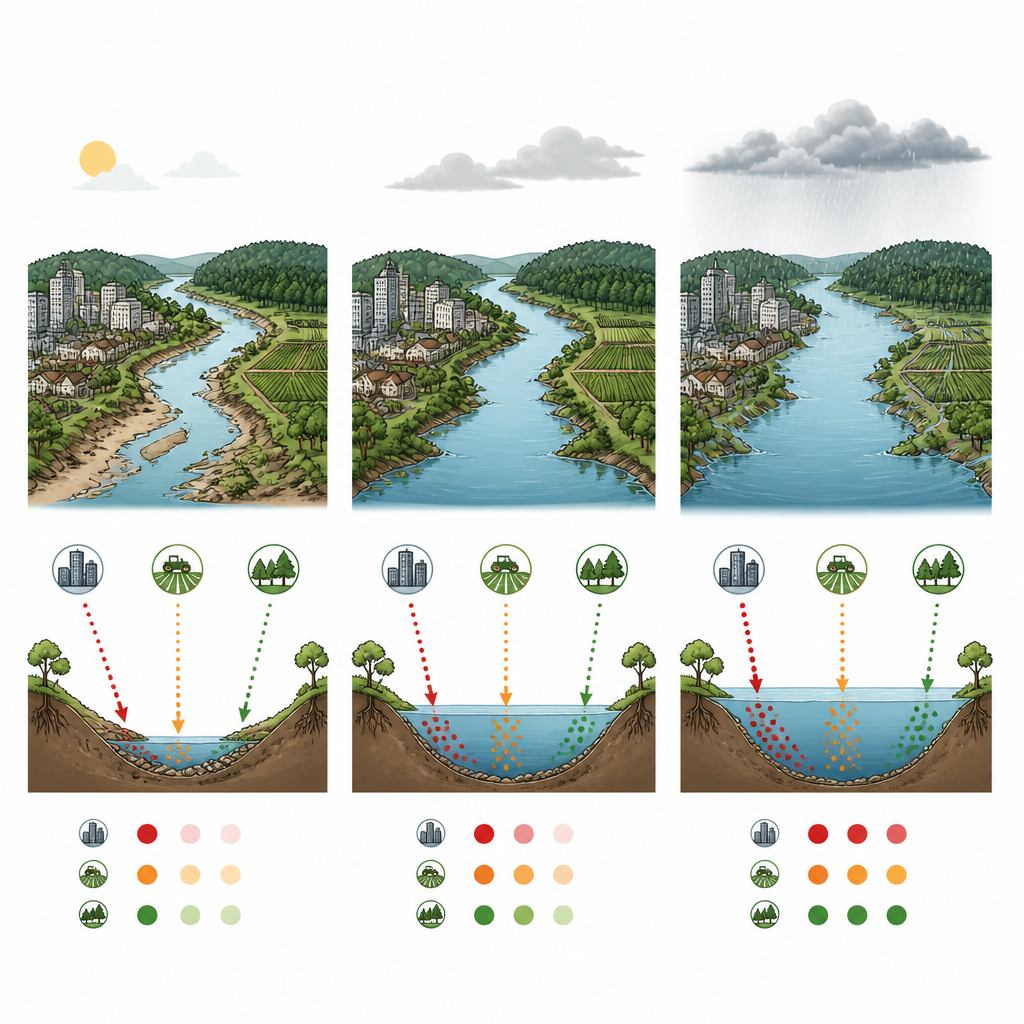
The Negro River in the Amazon may look remote on a map, but it helps shape rainfall, climate, and life across much of Brazil. It also passes right by the fast-growing city of Manaus, where sewage, industry, and runoff from streets and farms can wash a mix of metals and nutrients into its dark waters. This study asks a simple but vital question: how do the river’s rising and falling water levels over the year change the amount and type of these substances in the water, and what does that mean for people and wildlife who depend on it?
A year in the life of a great river
The researchers focused on what they call potentially toxic elements, including aluminum, copper, zinc, manganese, and phosphorus, along with other common minerals such as calcium, sodium, and potassium. They collected water samples from 60 locations along the Negro River at three different times: during low water in January 2023, during the shift from low to high water in September 2023, and during a higher water period in March 2024. All samples were handled using standard methods for water testing, and the team compared their results with Brazilian water quality rules that set safe levels for drinking and environmental use.
What they found in the dark waters
Among all the measured substances, two stood out: aluminum and phosphorus. Their average levels were above the limits set by national rules in all three sampling periods. Aluminum levels were especially high during the low-water period, then eased as the river level rose and diluted the water. Phosphorus also peaked in the drier time and dropped during wetter months. High phosphorus is a concern because it can feed algal growth and make waters more prone to eutrophication, the process where excess nutrients fuel blooms that can harm fish and other life. Yet the authors note that the Negro is a naturally acidic “blackwater” river rich in humic acids and organic matter, conditions that help keep aluminum in solution and shape how phosphorus behaves, so not all elevated readings point directly to pollution.
Reading the chemical fingerprints
The team used statistical tools to look for patterns hidden in the long list of elements. A correlation analysis showed that some elements tend to rise and fall together, such as aluminum with phosphorus, and calcium with magnesium and sodium. These links hint at shared sources and shared paths into the river, from weathered rocks and forest soils to distant sea salt and dust carried by winds from the Sahara. A second method, called principal component analysis, grouped the samples by season: January’s high waters carried more sodium, magnesium, calcium, aluminum, phosphorus, titanium, and beryllium; September’s drier conditions favored potassium, rubidium, and barium; March showed a more even mix, with lithium and iron slightly more common. Together, these patterns suggest that the river’s flood pulse is a powerful driver of chemistry, but that other influences, especially human land use, also leave a mark.
City, farms, and forests at the water’s edge
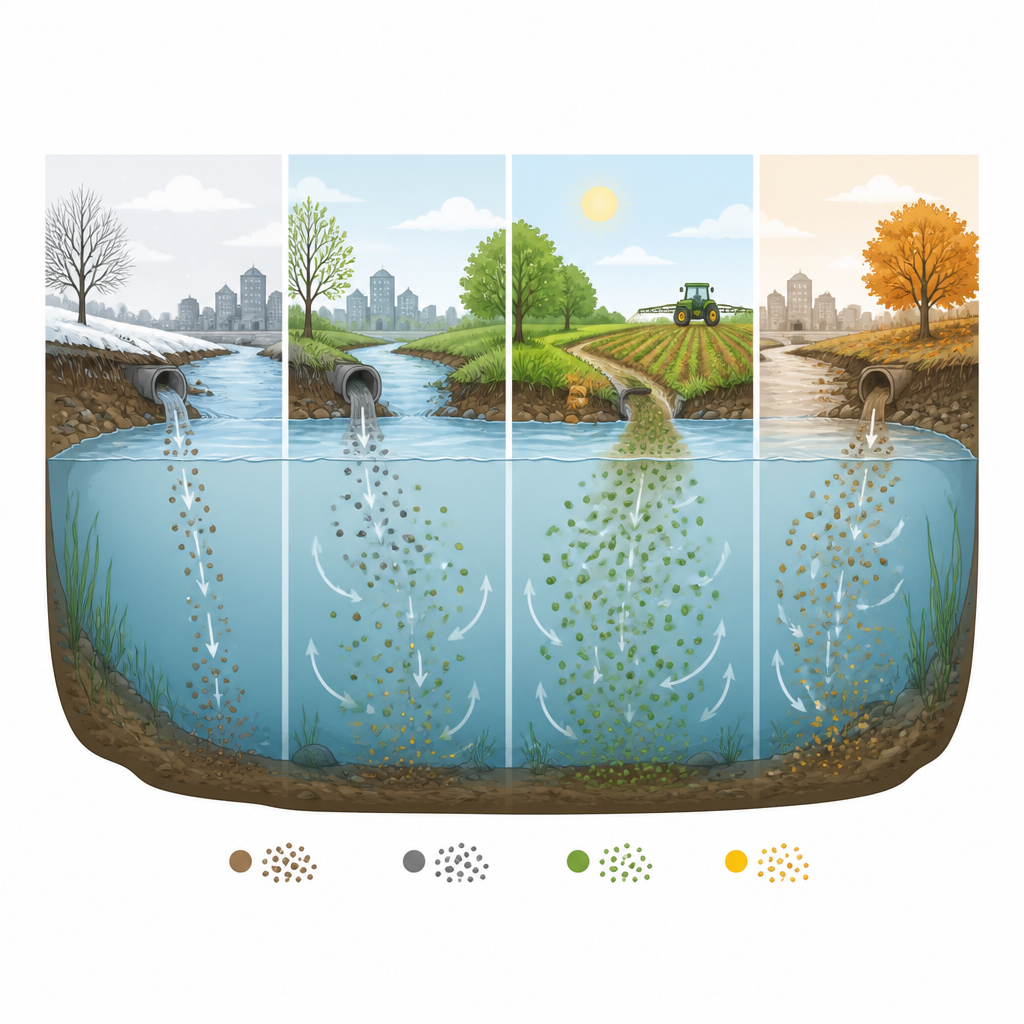
Even though recent work has rated the Negro River’s overall water quality as generally good, this study shows how urban and rural activities can interact with seasonal changes to shape which elements appear in the water and when. Runoff from city streets, untreated sewage, and fertilizer from nearby fields can mix with naturally mobilized minerals and organic matter, especially when heavy rains wash across the landscape. The fact that the highest concentrations of aluminum and phosphorus coincide with certain stages of the flood cycle points to a combination of natural background conditions and human pressure, rather than a single clear-cut source.
What it means for the future of the river
The authors conclude that contamination by these elements in the Negro River is multifactorial. Seasonal flooding and drying set the stage, but urban growth, industry, and agriculture near Manaus strongly modulate the final picture. While most elements remained within ranges typical of Amazonian rivers, the persistently high aluminum and phosphorus call for attention, especially because the river is used as a water supply. The study is one of the first large-scale efforts to track these substances in the Negro River, and the authors argue that future work should include sediments and aquatic organisms, and expand in space and time. Such monitoring can guide public policies to protect this key river, helping balance the needs of a major city with the health of one of Earth’s most important freshwater systems.
Citation: dos Banhos, E.F., Arcos, A.N., Oliveira, R.L.e. et al. Distribution and seasonality of potentially toxic elements (PTEs) in the waters of the Negro river in Manaus, Amazonas, Brazil. Sci Rep 16, 14836 (2026). https://doi.org/10.1038/s41598-026-42500-4
Keywords: Negro River, water quality, toxic elements, Amazon seasonality, urban runoff