Clear Sky Science · en
The synergistic effects of chronic gas condensate pollution and warming on the survival, performance and reproduction of the mussel Brachidontes pharaonis
Why this matters for our seas and our plates
Coastal seas are warming at the same time that more oil and gas are being produced offshore. This study looks at what happens when a common Mediterranean mussel is exposed for months to both a subtle oil‑derived pollution called gas condensate and to slightly warmer water. Because mussels filter large amounts of seawater and end up on our dinner plates, understanding how they react reveals not only how coastal ecosystems may change, but also what risks may build up through the food web and into human seafood.
A new kind of pollution meets a warming sea
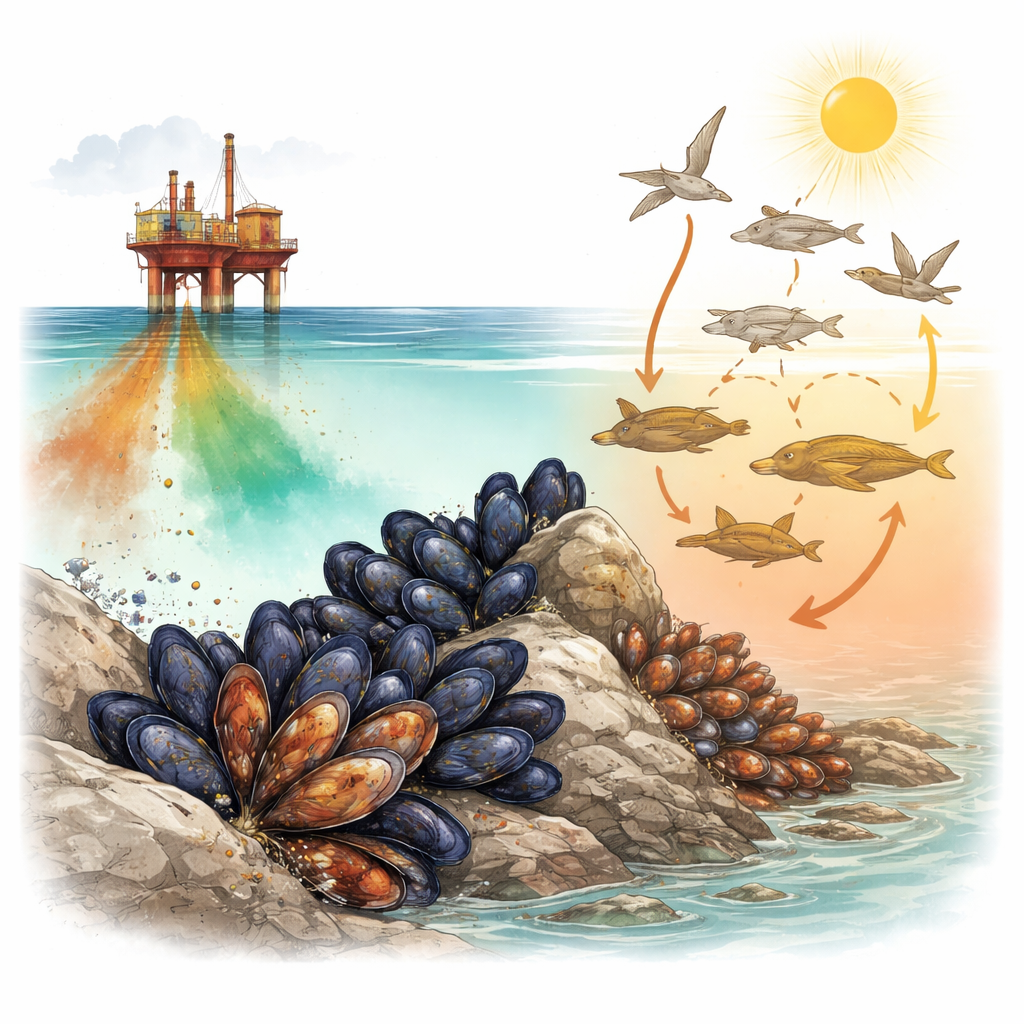
Most public concern about marine oil spills focuses on thick, black crude. Gas condensate is different: it is a lighter, more volatile mix released during natural‑gas production. It spreads quickly through the water and contains small, ring‑shaped molecules that can easily enter living tissues and linger there. At the same time, the Eastern Mediterranean Sea is warming faster than the global ocean. Warmer water speeds up many chemical and biological reactions, which can make some pollutants more harmful. The researchers set out to see how these two stressors together affect a hardy, invasive mussel, Brachidontes pharaonis, that now blankets many rocky shores in the region.
A long, controlled exposure experiment
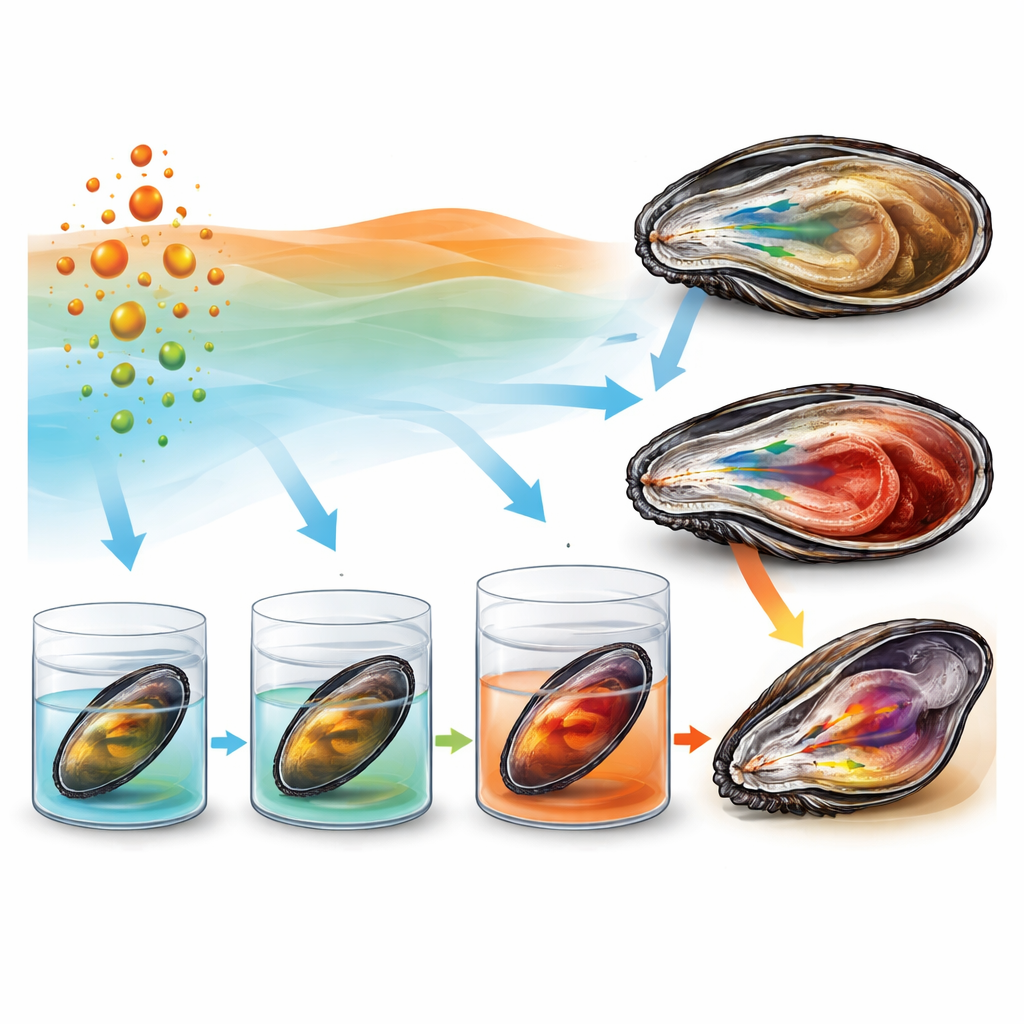
The team collected mussels from the Israeli coast and kept them for 77 days in laboratory tanks that mimicked local seawater conditions. Some tanks stayed at the usual temperature, while others were warmed by just over three degrees Celsius, similar to a mid‑century climate‑change scenario. Within each temperature, mussels were exposed to a range of gas condensate levels, from none to 100 parts per billion—concentrations meant to reflect chronic, low‑level pollution rather than dramatic spills. Throughout the experiment, the scientists tracked how fast the mussels used oxygen (a measure of respiration), how quickly they filtered microalgae from the water (their clearance or feeding rate), and how much of various hydrocarbon compounds accumulated in their tissues.
Hidden strain: slower breathing and feeding
Almost all mussels survived, which might suggest that they were coping well. But their basic functions told another story. As gas condensate levels rose, mussels consistently breathed more slowly, whether measured relative to their size or weight, signalling a depressed metabolism. Their filtering activity also dropped with higher pollution, meaning they processed less water and food. Temperature by itself had little effect on these rates, but when combined with pollution it sometimes changed the pattern: at slightly warmed conditions, very low condensate levels caused a modest uptick in activity before it fell off at higher doses. This so‑called hormetic response hints that mild stress may briefly stimulate mussels, even as stronger stress overwhelms them.
Pollutants building up inside mussels
The researchers then examined how different hydrocarbon compounds built up in mussel tissues. Small, single‑ring chemicals such as benzene and toluene reached especially high levels, in some cases thousands of nanograms per gram of tissue. A heavier compound, benzo[a]pyrene, known for its cancer‑causing potential, also accumulated strongly at the highest pollution level. Under normal temperature, most compounds in the mussels simply rose with increasing condensate in the water. Under warming, however, the pattern became more complex: low pollution plus higher temperature led to surprisingly high concentrations inside the animals, while at the most polluted, warmed conditions tissue levels sometimes dropped, likely because the mussels had already reduced feeding and uptake. Crucially, the amount of benzo[a]pyrene in mussels at the top condensate level far exceeded regional safety thresholds for seafood.
Ripple effects through food webs and policy
Although Brachidontes pharaonis proved tough enough to survive months of combined warming and pollution, its reduced breathing and feeding and its heavy pollutant loads suggest serious long‑term consequences. Slower feeding could alter how much organic matter is removed from coastal waters, changing water clarity and nutrient cycling. At the same time, predators that consume these mussels—such as crabs, fishes, and shorebirds—may receive concentrated doses of toxic compounds, which can move up the food chain. The authors argue that as gas and oil activities expand in an already warming Mediterranean “hotspot,” regulations should account for season and temperature when setting acceptable pollution levels. Their work points to the need for climate‑aware rules that limit hydrocarbon releases not just by how much is spilled, but also by how warm and vulnerable the receiving waters have become.
Citation: Tal, N.P., Astrahan, P. & Guy-Haim, T. The synergistic effects of chronic gas condensate pollution and warming on the survival, performance and reproduction of the mussel Brachidontes pharaonis. Sci Rep 16, 12109 (2026). https://doi.org/10.1038/s41598-026-42499-8
Keywords: marine pollution, climate warming, mussels, hydrocarbons, Mediterranean Sea