Clear Sky Science · en
Human umbilical cord mesenchymal stem cells alleviate hypoxic-ischemia-induced white-matter injury in neonatal rats by regulating polarization of microglia
Why protecting fragile young brains matters
Every year, many babies are born too early, and even when they survive the first difficult weeks, some later struggle with movement, learning, or vision problems. A major reason is damage to the brain’s “wiring insulation,” the white matter that helps nerve signals travel quickly and smoothly. This study in newborn rats asks a hopeful question: can a simple cell treatment, taken from donated umbilical cords, calm damaging brain inflammation and help repair this wiring before long‑term harm sets in?
A closer look at white matter damage
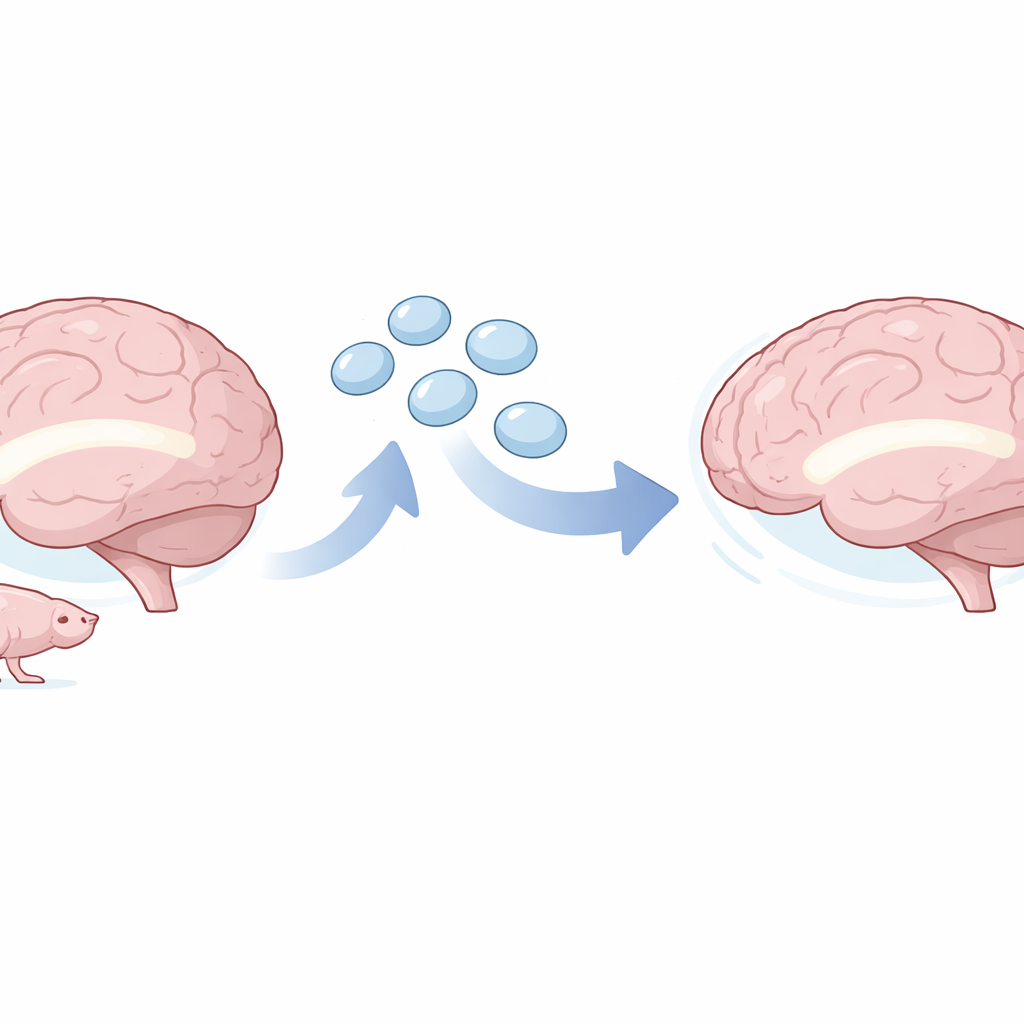
In very premature infants, a brief lack of oxygen and blood flow can injure white matter, leaving nerve fibers poorly insulated and slowing communication between brain regions. Doctors currently have no way to directly fix this type of injury. The researchers recreated a similar problem in three‑day‑old rats by briefly blocking a neck artery and lowering oxygen in the air. This produced clear signs of white matter damage: disrupted tissue structure, thinner insulating layers around nerve fibers, and poorer performance on a standard test of spatial memory, which depends on healthy brain circuits.
Umbilical cord cells as a repair team
The team then tested human umbilical cord mesenchymal stem cells, a type of versatile support cell collected from donated cords after birth. These cells are attractive for therapy because they grow well, provoke little immune rejection, and are already being studied in many diseases. The scientists confirmed in the lab that the cord cells had the right features and could mature into bone, fat, and cartilage cells. Next, they injected a small number of these cells into a fluid‑filled space in the rat brain a few hours after the injury, and followed the animals over several weeks.
Healing the brain’s wiring and behavior
Rats that received the cord cells showed far healthier brains than untreated injured animals. The area of dead tissue was smaller, and under the microscope, the white matter looked more orderly with fewer empty spaces. Key proteins that make up the insulating myelin coat around nerve fibers, which had dropped after injury, rebounded toward normal levels after treatment. Electron microscope images showed that the myelin layers became thicker again, and nerve fibers were better preserved. These structural improvements translated into function: in a water‑maze test of learning and memory, treated rats found the hidden platform faster and spent more time searching in the correct area, indicating better cognitive recovery.
Taming the brain’s immune response
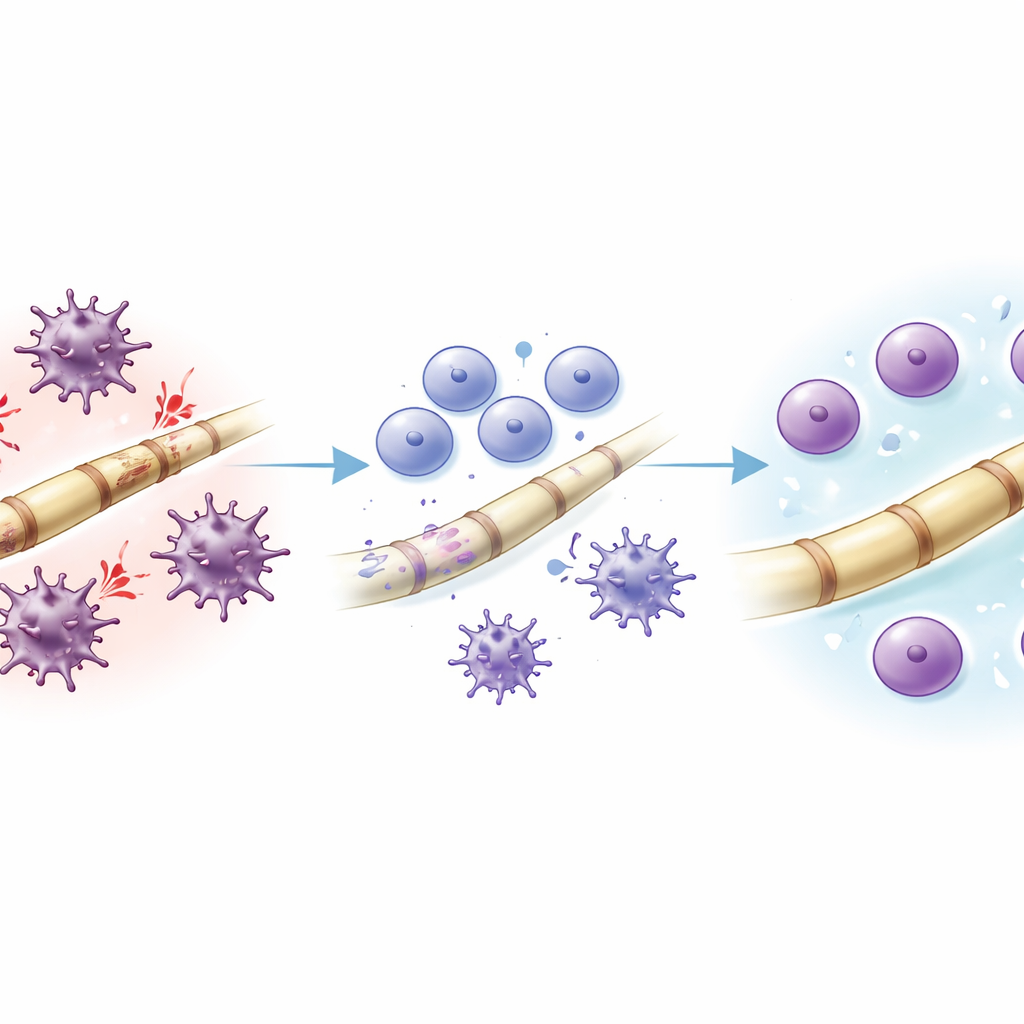
Much of the hidden damage in white matter comes from the brain’s own immune cells, called microglia. After an insult, they can adopt a destructive, inflammatory mode or a more helpful, healing mode. The study found that injury pushed microglia strongly toward the harmful state and switched on a molecular alarm system known as the NLRP3 inflammasome, which triggers the release of toxic inflammatory molecules. Cord cell treatment dialed down this alarm, reduced proteins linked to the aggressive microglial state, and boosted markers of the protective state instead. At the same time, harmful inflammatory signals decreased, while soothing, tissue‑supporting signals increased, creating a more favorable environment for repair.
Blocking a key danger sensor
The researchers also probed how the cord cells achieve this immune “re‑tuning.” They focused on a surface sensor called TLR4, which helps microglia detect danger and can feed into the NLRP3 alarm system. After injury, TLR4 levels rose sharply on microglia, but cord cell treatment brought them back down. When the scientists added a drug that specifically re‑activates TLR4, many of the benefits of the cord cells disappeared: microglia again shifted toward the harmful state, inflammatory molecules surged, and the NLRP3 system was re‑engaged. This suggests that the cord cells protect white matter largely by blocking this danger sensor pathway and steering microglia toward a calmer, healing role.
What this could mean for premature babies
Altogether, this work shows that umbilical cord stem cells can lessen early white matter injury in newborn rats, restore healthier insulation around nerve fibers, and improve later learning ability. They appear to do this not by becoming new brain cells themselves, but by powerfully reshaping the brain’s immune response—quieting a damaging alarm system and encouraging immune cells to support repair rather than fuel destruction. While much more research is needed before this approach can be safely tested in premature infants, the study strengthens the idea that a treatment made from otherwise discarded birth tissue could one day help protect the most fragile brains at the very start of life.
Citation: Wang, C., Xu, QQ., Zhang, SJ. et al. Human umbilical cord mesenchymal stem cells alleviate hypoxic-ischemia-induced white-matter injury in neonatal rats by regulating polarization of microglia. Sci Rep 16, 11829 (2026). https://doi.org/10.1038/s41598-026-42445-8
Keywords: premature brain injury, white matter repair, umbilical cord stem cells, neonatal inflammation, microglia polarization