Clear Sky Science · en
Ameliorative effect of selenium nanoparticles combined with post-conditioning on testicular ischemia–reperfusion injury in rats
Why this matters for men’s health
When a testicle suddenly twists inside the scrotum—a condition called testicular torsion—blood flow is cut off within minutes. Even when surgeons quickly untwist and save the testis, the rush of blood back into the starved tissue can trigger a second wave of damage that threatens future fertility. This study in rats explores a new two-part strategy that uses tiny particles of the nutrient selenium together with a simple blood-flow routine to better protect the testis from this hidden harm.
A dangerous twist in blood flow
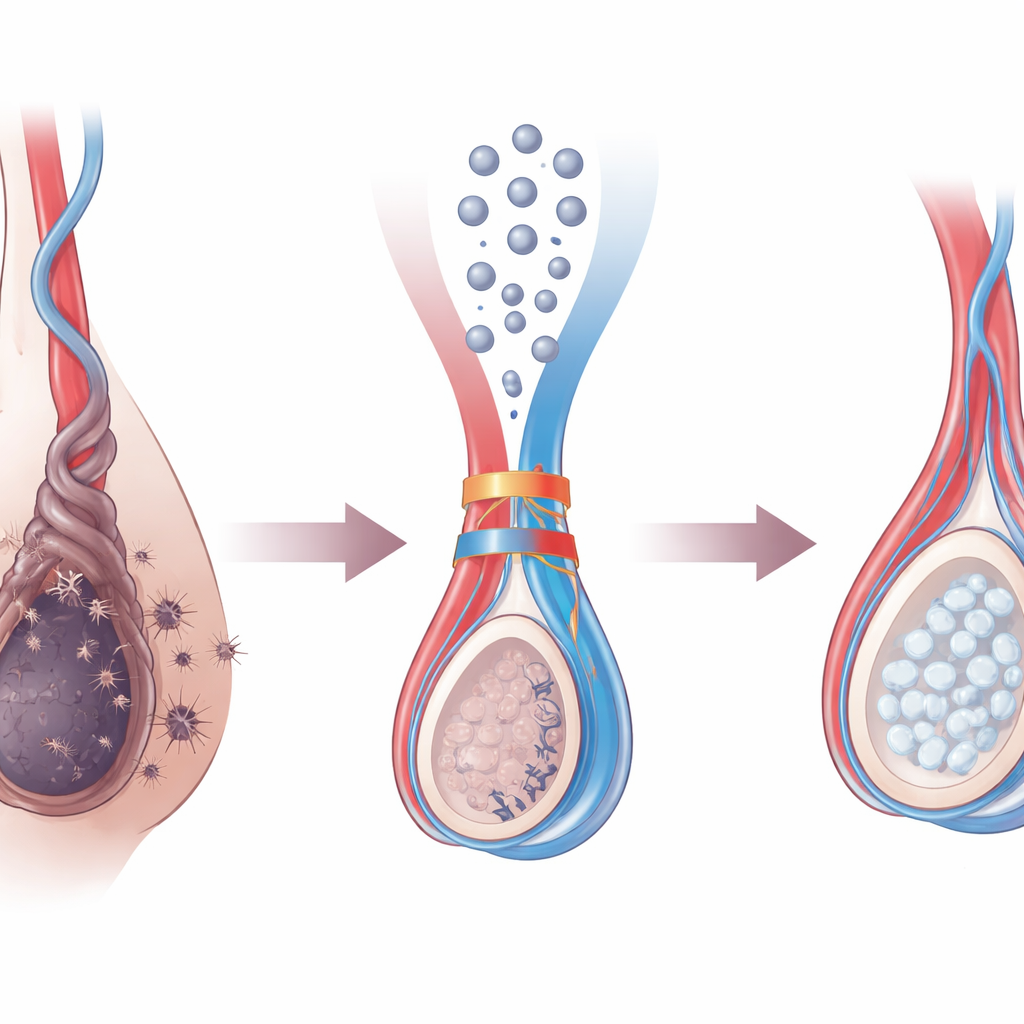
Testicular torsion is a medical emergency that mostly strikes boys and young men. The twisting spermatic cord blocks blood vessels, starving the testis of oxygen and nutrients. When blood flow is restored in surgery, the tissue experiences “ischemia–reperfusion” injury: unstable oxygen molecules, called reactive oxygen species, flood the tissue, sparking inflammation and programmed cell death. Over time, this cascade can thin the sperm-producing tubules, reduce sperm counts, and impair hormones like testosterone, even if the organ appears physically intact.
Tiny selenium helpers and smart blood-flow timing
Scientists have been searching for drugs that can blunt this reperfusion damage, but many candidates have not progressed beyond small animal studies. Nanoparticles offer a fresh angle by delivering protective substances more efficiently. Selenium nanoparticles are an especially promising form of this essential trace element: they are well absorbed, less toxic than traditional supplements, and strongly support the body’s own antioxidant defenses. In parallel, a technique called post-conditioning gently alternates brief periods of blood flow and blockage right after circulation is restored. These short cycles appear to “train” tissues to tolerate oxidative stress and improve survival.
Putting the combination to the test
In this experiment, 28 male rats were divided into four groups. All had one testis removed, while the other either remained untouched (sham group) or was twisted tightly for three hours and then untwisted to allow 24 hours of reperfusion. One injured group received no extra help, a second received post-conditioning cycles at the moment blood flow was restored, and a third received both post-conditioning and an injection of selenium nanoparticles just before reperfusion. The researchers then measured reproductive hormones in blood, chemical signs of oxidative stress and inflammation in the testis, and closely examined tissue slices under the microscope to assess the state of the sperm-forming structures.
Less damage, stronger recovery
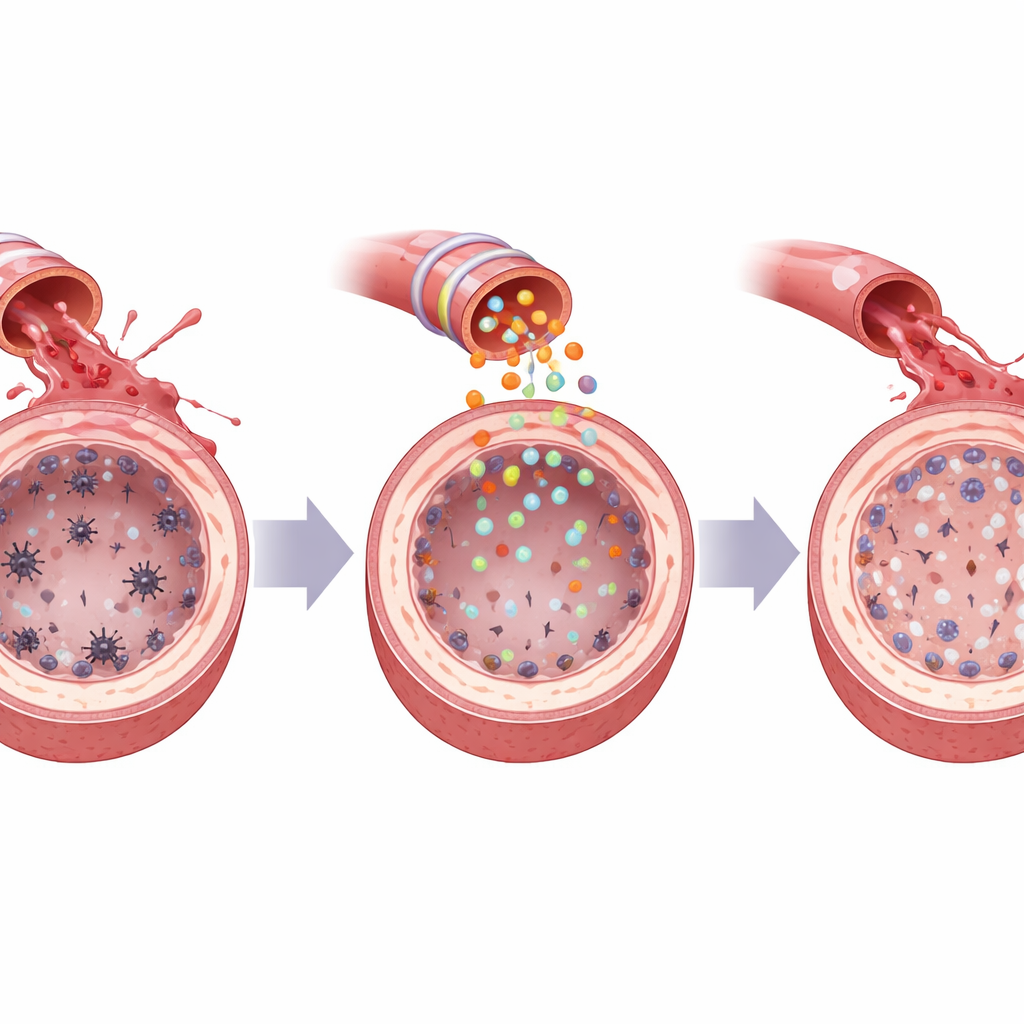
Rats that experienced torsion and reperfusion without protection showed the classic footprint of severe injury: high levels of lipid breakdown products, elevated inflammatory messengers, and strong activity of cell-death enzymes. Their natural antioxidants and sex hormones dropped, and their sperm-producing tubules were thinned, misshapen, and largely empty of mature germ cells. Post-conditioning alone improved many of these measures, but the combination with selenium nanoparticles was clearly superior. In this group, oxidative stress fell, inflammation and cell death signals were strongly suppressed, and protective proteins that help cells withstand injury were boosted. Hormone levels rebounded toward normal, and the tubules largely regained their orderly layers of developing sperm cells, with scoring systems indicating near-complete spermatogenesis.
What this could mean for future patients
Although this work was done in rats and followed them for only a day after surgery, it shows that pairing selenium nanoparticles with a simple, timed blood-flow routine can dramatically limit the hidden damage that follows testicular torsion. By calming oxidative stress, dampening inflammation, and preventing widespread cell loss, the combined treatment preserved both testicular structure and function far better than post-conditioning alone. Before such an approach could be used in boys and men, researchers will need to confirm long-term benefits, refine dosing and delivery, and ensure safety. Still, these findings point to a future in which a nutrient-inspired nanotherapy, applied alongside standard surgery, could give patients a much better chance of protecting their fertility after a frightening emergency.
Citation: Amena-Elmongy, Samy, A., Tolba, E. et al. Ameliorative effect of selenium nanoparticles combined with post-conditioning on testicular ischemia–reperfusion injury in rats. Sci Rep 16, 10986 (2026). https://doi.org/10.1038/s41598-026-42422-1
Keywords: testicular torsion, ischemia reperfusion injury, selenium nanoparticles, male fertility, oxidative stress